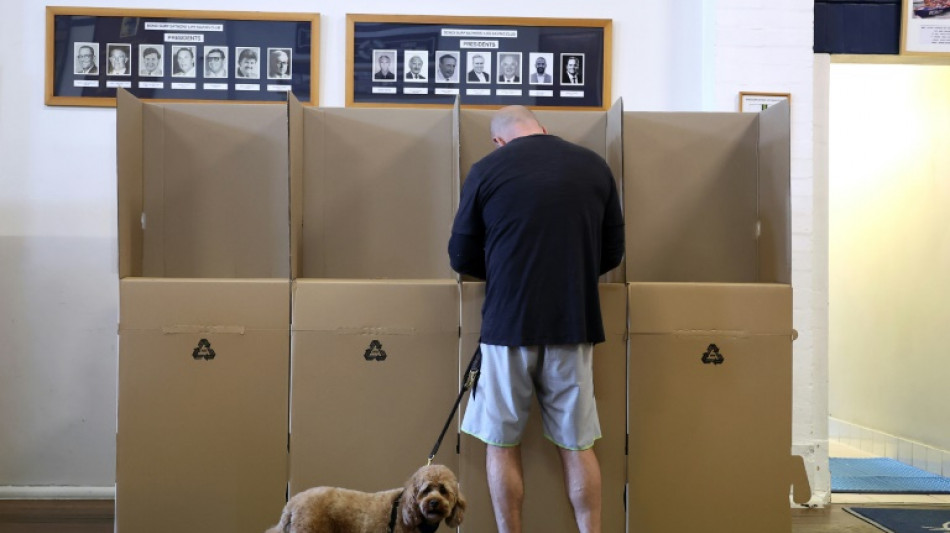
Anger, sorrow as Indigenous Australians weigh referendum defeat / Photo: DAVID GRAY - AFP

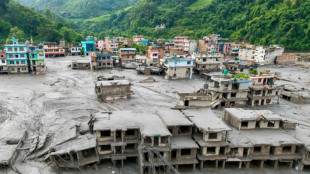 Desperate families search for missing after Nepal floods
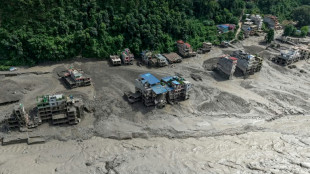 The missing in Nepal-Tibet flash floods
 Search for 1,300 missing after deadly Nepal-Tibet floods

 Once a top export, prized Kashmir carpet fades
 Search for 1,000 missing after deadly Nepal-Tibet floods
 Park So-yeon first woman to play for eSports powerhouse South Korea
 Yayoi Kusama: Japan's kaleidoscopic, troubled 'polka dot queen'

 Euro champ Hunt 'on her toes' against world's best in Zurich 100m
 Asian chip firms lifted by Nvidia forecast but broader markets struggle
 Search for missing after Nepal-Tibet floods kill 165
 Qantas says profits slump as fuel costs surge
 Lofty bond yields, Bessent's intervention pose challenge to Fed's Warsh
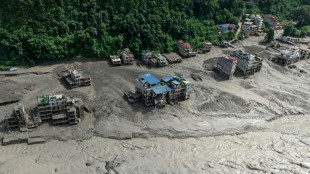 The foreigners missing in Nepal's flash floods
 Bond yields are surging: Here's why that could spell trouble
 Fed's Cook rejects Trump mortgage fraud claims
 Police probe 'assault allegations' after Carse's nightclub incident
 How we might hear new Dolly Parton music in the future
 Nvidia doubles revenue, forecasts even more AI spending
 Canada renews push to boycott US products

 Savio scores on debut as Spurs set-up League Cup tie with Liverpool
 Brazil sues Discord over child safety measures, demands $100 mln in damages

 Alberta NDP Urges Smith to Postpone Separation Vote Amid Trade War

 Fenerbahce stun Lyon in Champions League as AEK crush Levski
 Why Global Finance Still Relies on Wall Street Despite Diversification Trends
 Bethlehem Father Seeks Aid for Special Needs Children Amid Health Crisis
Aboriginal Australians on Sunday voiced anger and sorrow over the rejection of a landmark push for Indigenous rights and recognition, which was spurned by the country's white majority in a binding national referendum.
Indigenous leaders called for a "week of silence" to mourn the "bitter" outcome of the poll, after Prime Minister Anthony Albanese had urged his divided nation to heal "in the spirit of unity".
With more than 70 percent of ballots counted Sunday morning, around 60 percent of Australians said "no" when asked if the 1901 constitution should be changed to recognise the country's first inhabitants.
The reforms would also have created a consultative body -- a "Voice" to Parliament -- tasked with working on solutions to the pervasive inequalities plaguing Aboriginal communities.
The proposal was defeated in every state across the country.
Aboriginal advocacy groups said Sunday that millions of Australians had ignored the chance to atone for the "brutal dispossession of our people".
"Now is the time for silence, to mourn and deeply consider the consequence of this outcome," a joint statement read.
"The truth is that we offered this recognition and it has been refused. We know now where we stand in our own country," it added, before calling for a "week of silence" to grieve and reflect.
Indigenous voter Auntie Shirley Lomas was defiant in defeat, saying it had done nothing to crush her resolve.
"Aboriginal people have been here for 60,000 years and we'll continue to be here," she told AFP in the wake of the result.
"Voters voted no because they fear change. Most of them wouldn't even know an Aboriginal person."
Just under four percent of Australia's 26 million population are Indigenous.
- 'Painfully familiar' -
Political gains have not come easily for Aboriginal Australians, who have fought tooth-and-nail over the years to secure basic voting rights, own traditional lands, and win election to parliament.
Against this backdrop, Indigenous "yes" campaigner Dean Parkin said the crushing outcome was "painfully familiar" and just the latest "chapter in the story of our struggle".
Supporters saw the referendum as a way to unite the country while addressing the historical injustices inflicted upon First Nations people.
Instead, it has exposed the deep racial fault lines that still run through the country more than two centuries since British colonisers dropped anchor in Sydney Harbour.
Albanese has vowed that his government will continue working to deliver Indigenous recognition -- although it is unclear what options remain.
Prominent Aboriginal activist and scholar Marcia Langton declared that decades of work to build trust between Australians had failed.
"Reconciliation is dead," she told an Indigenous television broadcaster.
- A new chapter -
While the vast majority of Aboriginal Australians supported the referendum, some opposed it as a token measure that would not drive meaningful change.
Indigenous "no" campaigner Warren Mundine told national broadcaster ABC on Sunday he was thankful the referendum had failed.
The opposition campaign had deftly channelled fears about the role and effectiveness of the "Voice" assembly, encouraging people to vote "no" if they were uncertain.
The debate was accompanied by reams of online misinformation suggesting the "Voice" would lead to land seizures, that it would create a South African-style system of apartheid, or that it was part of a United Nations plot.
Conservative opposition leader Peter Dutton, who staunchly opposed the referendum, expressed his relief on Saturday evening.
"It is clear obviously that the referendum has not been successful and I think that is good for our country."
Aboriginal Australians, whose ancestors settled on the continent around 60,000 years ago, are today celebrated as the flag bearers of one of the world's oldest continuous cultures.
But 235 years since the first British colonisers arrived, they are still far more likely to die young, live in poverty, and wind up in prison.
A.S.Diogo--PC