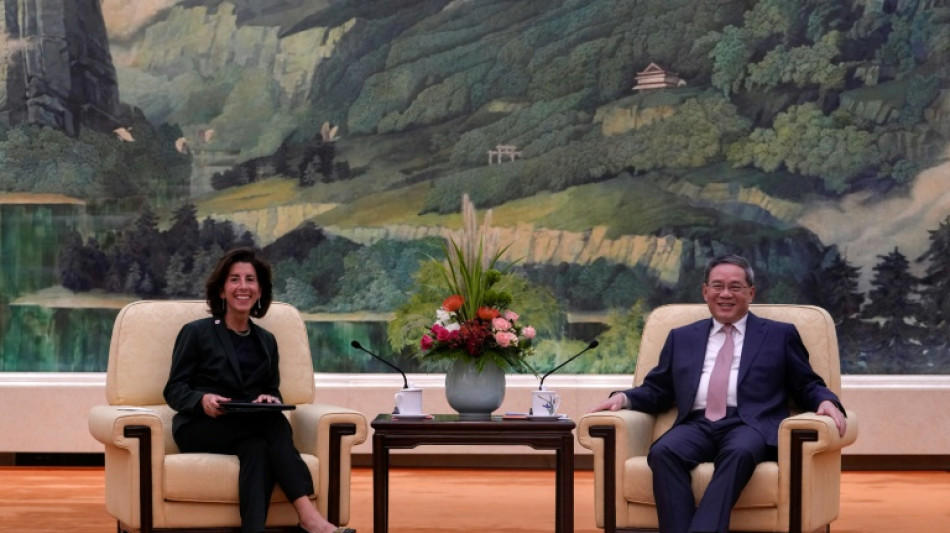
US tightens curbs on AI chip exports to China / Photo: Andy Wong - POOL/AFP/File

 Desperate families search for missing after Nepal floods
 The missing in Nepal-Tibet flash floods

 Search for 1,300 missing after deadly Nepal-Tibet floods

 Once a top export, prized Kashmir carpet fades

 Search for 1,000 missing after deadly Nepal-Tibet floods

 Park So-yeon first woman to play for eSports powerhouse South Korea

 Yayoi Kusama: Japan's kaleidoscopic, troubled 'polka dot queen'

 Euro champ Hunt 'on her toes' against world's best in Zurich 100m

 Asian chip firms lifted by Nvidia forecast but broader markets struggle

 Search for missing after Nepal-Tibet floods kill 165

 Qantas says profits slump as fuel costs surge
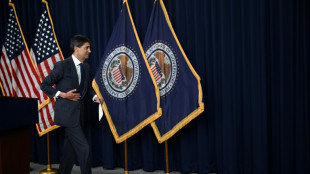 Lofty bond yields, Bessent's intervention pose challenge to Fed's Warsh

 The foreigners missing in Nepal's flash floods
 Bond yields are surging: Here's why that could spell trouble

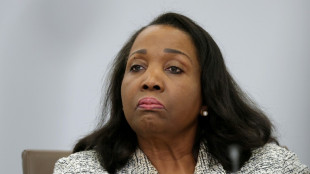 Fed's Cook rejects Trump mortgage fraud claims
 Police probe 'assault allegations' after Carse's nightclub incident

 How we might hear new Dolly Parton music in the future

 Nvidia doubles revenue, forecasts even more AI spending
 Canada renews push to boycott US products

 Savio scores on debut as Spurs set-up League Cup tie with Liverpool

 Brazil sues Discord over child safety measures, demands $100 mln in damages

 Alberta NDP Urges Smith to Postpone Separation Vote Amid Trade War

 Fenerbahce stun Lyon in Champions League as AEK crush Levski

 Why Global Finance Still Relies on Wall Street Despite Diversification Trends

 Bethlehem Father Seeks Aid for Special Needs Children Amid Health Crisis

The United States on Tuesday said it was tightening curbs on exports of state-of-the-art AI chips to China, sending the share price of Nvidia and other semiconductor companies plummeting on Wall Street.
The measures are the latest chapter in the policy started under the Trump administration to limit Beijing's ability to gain too much ground and become a leading tech economy.
"Today's updated rules will increase the effectiveness of our controls and further shut off pathways to evade our restrictions," said US Commerce Secretary Gina Raimondo.
The new rules tighten measures taken a year ago that banned the sale to China of microchips that are crucial to the manufacturing of powerful AI systems.
But calls heightened to close off the supply chain even further after the world discovered the powers of AI with the launch of ChatGPT.
Also casing alarm in Washington was news that China-owned Huawei had released a new smartphone that featured a powerful home-grown advanced chip.
Raimondo insisted that the beefed up curbs were intended to close loopholes and to prevent China's development of AI for military use.
"It's true that AI has the potential for huge societal benefit. But it also can do tremendous and profound harm if it's in the wrong hands and in the wrong militaries," Raimondo told US media.
The main focus of attention has been Nvidia's industry leading H100 chip, which is crucial for the creation of generative AI, the technology behind ChatGPT and other powerful systems.
The update on Tuesday widened the ban to other lower-performing chips made by Nvidia and other manufacturers that were going to China unrestricted.
The rules will not affect chips used in consumer goods such as laptops, smartphones and gaming consoles, though some will be subject to export licensing requirements, a statement said.
- 'Permanent loss' -
The share price of Nvidia was down as much as six percent on Tuesday after the announcement, with Intel and AMD also sharply lower.
The chip giants have lobbied hard to prevent further curbs on their business in China.
During an earnings call in August, a Nvidia executive warned against the tougher curbs, saying they would lead to "a permanent loss" in being competitive in China.
The Semiconductor Industry Association on Tuesday criticized any "overly broad, unilateral controls" that would punish the industry "without advancing national security."
Trade curbs "encourage overseas customers to look elsewhere" for the chips they need, it added.
On a bridge-building visit to China in August, Raimondo said the US was seeking a more normalized relationship with the world's second biggest economy, but the new curbs will likely draw an angry reaction from Beijing.
After the US announced the initial export ban last year, China responded with its own curbs, including the introduction of a license requirement to export the rare minerals vital in the production of semiconductors.
L.Mesquita--PC