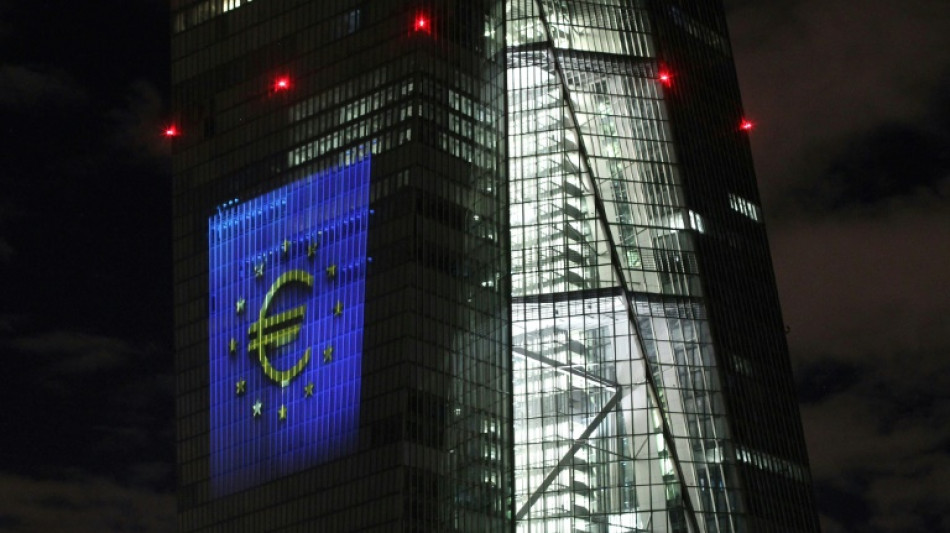
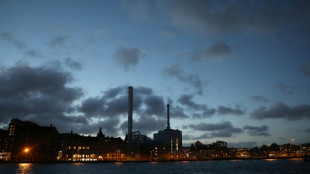
ECB greenlights next stage of digital euro project / Photo: Daniel ROLAND - AFP/File

 Desperate families search for missing after Nepal floods
 The missing in Nepal-Tibet flash floods
 Search for 1,300 missing after deadly Nepal-Tibet floods

 Once a top export, prized Kashmir carpet fades

 Search for 1,000 missing after deadly Nepal-Tibet floods

 Park So-yeon first woman to play for eSports powerhouse South Korea

 Yayoi Kusama: Japan's kaleidoscopic, troubled 'polka dot queen'
 Euro champ Hunt 'on her toes' against world's best in Zurich 100m
 Asian chip firms lifted by Nvidia forecast but broader markets struggle
 Search for missing after Nepal-Tibet floods kill 165

 Qantas says profits slump as fuel costs surge
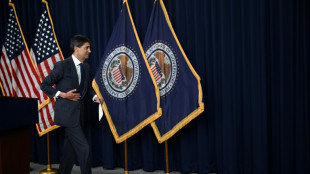 Lofty bond yields, Bessent's intervention pose challenge to Fed's Warsh

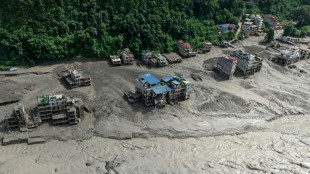 The foreigners missing in Nepal's flash floods
 Bond yields are surging: Here's why that could spell trouble
 Fed's Cook rejects Trump mortgage fraud claims
 Police probe 'assault allegations' after Carse's nightclub incident
 How we might hear new Dolly Parton music in the future
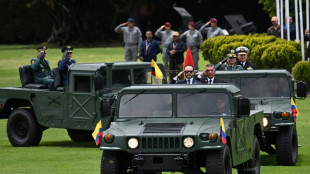
 Nvidia doubles revenue, forecasts even more AI spending
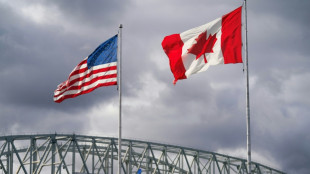 Canada renews push to boycott US products
 Savio scores on debut as Spurs set-up League Cup tie with Liverpool

 Brazil sues Discord over child safety measures, demands $100 mln in damages

 Alberta NDP Urges Smith to Postpone Separation Vote Amid Trade War

 Fenerbahce stun Lyon in Champions League as AEK crush Levski

 Why Global Finance Still Relies on Wall Street Despite Diversification Trends
 Bethlehem Father Seeks Aid for Special Needs Children Amid Health Crisis
The European Central Bank moved closer to creating a "digital euro" Wednesday by greenlighting the next stage in the project, even as questions persist about the potential benefits and risks.
The ECB's governing council has agreed to launch a two-year "preparation phase" from November, the bank said in a statement, while stressing that the final decision on launching a virtual currency had not yet been made.
"We need to prepare our currency for the future," said ECB president Christine Lagarde, adding that a digital euro would "coexist alongside physical cash" while "leaving no one behind".
From China to the United States, Jamaica to Japan, more than 100 central banks worldwide are exploring or preparing to put in place digital currencies as electronic payments grow, changing the way people spend their money.
A digital euro would be an electronic version of euro notes and coins, issued by the ECB and held in a digital wallet.
"We envisage a digital euro as a digital form of cash that can be used for all digital payments, free of charge, and that meets the highest privacy standards," Lagarde said.
Central bank-backed digital currencies (CBDCs) have been touted as a risk-free alternative to private, highly volatile cryptocurrencies like Bitcoin which have seen a rise in popularity in recent years.
A digital euro would also offer a "pan-European" payment solution, the ECB said, countering the dominance of foreign payment giants like MasterCard, Visa or PayPal in the 20-nation eurozone.
Enthusiasts say a digital euro will complement cash and ensure the ECB does not leave a gap later filled by private -- usually non-EU -- players and other central banks.
But critics say there is no clear rationale for a digital euro given the many cashless payment options available already, while commercial banks worry about customers shifting their funds over to digital euro accounts and wallets.
Eurozone citizens have "access to a huge number of means of payment for everyday transactions, so the idea of launching an additional means of payment... is not something that comes naturally," Erick Lacourrege, managing director of payment methods at the Bank of France, told reporters.
But he cited the rapid decline in the use of cash, as well as concerns about payment "sovereignty" in the eurozone as reasons to continue developing the project.
"We find ourselves in a situation where all our daily payments rely on non-European actors and possibly, in the future, on non-European big tech companies," he said.
H.Silva--PC