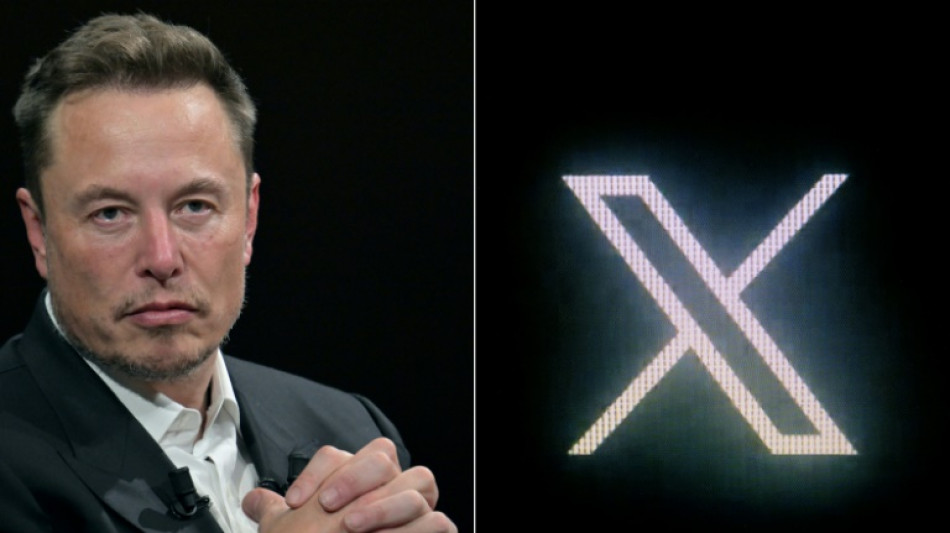
A year after Musk's Twitter takeover, X remains mired in turmoil / Photo: Alain JOCARD - AFP/File

 Once a top export, prized Kashmir carpet fades
 Search for 1,000 missing after deadly Nepal-Tibet floods

 Park So-yeon first woman to play for eSports powerhouse South Korea

 Yayoi Kusama: Japan's kaleidoscopic, troubled 'polka dot queen'
 Euro champ Hunt 'on her toes' against world's best in Zurich 100m

 Asian chip firms lifted by Nvidia forecast but broader markets struggle
 Search for missing after Nepal-Tibet floods kill 165
 Qantas says profits slump as fuel costs surge
 Lofty bond yields, Bessent's intervention pose challenge to Fed's Warsh

 The foreigners missing in Nepal's flash floods
 Bond yields are surging: Here's why that could spell trouble

 Fed's Cook rejects Trump mortgage fraud claims
 Police probe 'assault allegations' after Carse's nightclub incident

 How we might hear new Dolly Parton music in the future

 Nvidia doubles revenue, forecasts even more AI spending
 Canada renews push to boycott US products
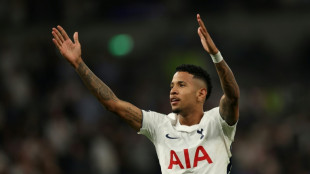
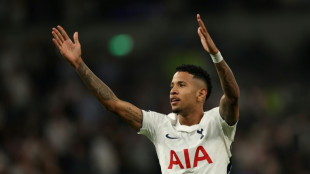 Savio scores on debut as Spurs set-up League Cup tie with Liverpool

 Brazil sues Discord over child safety measures, demands $100 mln in damages
 Alberta NDP Urges Smith to Postpone Separation Vote Amid Trade War

 Fenerbahce stun Lyon in Champions League as AEK crush Levski

 Why Global Finance Still Relies on Wall Street Despite Diversification Trends
 Bethlehem Father Seeks Aid for Special Needs Children Amid Health Crisis
 LIV Golf to lay off majority of staff

 How narwhal 'scientists' track Arctic warming
 Iran says US sanctions will achieve nothing

A year ago Elon Musk purchased X, formerly known as Twitter, taking the platform on a journey that has resulted in lost money, advertisers and trust.
Musk closed the $44 billion deal on October 27, 2022, facing a lawsuit that held him to terms of purchase he was keen to escape.
Here is a look back at Musk's first year as owner of the platform.
- Family feeling gone -
In the days after his purchase, Musk quickly fired executives who had been running Twitter and took the publicly traded company private.
He also laid off most of the San Francisco-based company's workers, cutting ranks to fewer than 1,500 from 8,000.
Twitter employees were asked to commit unconditionally to their jobs and forego any notion of telecommuting.
Former project manager Esther Crawford, who wrote online about her experience, said Musk replaced the company's family atmosphere with a climate of fear.
She described Musk as audacious but "moody," surrounding himself with "yes men" and making decisions on instinct.
In July, Musk did away with Twitter's globally recognized bird logo and changed the platform's name to X.
- Misinformation -
In the months following his takeover, Musk gutted content moderation, restored accounts of previously banned extremists, and allowed users to purchase account verification, helping them profit from viral -- but often inaccurate -- posts.
Musk defended such changes in the name of free speech.
He disabled features put in place to prevent users from being duped by false claims and put in new systems that encourage their spread, according to nonprofit fact-checking website PolitiFact.
Steps taken by Musk at X "have sparked increased sharing of misinformation and hate speech," PolitiFact said Monday in a report, echoing an array of groups tracking toxic content on social media.
The fast-evolving Israel-Hamas conflict has been seen as one of the first real tests of Musk's version of the platform during a major crisis. For many experts, the results confirm their worst fears: that changes have made it a challenge to discern truth from fiction.
"It is sobering, though not surprising, to see Musk's reckless decisions exacerbate the information crisis on Twitter surrounding the already tragic Israel-Hamas conflict," Nora Benavidez, senior counsel at the watchdog Free Press, told AFP.
This month the European Commission announced an investigation into X for alleged dissemination of bogus information and terrorist content regarding the conflict between Israel and Hamas.
X chief executive Linda Yaccarino has signaled that the platform is serious about trust and safety, but researchers have voiced pessimism, saying the site has abandoned efforts to elevate top news sources.
- Money matters -
Over the past year, the platform's advertising business partially collapsed as marketers soured on X.
Insider Intelligence forecasts that X will finish 2023 with $2.98 billion in ad revenue, compared to $4.14 billion in 2022.
Musk early this year said the company's value had more than halved to $20 billion, and some estimates place it even lower.
Musk started charging for features once free at Twitter, such as blue tick marks originally intended as badges of authenticity, in an effort to make money from subscriptions.
And X recently started charging new users in New Zealand and the Philippines for basic features such as posting messages in a trial aimed at reducing spam.
Musk has suggested charging all X users, but the idea was widely panned. Industry analysts said it would make X even less appealing to advertisers.
"X's wounds are almost entirely self-inflicted," Insider Intelligence analyst Jasmine Enberg told AFP.
"Musk's treatment of the platform as a technology he could remake in his vision, rather than as a social network powered by people and ad dollars, is the single largest cause of advertiser exodus, user decline and loss of its place as a central hub for news."
While speaking at a recent tech conference, Yaccarino estimated the number of daily active X users at 225 million, a drop of more than 10 percent from when Musk bought the company.
Twitter quitters have become a diaspora of sorts, spread across Mastodon, Bluesky, Threads and other platforms in search of a new social media home.
- Right-wing tilt -
Extreme right-wing content has meanwhile flourished at X.
Musk reinstated former president Donald Trump's account and did away with a team devoted to fighting misinformation about elections.
Former Fox news host Tucker Carlson, known for radical conservative opinions, launched a show on X after being fired from the television station.
Catering to the more mainstream right, Musk hosted and streamed interviews with Republican US presidential hopeful Ron DeSantis and Israeli Prime Minister Benjamin Netanyahu.
C.Cassis--PC