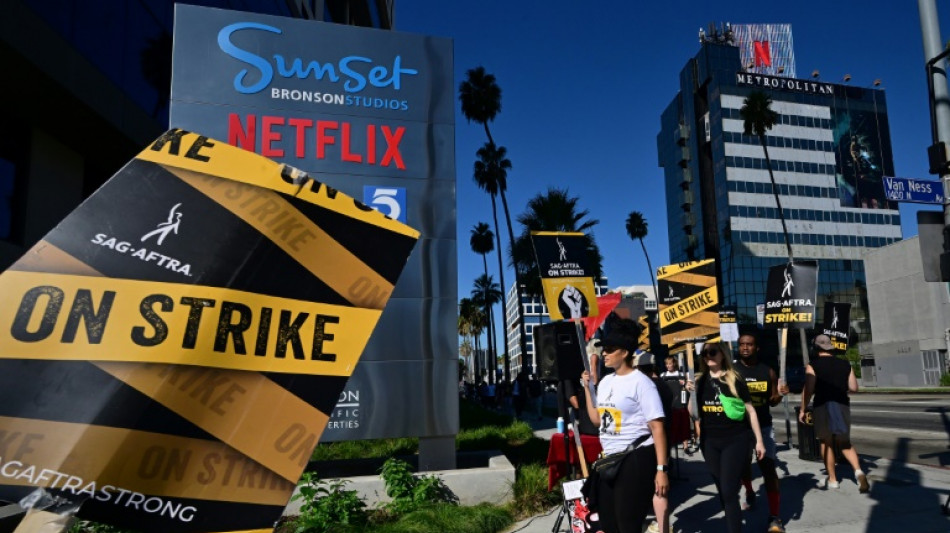
Tight job market rebalances power between US business and labor / Photo: Frederic J. BROWN - AFP

 UEFA set to withdraw FIFA boycott threat ahead of Champions League draw

 Sumo moves to beat Japan summer heat as temperatures rise
 'Be more honest': Markets crave clarity from cryptic Fed chair
 Climate change leaves its mark on America's largest reservoir

 CIA director warned Russia not to attack NATO members: US media
 Search for missing after Nepal-Tibet floods kills at least 160
 Meta, US states agree $18 bn settlement in landmark teen safety case

 What scientists know so far about Nepal's deadly floods
 US general visits Colombia to discuss war on drugs

 Meta settlement puts social media industry on notice: 'There will be more'
 NFL owners approve record Seahawks sale
 Nigerian armed groups net nearly $6 mn in ransoms: study

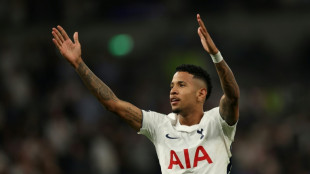 Savio scores on debut as Spurs advance in League Cup
 Mbappe hits treble as Real Madrid thrash Real Sociedad

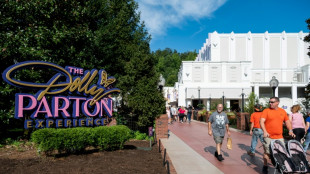 At Dollywood, superfans honor the late singer and local hero

 Stocks mixed as oil drops, US inflation stays high

 Bolivia's Paz appoints new economy minister amid bailout talks

 US designates UK-based Palestine Action as foreign 'terrorist group'

 'Rocky Horror Picture Show' star Tim Curry dead at 80

 American Moll wins women's pole vault at Zurich city event
 As Canada takes on US tariffs, what's behind the David and Goliath fight?
 UEFA 'likely' to drop threat to boycott FIFA tournaments: source

 US disrupts platforms allegedly used by Chinese hackers

 The foreign tourists missing in Nepal's flash floods
 Hundreds missing after Nepal-Tibet flood kills 98
The US economy is contending with a wave of union activism unseen in decades as organized labor seizes a rare opportunity to play hardball in a tight employment market.
Sectors experiencing unrest include automobiles, health care, restaurants, defense, airlines, technology and the performing arts.
In some cases, employees have threatened to walk out, but didn't actually strike.
"Workers haven't had much leverage for decades, and certainly not in the aftermath of the 2008-2008 recession," said Susan Schurman, professor of labor relations at Rutgers University.
Schurman considers the current dynamic the most advantageous for unions since the 1930s, a rupture from a long period in which employers had the upper hand.
"Wages have been stagnant for decades," Schurman said. "The pandemic changed all that," with the low unemployment bolstering worker leverage.
Such a backdrop has given momentum to organizing campaigns at more companies, although establishing a union shop remains difficult.
In some cases such as Starbucks and Amazon, workers have voted in favor of representation, but struggled to seal a contract with the employer.
The activism can feed on itself as workers in different sectors observe each other fighting for more, sometime spurring concessions from employers who are trying to stay union-free, said Schurman.
This can mean higher wages, better working conditions, increased job security or other conditions.
- Inflation -
Higher consumer prices have been another catalyst for workers, adding credibility to workers claims that they need higher pay just to break even.
Data released this week showed a 3.7 percent increase over September 2022, down from the 9.1 percent surge in June 2022.
The Federal Reserve has raised interest rates 11 times since March 2022 in an effort to return inflation to a two percent target.
In August the United States lost 4.1 million days of work due to strikes, the highest level in 23 years, according to the Labor Department.
One of the most prominent strikes has been the United Auto Workers' unprecedented stoppage of Detroit's "Big Three," Ford, Stellantis and General Motors, the first time the union has walked out of all three companies at once.
Pointing to soaring CEO pay at the companies, UAW President Shawn Fain has called out the automakers to boost pay and restore benefits following union concessions after the 2008 financial crisis and ensuing auto industry bankruptcies.
"Another record quarter, another record year. As we've said for months: record profits equal record contracts," Fain said Tuesday as he announced the latest expansion of the strike at GM.
"It's time GM workers, and the whole working class, get their fair share," said Fain, who has seen gradually improved company offers as evidence the "stand up" strike is working
With this week's most recent walkouts, UAW auto employees on strike numbered around 45,000.
Schurman said she was "surprised" by Fain's strategy, "but it appears to be working," she said. "They all have more on the table now than they did a month ago."
On Wednesday night, the UAW announced a tentative agreement with Ford applauded as "an historic accord" by the President Joe Biden.
The agreement, which includes a 25 percent wage hike, still must be ratified by Ford workers.
- Health care, airlines, etc. -
Biden also cheered an agreement between the Teamsters and UPS in July that averted a potentially calamitous strike.
Defense group General Dynamics also sealed a deal with the UAW that could avert a walkout.
The big US airlines Delta, United and American have reached agreements with pilots unions for about a 40 percent pay boost.
However, negotiations are continuing with flight attendant unions at United and American, with a holiday-season walkout not out of the question at this point.
Health care has also seen plenty of activity, with insurer Blue Cross Blue Shield of Michigan still on the picket line after launching a strike in mid-September.
Health network Kaiser Permanente agreed to hefty wage hikes after some 75,000 of its 85,000 employees walked out for three days in early October and threatened another stoppage next month.
Workers at pharmacy chain Walgreens have had walkouts.
In Hollywood, actors have been on the pickets since July, while the Writers Guild of America ratified its contract earlier this month after a 148-day stoppage.
A.P.Maia--PC