Fears grow of tighter state grip on Serbian media / Photo: OLIVER BUNIC - AFP

 UEFA set to withdraw FIFA boycott threat ahead of Champions League draw
 Sumo moves to beat Japan summer heat as temperatures rise
 'Be more honest': Markets crave clarity from cryptic Fed chair
 Climate change leaves its mark on America's largest reservoir
 CIA director warned Russia not to attack NATO members: US media
 Search for missing after Nepal-Tibet floods kills at least 160
 Meta, US states agree $18 bn settlement in landmark teen safety case

 What scientists know so far about Nepal's deadly floods

 US general visits Colombia to discuss war on drugs

 Meta settlement puts social media industry on notice: 'There will be more'
 NFL owners approve record Seahawks sale

 Nigerian armed groups net nearly $6 mn in ransoms: study
 Savio scores on debut as Spurs advance in League Cup

 Mbappe hits treble as Real Madrid thrash Real Sociedad

 At Dollywood, superfans honor the late singer and local hero
 Stocks mixed as oil drops, US inflation stays high

 Bolivia's Paz appoints new economy minister amid bailout talks
 US designates UK-based Palestine Action as foreign 'terrorist group'

 'Rocky Horror Picture Show' star Tim Curry dead at 80

 American Moll wins women's pole vault at Zurich city event

 As Canada takes on US tariffs, what's behind the David and Goliath fight?
 UEFA 'likely' to drop threat to boycott FIFA tournaments: source
 US disrupts platforms allegedly used by Chinese hackers

 The foreign tourists missing in Nepal's flash floods

 Hundreds missing after Nepal-Tibet flood kills 98
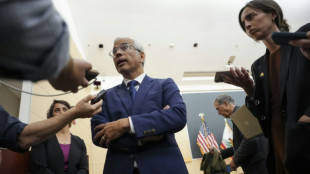
Two controversial bills backed by Serbian lawmakers this week have sparked fears of more state control over the media and another setback for press freedom in the Balkan nation.
Parliament approved a law on public information and the media as well as another on electronic media on Thursday.
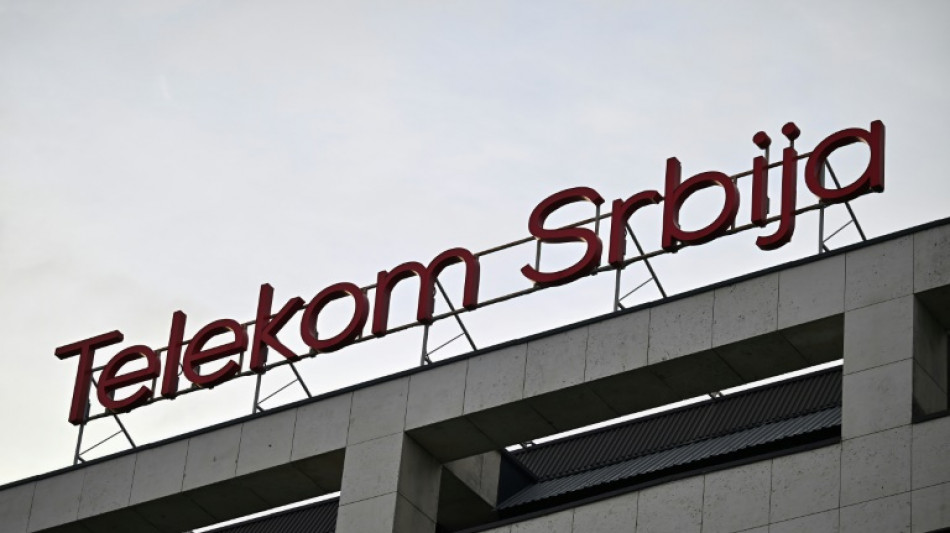
If President Aleksandar Vucic signs the legislation into law, it will notably enable state-owned telecoms provider Telekom Srbija to acquire media outlets -- something that was prohibited up to now.
The votes raise "fears of state influence and state pressure" on the media, the president of the European Federation of Journalists, Maja Sever, told AFP.
The intention of the authorities is to "legalise the role of the state... in (the) media market", opposition MP Robert Kozma, of the Green-Left Front party, told AFP after the vote.
"And that means only one thing -- the spread of media darkness," he said.
The information and communications ministry called the adoption of the two laws an "important step towards the further improvement of the media scene in Serbia".
The government said earlier this month that the new laws guaranteed freedom of opinion, expression and press "in line with the highest international standards".
- 'Dominant market position' -
Telekom Srbija is the largest telecommunications operator in the country with nearly 53 percent of users, official figures show.
But it does not offer the independent N1 or Nova S television channels.
The European Parliament in May voiced concern about the "dominant market position of Telekom Srbija, where the majority stakeholder is the state".
It also noted allegations "that the ruling party is using it to increase its influence over the media market in Serbia".
By allowing Telekom Srbija to establish and buy media outlets, Serbia, which aspires to join the European Union, has shown it still "selectively accepts European values and principles", said the Independent Journalists' Association of Serbia (NUNS).
Opponents to Vucic, whose conservative Serbian Progressive Party dominates parliament, have accused him of relying on harsh measures to keep the opposition in disarray and media outlets under his thumb.
From September to mid-October, Vucic occupied 39 percent of primetime political news programmes on national television and N1, according to BIROD, a social research think thank.
In its final report on Serbia's April 2022 general elections, the Organization for Security and Cooperation in Europe noted that the public media provided "uncritical" news coverage.
Private TV channels with national coverage "allocated some 90 percent of coverage in news programmes to the president and government officials", it added.
- Inefficient regulator -
One of the most controversial points of the two bills relates to the Regulatory Authority for Electronic Media (REM), which is responsible for media monitoring.
The European Parliament has urged the Serbian government to ensure the body's independence.
But the two bills did not "oblige the REM to monitor whether the president... and other officials appear in the most-watched media during the (election) campaign and inform people about it", NUNS said after the vote.
Last year, the regulatory body awarded all four national frequencies, for an eight-year period, to the "same television channels as in the previous period", the European Commission said in an October 2022 report on Serbia.
All of those channels had received warnings from the REM due to "violation of their legal obligations", it added.
And since the bills do not oblige the REM to act upon viewers' complaints, it can "continue to turn a blind eye to violations of all the rules of the profession and the spread of violence in interest of the big media", NUNS warned.
Serbia ranked 91st in the 2023 World Press Freedom Index published by Reporters Without Borders, down from 79th last year.
A.F.Rosado--PC