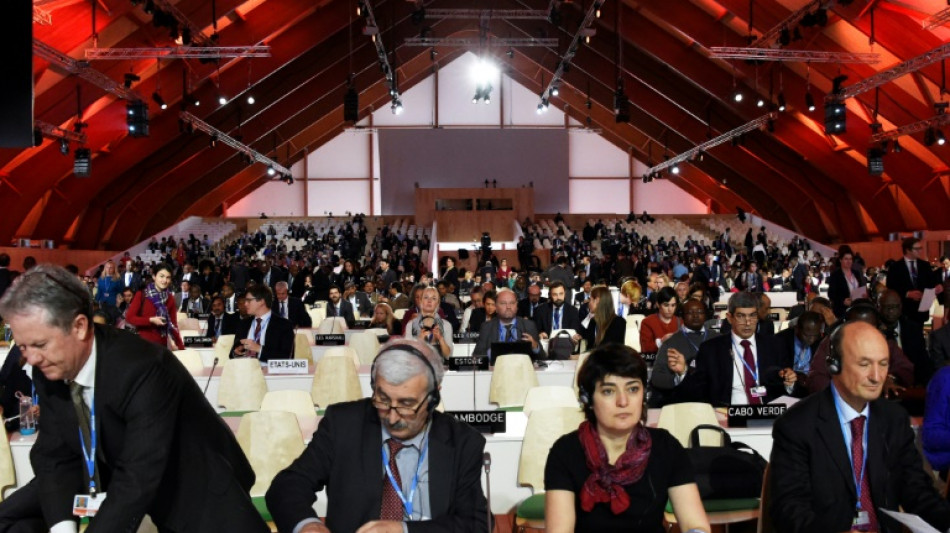
What is a COP? / Photo: DOMINIQUE FAGET - AFP

 UEFA set to withdraw FIFA boycott threat ahead of Champions League draw
 Sumo moves to beat Japan summer heat as temperatures rise
 'Be more honest': Markets crave clarity from cryptic Fed chair

 Climate change leaves its mark on America's largest reservoir
 CIA director warned Russia not to attack NATO members: US media
 Search for missing after Nepal-Tibet floods kills at least 160
 Meta, US states agree $18 bn settlement in landmark teen safety case

 What scientists know so far about Nepal's deadly floods

 US general visits Colombia to discuss war on drugs
 Meta settlement puts social media industry on notice: 'There will be more'
 NFL owners approve record Seahawks sale
 Nigerian armed groups net nearly $6 mn in ransoms: study

 Savio scores on debut as Spurs advance in League Cup
 Mbappe hits treble as Real Madrid thrash Real Sociedad

 At Dollywood, superfans honor the late singer and local hero
 Stocks mixed as oil drops, US inflation stays high
 Bolivia's Paz appoints new economy minister amid bailout talks
 US designates UK-based Palestine Action as foreign 'terrorist group'
 'Rocky Horror Picture Show' star Tim Curry dead at 80
 American Moll wins women's pole vault at Zurich city event
 As Canada takes on US tariffs, what's behind the David and Goliath fight?
 UEFA 'likely' to drop threat to boycott FIFA tournaments: source

 US disrupts platforms allegedly used by Chinese hackers
 The foreign tourists missing in Nepal's flash floods
 Hundreds missing after Nepal-Tibet flood kills 98
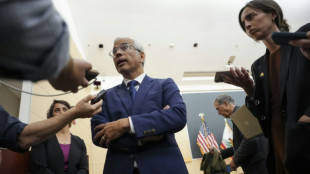
The crunch climate talks being held in Dubai from November 30 to December 12 will be the 28th such gathering of world leaders under UN auspices known as COPs.
AFP unpacks the workings of the high-level summit, where countries will aim to thrash out a new agreement as accelerating climate change threatens the world with costly and destructive consequences.
- What is a COP? -
COP stands for Conference of the Parties, referring to the 198 parties including the European Union that have signed the United Nations Framework Convention on Climate Change, originally adopted in Brazil in 1992.
COPs have been held every year in different cities since 1995, with the exception of COP26 in Glasgow, which was delayed by a year due to the coronavirus pandemic.
They are numbered in chronological order, with the United Arab Emirates welcoming the world's movers and shakers at COP28 after taking over the presidency from COP27 hosts Egypt.
COPs also exist for other UN conventions and treaties on issues including desertification and biodiversity.
- What are the outcomes? -
The long, complex and occasionally acrimonious negotiations between world leaders are supposed to end with a final text, which is often hammered out well past the official deadline.
Numerous lobbyists, NGOs, international organisations and other observers gather on the sidelines of the talks.
The agreement must be reached by consensus, meaning different positions and interests have to be reconciled, all while aiming for progress in the fight against climate change.
Outcomes of little substance have emerged from some COPs, in stark contrast with the acceleration of climate change and its increasingly destructive consequences.
Swedish climate activist Greta Thunberg has dismissed COPs as "greenwashing machines", summing up the result of a recent summit as "bla, bla, bla".
In 2009, COP15 in Copenhagen was widely viewed as a failure as no global deal was reached, despite a last-minute text involving the world's two largest economies, the United States and China.
But other editions have a more favourable place in history, notably COP21 in 2015, which gave birth to the historic Paris Agreement that 195 parties have ratified.
The accord was the first to unite the international community behind the goal of keeping global temperature rises "well below" two degrees Celsius compared with industrial levels, and to 1.5C if possible.
In a first, COP26 in 2021 designated fossil fuels as the primary cause of global warming, but under pressure from China and India the final text only called for a "phasedown" of coal rather than a "phaseout".
- What to expect this year? -
COP28 is due to host a record 80,000 people, according to the Emirati presidency.
The choice of Sultan Al Jaber -- head of the UAE's national oil company ADNOC -- as COP president has sparked fury among environmental campaigners.
But Jaber and others see it as an opportunity for a business leader from the fossil fuel industry to discuss the energy transition, which will once again be a key topic of discussion.
The COP presidency has set concrete goals for 2030: tripling global renewable energy capacity as well as doubling energy efficiency and hydrogen production.
COP28 will also see a first "global stocktake" of the world's progress in achieving the Paris goals.
A technical report released in September concluded -- unsurprisingly -- that the world was well off course and that "much more is needed now on all fronts".
As always, money will be at the centre of bitter debate.
Rich countries have pledged financial support for developing nations to help them adapt to and mitigate the havoc wrought by climate change.
A historic "loss and damage" fund for vulnerable countries was agreed at COP27, but its governance, location and funding mechanisms remain up in the air.
G.Teles--PC