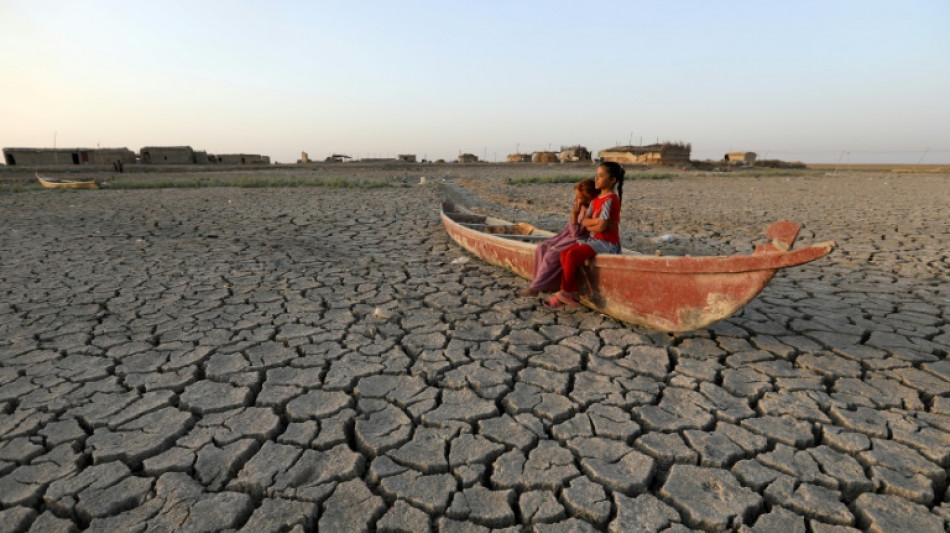
Scientists blame climate change for 'extreme drought' in Iraq, Iran and Syria / Photo: Asaad NIAZI - AFP/File

 What scientists know so far about Nepal's deadly floods

 US general visits Colombia to discuss war on drugs

 Meta settlement puts social media industry on notice: 'There will be more'
 NFL owners approve record Seahawks sale

 Nigerian armed groups net nearly $6 mn in ransoms: study

 Savio scores on debut as Spurs advance in League Cup

 Mbappe hits treble as Real Madrid thrash Real Sociedad

 At Dollywood, superfans honor the late singer and local hero

 Stocks mixed as oil drops, US inflation stays high

 Bolivia's Paz appoints new economy minister amid bailout talks

 US designates UK-based Palestine Action as foreign 'terrorist group'
 'Rocky Horror Picture Show' star Tim Curry dead at 80
 American Moll wins women's pole vault at Zurich city event

 As Canada takes on US tariffs, what's behind the David and Goliath fight?

 UEFA 'likely' to drop threat to boycott FIFA tournaments: source

 US disrupts platforms allegedly used by Chinese hackers

 The foreign tourists missing in Nepal's flash floods

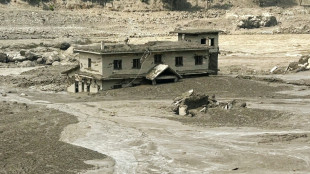 Hundreds missing after Nepal-Tibet flood kills 98

 CIA director was on 'semi-routine' mission in Moscow: Trump
 Aldeguer switches to Rossi's VR46 for next season

 Rent TRON Energy and Reduce USDT Fees : TronBid Expands Marketplace

 Pakistan captain Babar Azam returns against England '90 percent fit'

 Stocks mixed as oil drops, inflation stays high

 Improving standards transform pole vault as spectacle, says Duplantis

 India close in on win despite Sri Lanka fightback in second Test
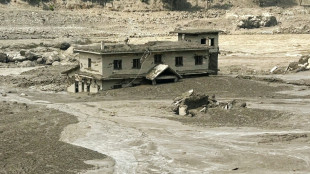
The "extreme" drought gripping Iraq, Syria and Iran would not have occurred without climate change caused primarily by burning fossil fuels, scientists said Wednesday, warning that punishing dry spells will become more intense as the world warms.
High temperatures due to human-caused climate change made the drought "much more likely to happen" -- about 25 times more likely in Syria and Iraq and 16 times more likely in Iran, according to the World Weather Attribution (WWA) group.
"Human-induced climate change has increased the intensity of such a drought such that it would not have been classified as a drought in a 1.2C cooler world," said the scientists.
It found that existing vulnerability from "years of conflict and political instability" also reduced people's ability to respond to the drought, sparking a "humanitarian disaster".
The research focused on the period from July 2020 to June 2023 in two regions where impacts have been most severe: Iran, and the basin of the Tigris and the Euphrates, the rivers that cross Syria and Iraq.
Both regions are currently experiencing an "extreme drought" as classified by the US Drought Monitor scale, said the scientists in a statement.
"After quite good rains in 2020 and good harvests, three years of very low rainfalls followed with very high temperatures led to a drought with very severe impacts on agricultural access to potable water," said co-author Friederike Otto, of the Grantham Institute at Imperial College London.
- 'Not so optimistic' -
In an online briefing, co-author Mohammad Rahimi from Iran's Semnan University, called for better resource management.
"Historically we didn't have a lot of rain so this is normal for our region, but the increase in temperature is a new topic," he said.
Rising temperatures in coming years threaten to evaporate much of the region's precipitation, according to Rahimi.
"We anticipate that we will have more evaporation and transpiration from the plants so am not so optimistic for the future," he added.
In Iraq, one of the world's leading oil producers, and in war-torn Syria, AFP journalists regularly observe the repercussions of climate change and the drought's impacts on the most vulnerable populations.
Both countries have seen a drastic drop in agricultural production in recent years, particularly among wheat farmers.
Reduced river flows and water pollution have left little catch for fishermen.
- Water stress -
By September 2022, the drought had displaced nearly two million people living in rural areas in Syria, according to the WWA.
In Iran, water shortages have "led to tensions with neighbouring countries" and soaring food prices, the statement said.
Conflicts over water are also on the rise in Iraq, where a recent UN report found one in five citizens in the country of 43 million people already suffered from water insecurity.
High levels of water stress are exacerbated by a multitude of factors, including inefficient irrigation methods, outdated water treatment plants and rapid population growth.
Key water systems are also increasingly sabotaged during conflicts.
The scientists warned that "long-lasting severe droughts like these are no longer rare events".
Instead, they can be expected to occur once every decade in Syria and Iraq, and twice every decade in Iran.
"With every degree of warming, Syria, Iraq and Iran will become even harsher places to live," said Rahimi.
C.Cassis--PC