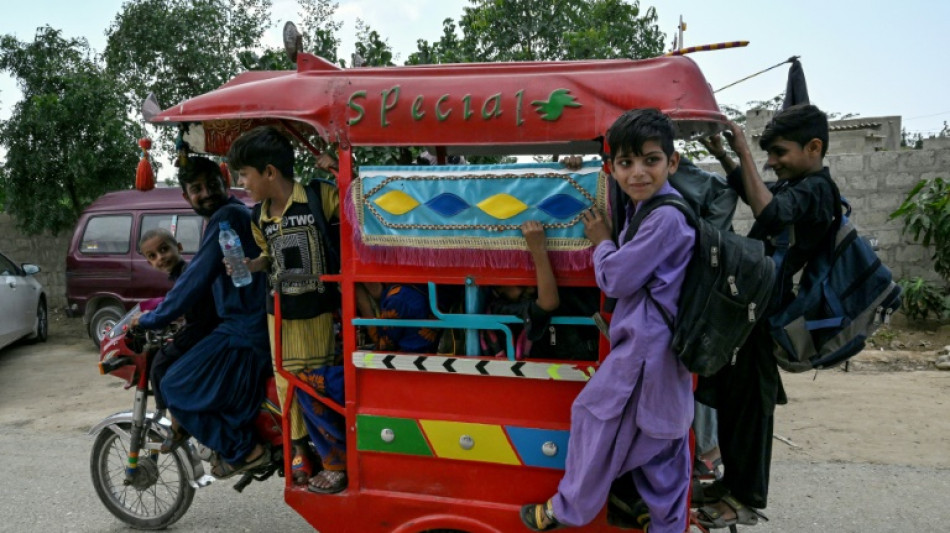
'Education apartheid': schooling in crisis in Pakistan / Photo: Asif HASSAN - AFP

 Rodri arrives at Barcelona to complete 'dream' move
 Discord suspends livestreams in Brazil after teen's suicide
 Tupac Shakur's accused killer was out for 'revenge', jury hears

 Netanyahu presses role for US general in Hamas disarmament

 US-Palestinian says 'terrified' as he returns to property besieged by settlers

 Amboss Opens Affiliate Program: Earn Recurring Bitcoin Commissions by Growing Bitcoin Payments
 Netanyahu, Kushner discuss US general for Hamas disarmament: Israeli official
 Scottish FA withdraws support for FIFA boss Infantino

 Belgium fire halts short of German border, but not 'contained'
 Number one Shi suffers shock first-round exit at badminton worlds

 Kolisi and Nche may miss South Africa Test against New Zealand
 Trump threatens Oman: latest developments in US-Iran war

 Stocks lower as Hormuz concerns and high oil prices persist

 Crowds turn out for 'Total Eclipse' singer Bonnie Tyler's funeral

 Mali jails junta-critic broadcaster, influencer for seven years

 'Nowhere to run': Indonesian quake survivors plead for help
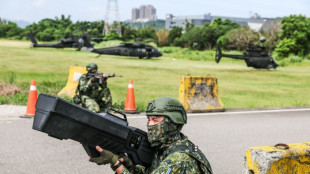
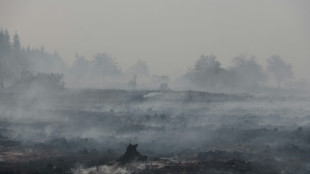 Belgium fire makes 'limited' spread overnight, more help on way

 Vingegaard brings curtain down on season
 Dickwella, Dinusha hit fifties as Sri Lanka fight back
 Bangladesh Test cricket reboot delivers in style with historic win

 Virgin moves closer to launching Eurostar rival in 2030
 Indian marble waste dump becomes unlikely tourist attraction

 Coach says Australia 'let standards slip' in shock Bangladesh loss

 Hawaii recovery efforts begin as Lala downgraded, moves west

 Food safety crackdown snares Mumbai's famed restaurants
Aneesa Haroon drops off her tattered school bag at her rural home in Pakistan and hurriedly grabs lunch before joining her father in the fields to pick vegetables.
The 11-year-old's entry into school at the age of seven was a negotiation between teachers and her parents in her farming village on the outskirts of Karachi.
"Initially, many parents were not in favour of educating their children," headteacher Rukhsar Amna told AFP.
"Some children were working in the fields, and their income was considered more valuable than education."
Pakistan is facing a severe education crisis, with more than 26 million children out of school, the majority in rural areas, according to official government figures -- one of the highest rates in the world.
This weekend, Pakistan will host a two-day international summit to advocate for girls' education in Muslim countries, attended by Nobel Peace laureate and education activist Malala Yousafzai.
In Pakistan, poverty is the biggest factor keeping children out of classrooms, but the problem is worsened by inadequate infrastructure and underqualified teachers, cultural barriers and the impacts of climate change-fuelled extreme weather.
In the village of Abdullah Goth on the outskirts of Karachi, the non-profit Roshan Pakistan Foundation school is the first in decades to cater to the population of over 2,500 people.
"There was no school here for generations. This is the first time parents, the community and children have realised the importance of a school," said Humaira Bachal, a 36-year-old education advocate from the public and privately funded foundation.
Still, the presence of a school was just the first hurdle, she added.
Families only agreed to send their children in exchange for food rations, to compensate for the loss of household income that the children contributed.
- 'Education emergency' -
In Abdullah Goth, most children attend school in the morning, leaving them free to work in the afternoon.
"Their regular support is essential for us," said Aneesa's father, Haroon Baloch, as he watched his daughter and niece pick okra to sell at the market.
"People in our village keep goats, and the children help graze them while we are at work. After finishing grazing, they also assist us with labour tasks."
Education in Pakistan is also increasingly impacted by climate change.
Frequent school closures are announced due to heavy smog, heatwaves and floods, and government schools are rarely equipped with heating or fans.
In the restive provinces of Balochistan and Khyber Pakhtunkhwa, education faces significant setbacks due to ongoing militancy, while classes are routinely disrupted in the capital Islamabad due to political chaos.
Although the percentage of out-of-school children aged between five and 16 dropped from 44 percent in 2016 to 36 percent in 2023, according to census data, the absolute number rises each year as the population grows.
Girls all across the country are less likely to go to school, but in the poorest province of Balochistan, half of girls are out of school, according to the Pak Alliance for Maths and Science, which analysed government data.
Cash-strapped Pakistan's Prime Minister Shehbaz Sharif declared an "education emergency" last year, and said he would increase the education budget from 1.7 percent of GDP to 4 percent over the next five years.
- 'Education apartheid' -
Public schools funded by the government offer free education but struggle with limited resources and overcrowding, creating a huge market for private schools whose costs can start from a few dollars a month.
In a parallel system, thousands of madrassas provide Islamic education to children from the poorest families, as well as free meals and housing, but often fail to prepare students for the modern world.
"In a way, we are experiencing an education apartheid," said Adil Najam, an international relations professor at Boston University who has researched Pakistan's education system.
"We have at least 10 different systems, and you can buy whatever quality of education you want, from absolutely abysmal to absolutely world-class.
"The private non-profit schools can prime the pump by putting (out) a good idea, but we are a country of a quarter billion, so these schools can't change the system."
Even young student Aneesa, who has set her mind on becoming a doctor after health professionals visited her school, recognises the divide with city kids.
"They don't work in field labour like we do."
In the small market of Abdullah Goth, dozens of children can be seen ducking in and out of street-side cafes serving truck drivers or stacking fruit in market stalls.
Ten-year-old Kamran Imran supports his father in raising his three younger siblings by working at a motorcycle workshop in the afternoons, earning 250 rupees ($0.90) a day.
Muhammad Hanif, the 24-year-old owner of the workshop, does not support the idea of education and has not sent his own children to school.
"What's the point of studying if after 10 to 12 years, we still end up struggling for basic needs, wasting time and finding no way out?" he told AFP.
Najam, the professor, said that low-quality education was contributing to the rise in out-of-school children.
Parents, realising their children cannot compete for jobs with those who attended better schools, instead prefer to teach them labour skills.
"As big a crisis as children being out of school is the quality of the education in schools," said Najam.
P.L.Madureira--PC