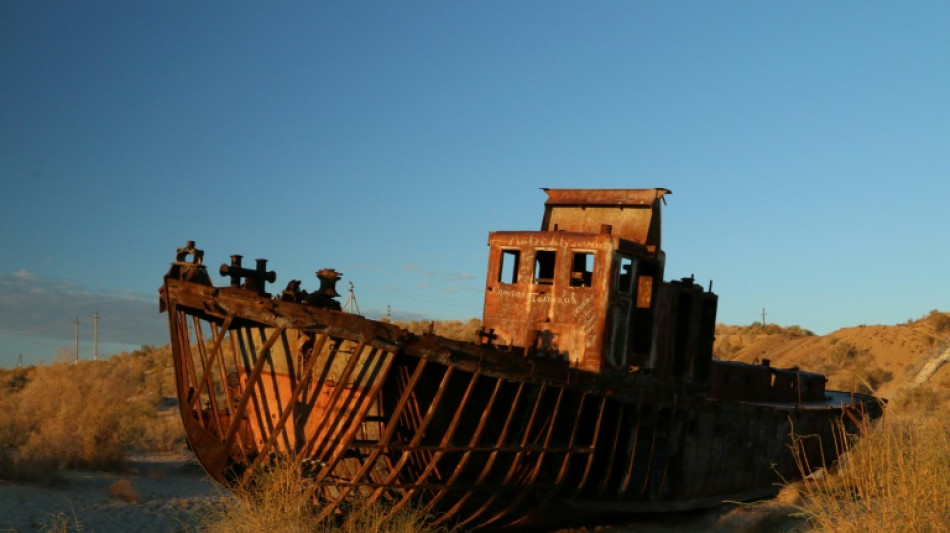
Kazakhstan says part of Aral Sea has nearly doubled in volume / Photo: Sebastien BERGER - AFP

 Radical Numerics develops offline AI tool to detect engineered pathogens

 Chennai orders inquiry after dogs die at shelter; two veterinarians face action

 Startup turns Chennai’s history and culture into an interactive world

 Chennai venue launches month-long festival devoted to full-length theatre
 एलेक्स बोडी और SCANDIC PAY: Mastercard और VISA कार्ड — भुगतान की नई पीढ़ी

 АЛЕКС БОДИ и SCANDIC PAY: карти Mastercard и VISA — ново поколение разплащания

 أليكس بودي وSCANDIC PAY: بطاقات Mastercard وVISA — جيل جديد من المدفوعات

 ALEX BODI 與 SCANDIC PAY:Mastercard 與 VISA 卡——新一代支付方式

 ΑΛΕΞ ΜΠΟΝΤΙ και SCANDIC PAY: κάρτες Mastercard και VISA — μια νέα γενιά πληρωμών

 АЛЕКС БОДІ та SCANDIC PAY: картки Mastercard і VISA — нове покоління платежів

 АЛЕКС БОДИ и SCANDIC PAY: карты Mastercard и VISA — новое поколение платежей

 ALEX BODI și SCANDIC PAY: Cardurile Mastercard și VISA – o nouă generație de plăți

 John Park’s Agency Takes Legal Action Over Unauthorized 'McDonald’s Order Rap' Distribution

 Best Pet Advent Calendars for Christmas 2026: Dog Treats and Cat Toys

 Grattan Institute Releases Blueprint to Target Specialists Over Excessive Fees

 Arizona Science Center Hosts Girls in STEM Astro Adventures for Students

Kazakhstan said on Monday the northern part of the Aral Sea had nearly doubled in volume since 2008, a rare environmental success story in a region plagued by pollution.
The Aral Sea between Uzbekistan and Kazakhstan was once the fourth largest lake in the world, before Soviet irrigation projects caused most of it to dry up.
The transformation of the freshwater sea -- once 40 metres (130 feet) deep and spanning 68,000 square kilometres (176,000 square miles) -- has been dubbed one of the world's worst environmental catastrophes.
Since 2008, the volume of water in the northern, smaller part of the sea has "increased by 42 percent and reached 27 billion cubic metres (950 billion cubic feet)", the Central Asian republic's water resources ministry said.
This was "thanks to the implementation of Phase One of the (Northern) Aral Sea conservation project", the ministry told AFP.
The scheme, funded jointly by the Kazakh government and the World Bank, has involved constructing new infrastructure to prevent water flowing out of the sea.
In 2024 alone, authorities directed 2.6 billion cubic metres of water from the Syr Darya river into the northern part, reducing the salinity of the water by a factor of almost four and promoting aquatic life, it said.
Efforts to save the Aral Sea have required close cooperation between the five former Soviet republics of Central Asia, who set annual water quotas for the Amu Darya and Syr Darya, the two rivers that feed the Aral.
Under the Soviet Union, the rivers were diverted to use for agriculture -- mainly for cotton and rice cultivation, causing the sea to shrink by up to 90 percent in size from the 1960s to the 2010s.
By the late 1980s, the sea had split into two sections -- a larger section on the Uzbek side that has mostly dried out and a smaller section in the northern Kazakh side which has become the focus of conservation efforts.
The drying of the Aral Sea has caused multiple animal species to go extinct and virtually ended human activity in the area.
In addition, winds have carried tens of millions of tonnes of salt and toxic dust from the dried-up lake bed across Central Asia, causing cancer and respiratory diseases.
A.S.Diogo--PC