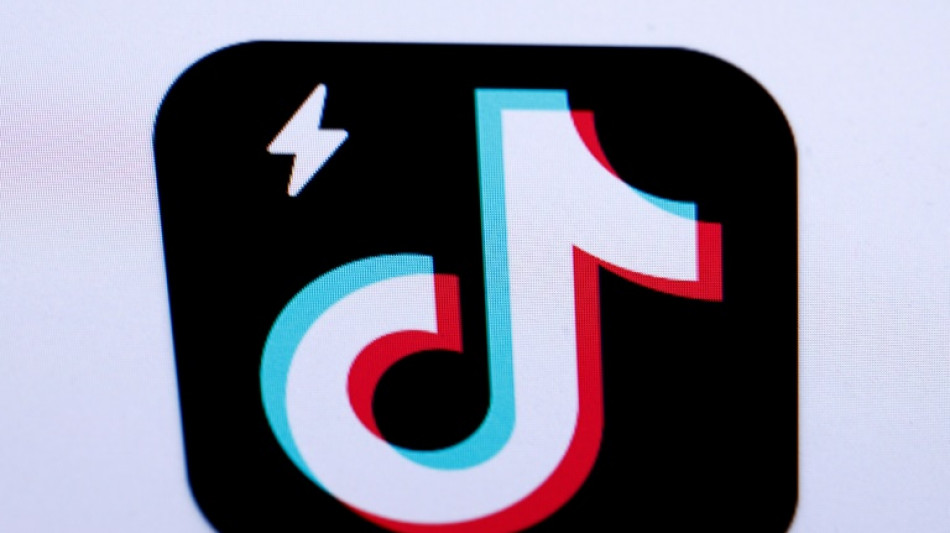
TikTok's journey from fun app to US security concern / Photo: Kiran RIDLEY - AFP

 Bipartisan backlash as Trump scales back US-South Korea drills

 'Never seen one like it': German pensioners flee wildfire

 Ipswich sign Enciso and Ouattara in double raid on Strasbourg

 UN laments 'unacceptable' toll of 350 aid workers killed in 2025

 Former child star actress Hayden Panettiere dead at 36

 Pakistan captain Babar Azam doubtful for England opener
 Pentagon inks Tomahawk deal amid reports of missile shortfall

 Rain halts India push after Dinusha century lifts Sri Lanka

 Dinusha hits century as Sri Lanka post 284 in first India Test

 Stocks steady as investors weigh US rate path

 Taiwan's leader says government to propose record defence spending for 2027

 Cambridge head slams 'feeding frenzy' over dead academic

 Ebola outbreak now DR Congo's deadliest ever

 Germany's coalition split over putting climate in constitution

 Ukraine badminton star: 'How can you feel normal when bombs are falling?'

 Rain brings respite as Belgium wrestles massive wildfire

 Most stocks rise as US data ease rate fears but fuel economic worries

 India take control of Galle Test as Sri Lanka slump to 99-5

 Australia's mushroom murderer appeals conviction

 The Nigerian fishing community being eaten up by the Atlantic
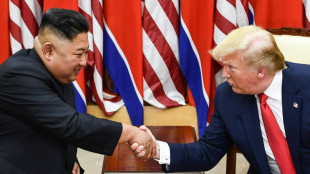
 Kushner to meet Netanyahu after talks with Hamas on Gaza plan

 Photos, memories all that remain for Colombia's bereaved after quake

 Sabalenka squeezes out win on sixth match point in Cincinnati

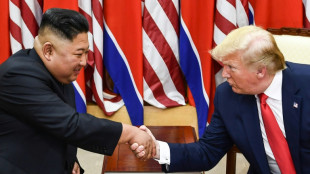 Trump says US scaling back military drills with South Korea hours before start
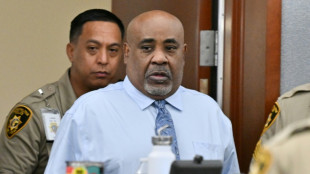
 Jason Arday: UK academic who died amid plagiarism storm
As a law that could get TikTok banned in the United States is poised to go into effect, here is a look at the rise of the video-sharing social media platform.
- Genesis -
In 2016, Beijing-based ByteDance launched Douyin, an app for sharing short videos, in the Chinese market.
ByteDance released TikTok for the international market the following year, shortly before buying "lip-synching" app Musical.ly and merging it into TikTok.
The social network became a hit, with its algorithm serving up endless collections of short, looping and typically playful videos posted by users.
- Pandemic boom -
TikTok's popularity soared during the Covid-19 pandemic declared in 2020, as people enduring lockdowns relied on the internet for diversion and entertainment.
As a result, authorities worldwide began eyeing TikTok's influence and addictive appeal.
TikTok became one of the most downloaded apps in the world, as officials grew increasingly wary of the potential for the Chinese government to influence ByteDance or access user data.
India banned TikTok in July 2020 due to tensions with China.
- Targeted by Trump -
While Donald Trump was US president in 2020, he signed executive orders to ban TikTok in the United States.
Trump accused TikTok, without proof, of siphoning off US users' data to benefit Beijing and of censoring posts at the direction of Chinese officials.
Trump's decision was made as his government clashed with Beijing on an array of issues.
During a failed bid for reelection in 2020, the Republican continued to campaign on an anti-China message.
Between legal challenges and Trump's loss to Joe Biden in that year's presidential election, the executive orders did not take effect.
- Billion mark -
In September 2021, TikTok announced it had one billion monthly users worldwide.
But concerns grew about TikTok users facing risks of addiction, propaganda and spying.
In 2022, BuzzFeed reported that ByteDance employees based in China had accessed TikTok users' non-public information.
ByteDance tried to cool privacy concerns by hosting user data on servers managed in the United States by Oracle.
The move did not ease concerns, however, with TikTok banned from devices used by the US military.
An array of other government agencies and academic institutes followed suit, forbidding members from using TikTok.
TikTok's Singaporean chief executive Shou Chew was grilled by members of the US Congress during a six-hour hearing in March 2023.
- Sell or go -
TikTok was back in the hot seat in the United States in 2024 when President Joe Biden authorized a law requiring TikTok to be banned if ByteDance does not sell the app to a company not associated with a national security adversary.
Washington's stated aim was to cut the risk of Beijing spying on or manipulating TikTok users, particularly the 170 million US users of the app.
TikTok remains adamant that it has never shared user data with the Chinese government or done its bidding at the social network.
ByteDance sued the US government, arguing the law violates free speech rights.
A final decision in that case was made Friday by the US Supreme Court, which upheld a law going into effect on January 19.
In a major defeat for TikTok, the court ruled that the law does not violate free speech rights and that the US government had demonstrated legitimate national security concerns about a Chinese company owning the app.
President-elect Trump, who returns to office on Monday, has signaled he might intervene on TikTok's behalf.
The company, however, has said that unless the outgoing Biden administration makes "definitive" assurances that the law will not be implemented, it would be forced to "go dark."
O.Gaspar--PC