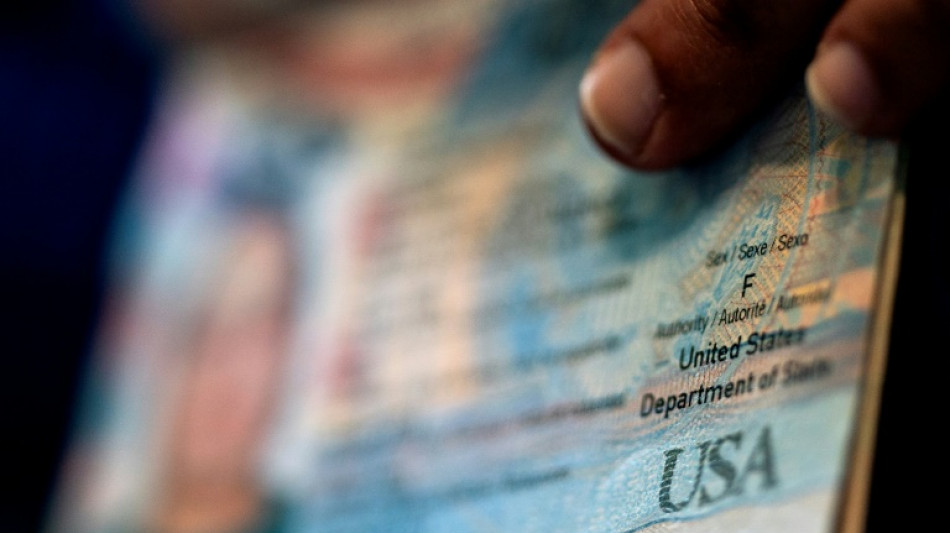
Trump's birthright citizenship move challenges US identity: analysts / Photo: Stefani Reynolds - AFP

 Bipartisan backlash as Trump scales back US-South Korea drills
 'Never seen one like it': German pensioners flee wildfire

 Ipswich sign Enciso and Ouattara in double raid on Strasbourg

 UN laments 'unacceptable' toll of 350 aid workers killed in 2025

 Former child star actress Hayden Panettiere dead at 36

 Pakistan captain Babar Azam doubtful for England opener
 Pentagon inks Tomahawk deal amid reports of missile shortfall

 Rain halts India push after Dinusha century lifts Sri Lanka
 Dinusha hits century as Sri Lanka post 284 in first India Test
 Stocks steady as investors weigh US rate path
 Taiwan's leader says government to propose record defence spending for 2027

 Cambridge head slams 'feeding frenzy' over dead academic

 Ebola outbreak now DR Congo's deadliest ever

 Germany's coalition split over putting climate in constitution

 Ukraine badminton star: 'How can you feel normal when bombs are falling?'

 Rain brings respite as Belgium wrestles massive wildfire
 Most stocks rise as US data ease rate fears but fuel economic worries

 India take control of Galle Test as Sri Lanka slump to 99-5

 Australia's mushroom murderer appeals conviction

 The Nigerian fishing community being eaten up by the Atlantic
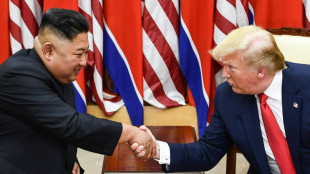
 Kushner to meet Netanyahu after talks with Hamas on Gaza plan

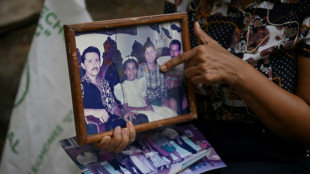 Photos, memories all that remain for Colombia's bereaved after quake
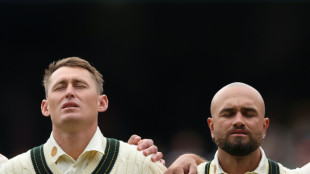
 Sabalenka squeezes out win on sixth match point in Cincinnati

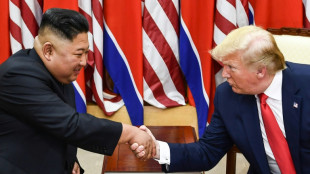 Trump says US scaling back military drills with South Korea hours before start
 Jason Arday: UK academic who died amid plagiarism storm
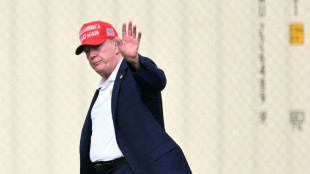
Donald Trump's plan to end birthright citizenship could fundamentally reshape America, analysts said Tuesday, overturning a principle that has underpinned the country for more than 150 years.
Moments after being sworn into office, the Republican president came out swinging, with a raft of executive orders aimed at slashing migration and changing how the US determines who is allowed to live here.
Most eye-catchingly, Trump took aim at previsions guaranteed in the 14th Amendment of the US Constitution that grant citizenship to anyone born on US soil.
"All persons born or naturalized in the United States, and subject to the jurisdiction thereof, are citizens of the United States and of the state wherein they reside," reads the document, which was ratified in 1868 as the postbellum US sought to knit itself back together.
If implemented, the order Trump signed on Tuesday would prevent the federal government from issuing passports, citizenship certificates or other documents to children whose mothers are in the country illegally or temporarily, and whose fathers are not US citizens or permanent residents.
Gil Guerra, an immigration policy analyst at US political think tank the Niskanen Center, said the notion of birthright citizenship is a defining characteristic of the American experiment.
The fact that everyone born here has a real stake in the country galvanizes a sense of cohesion that is absent in other systems, he said.
"It has helped assimilation by giving people who are born here an immediate sense of belonging," he told AFP.
"I think what people oftentimes overlook is that it also places responsibilities on the children of immigrants to see themselves as Americans and to be patriotic."
That feeds into the fierce pride that many Americans feel in their flag, their national anthem and in institutions like the military.
Making that precarious could have implications for social stability, said Guerra.
The modern United States has not suffered from the pockets of separatism that beset other world powers, like Russia, where tranches of the population feel like they don't belong.
"The US has managed to completely avoid that, because our political identity has for centuries now been borne on the premise that, if you're born in the US, you are an American," said Guerra.
- Supreme court -
Aaron Reichlin-Melnick, a senior fellow at the American Immigration Council, said the 14th Amendment was "crystal clear," and muddying the waters would have implications for people well beyond the babies born to illegal immigrants.
"All you needed before was a birth certificate proving you were born here... now, you'd have to show extensive documentation of your ancestry and your parents' citizenship," he told AFP.
"That makes everybody's life harder."
Trump supporters who fret about changing demographics sometimes complain that new arrivals and their children take resources that would otherwise be available for the established population.
But, says Guerra, the expansive approach to citizenship the US has historically taken has benefits to that very population -- whose own birth rate is plunging -- in terms of having enough working-age people to fund social security programs and to do the labor that a dynamic economy requires.
The demographic edge the US enjoys is also crucial in times of war.
Not "having a young population that can potentially serve in the military, in the events of conflict... could potentially endanger the United States," he said.
Trump's executive order faced an immediate legal challenge, with 22 states -- including California and New York -- suing to prevent its implementation.
The issue will almost certainly end up in the US Supreme Court.
While some legal scholars think Trump's efforts will come unstuck, a 6-3 conservative majority -- three of whom were appointed by Trump -- may have different ideas.
"I don't think it's inconceivable (that it will be upheld), which is what I would have said in 2019," Amanda Frost, a law professor at the University of Virginia told The New York Times.
"The ground is shifting."
N.Esteves--PC