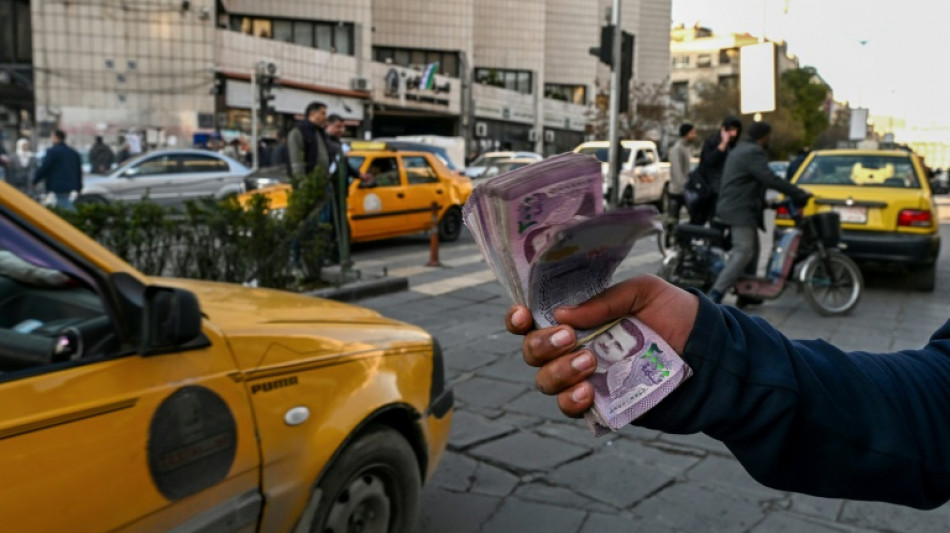
Syria's economy reborn after being freed from Assad / Photo: LOUAI BESHARA - AFP

 Stocks lower as Hormuz concerns and high oil prices persist
 Crowds turn out for 'Total Eclipse' singer Bonnie Tyler's funeral
 Mali jails junta-critic broadcaster, influencer for seven years
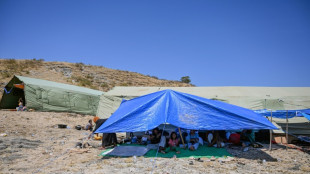 'Nowhere to run': Indonesian quake survivors plead for help
 Belgium fire makes 'limited' spread overnight, more help on way
 Vingegaard brings curtain down on season
 Dickwella, Dinusha hit fifties as Sri Lanka fight back
 Bangladesh Test cricket reboot delivers in style with historic win

 Virgin moves closer to launching Eurostar rival in 2030
 Indian marble waste dump becomes unlikely tourist attraction
 Coach says Australia 'let standards slip' in shock Bangladesh loss
 Hawaii recovery efforts begin as Lala downgraded, moves west
 Food safety crackdown snares Mumbai's famed restaurants
 Trump says US scaling back military drills with Seoul hours before start
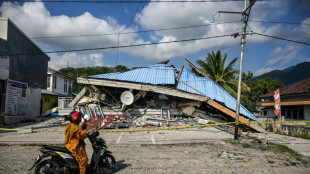 Nearly 13,000 displaced after deadly Indonesian quake
 Axe hangs over Australian batters after Darwin 'disaster'

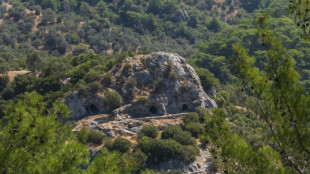 Is this cave in Turkey where Homer wrote 'The Odyssey'?
 Winning back walls from gangs, artists fill El Salvador's towns with color
 Opening arguments expected in Tupac murder trial
 As machinery removes rubble, hopes for survivors from Colombian quake dwindle
 Trump says US scaling back military drills with South Korea
 Zambia's Hichilema takes early lead in reelection bid
 Sabalenka squeezes out a win on sixth match point in Cincinnati

 Duplantis dominant, Hunt hits four and Asher-Smith makes history
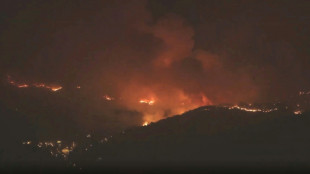 Spanish soldier dies in Aragon wildfire
When Bashar al-Assad ruled Syria, merchants like Youssef Rajab kept much of their imported stock hidden for fear of arrest for breaking the law.
But after an Islamist-led coalition toppled Assad in a lightning offensive last month, Rajab put previously banned foreign goods such as chocolate, biscuits and shampoo back on the shelf.
Such products are now openly on sale in Damascus, and foreign currency is once again traded without fear.
Under Assad, Syria was mired in corruption, under heavy economic sanctions, and in seemingly endless crisis.
Foreign currency was in carefully controlled supply, and engaging in its trade or in the sale of banned goods could have meant a stay in one of the country's notorious jails.
"A day after the regime fell, I brought out all the foreign merchandise I'd been hiding and put it for sale, without having to worry," Rajab told AFP.
"It was a strange feeling, but I was happy," added the 23-year-old, speaking beside shelves stacked with imported products.
Previously, the few imported goods that were available were smuggled in from Lebanon by traders who risked arrest, or were acquired by bribing officials as businessmen controlled imports to a country wracked by 13 years of civil war.
"It's true that now we have great freedom to engage in business, but it has also been chaotic," said Rajab.
On every street corner, makeshift money changers now tout for business from passers-by.
"It's a job that was done in secret before," said Amir Halimeh, sitting at a small table on which there were wads of Syrian pounds and US dollars.
"We used to refer to dollars as 'mint' or 'parsley' or something else green" to bypass surveillance, he added.
- Currency market 'freed' -
Assad's government kept a firm grip on foreign currency dealings as a way to control the economy, and any freelance operators faced punishment of seven years in prison and a heavy fine.
"The market has now been completely freed... as has the exchange rate," the moneychanger said.
The pound lost about 90 percent of its value against the US dollar in 2011, the year Syria descended into civil war after a brutal crackdown on democracy protests.
Now it is being traded at between 11,000 and 12,000 to the greenback.
Before Damascus fell to the coalition led by the Hayat Tahrir al-Sham group, the black market rate soared to 30,000 pounds for one dollar.
"The economy in the future Syria will be free and competitive," the interim government's Economy Minister Bassel Abdel Hanan told reporters.
He said the new authorities would implement "policies aimed at protecting domestic output, supporting the industrial sector and protecting agriculture".
They have yet to elaborate on their future economic plans during the three-month interim phase that began in December.
Economics professor Adnan Suleiman of Damascus University said that "the economic model that existed before the fall of the regime... was a market economy", but a "distorted" one.
- Sanctions -
"Supply and demand were not free. Instead of competition there was a monopoly," he said of people close to Assad who controlled different sectors of the economy.
In an effort to turn the page, the interim government has been lobbying for international sanctions to be lifted.
Earlier this month, the US Treasury Department announced it was providing additional sanctions relief on some activities for the next six months to ease access to basic services, including fuel and humanitarian aid.
Asaad al-Shaibani, Syria's top diplomat, told the World Economic Forum in Davos on Wednesday: "Removing economic sanctions is the key for the stability of Syria."
They had been imposed for the benefit of Syrians, but are now "against the Syrian people", he said.
"We inherited a collapsed state from the Assad regime, there is no economic system," Shaibani said, adding that "the economy in the future will be open".
Under Assad, fuel sales were a monopoly and were severely limited.
But now vendors openly sell cans of petrol and fuel oil on the streets of the capital -- where new models of car have also made an appearance.
Previously, the import of vehicles was tightly regulated.
Syria's war took a terrible toll not only on the people, but also on its infrastructure.
Damage to power plants and pipelines has caused power cuts lasting up to 20 hours a day.
"The former regime left a huge legacy," said Suleiman.
"The greatest task facing future governments is to finance development and reconstruction."
A.Motta--PC