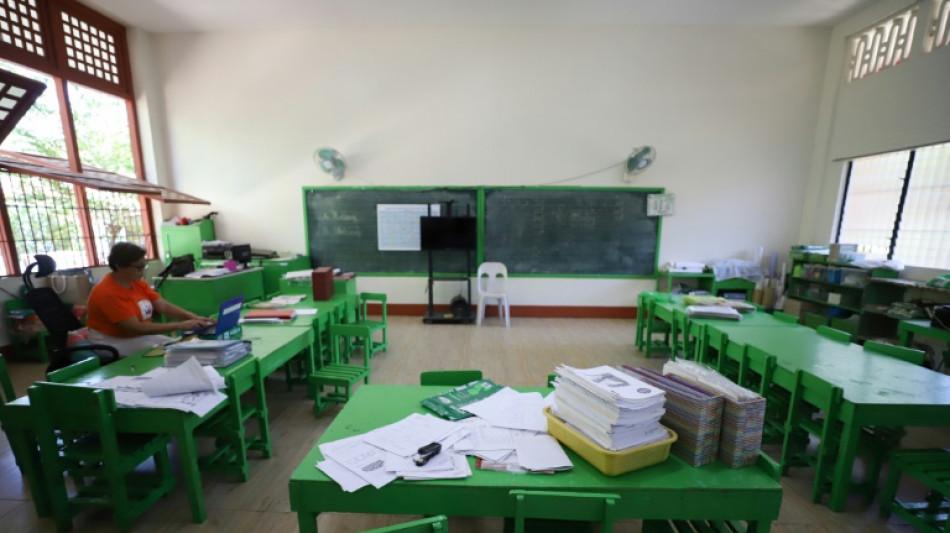
242 mn children's schooling disrupted by climate shocks in 2024: UNICEF / Photo: ARNOLD ALMACEN - AFP

 Mali jails junta-critic broadcaster, influencer for seven years

 'Nowhere to run': Indonesian quake survivors plead for help

 Belgium fire makes 'limited' spread overnight, more help on way

 Vingegaard brings curtain down on season
 Dickwella, Dinusha hit fifties as Sri Lanka fight back

 Bangladesh Test cricket reboot delivers in style with historic win

 Virgin moves closer to launching Eurostar rival in 2030
 Indian marble waste dump becomes unlikely tourist attraction

 Coach says Australia 'let standards slip' in shock Bangladesh loss

 Hawaii recovery efforts begin as Lala downgraded, moves west

 Food safety crackdown snares Mumbai's famed restaurants
 Trump says US scaling back military drills with Seoul hours before start
 Nearly 13,000 displaced after deadly Indonesian quake
 Axe hangs over Australian batters after Darwin 'disaster'

 Is this cave in Turkey where Homer wrote 'The Odyssey'?

 Winning back walls from gangs, artists fill El Salvador's towns with color

 Opening arguments expected in Tupac murder trial

 As machinery removes rubble, hopes for survivors from Colombian quake dwindle

 Trump says US scaling back military drills with South Korea

 Zambia's Hichilema takes early lead in reelection bid
 Sabalenka squeezes out a win on sixth match point in Cincinnati

 Duplantis dominant, Hunt hits four and Asher-Smith makes history

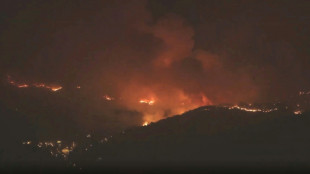 Spanish soldier dies in Aragon wildfire

 PSG beaten by Lens in French Champions' Trophy

 Rybakina, Andreeva race into Cincinnati third round

Extreme weather disrupted the schooling of about 242 million children in 85 countries last year -- roughly one in seven students, the UN children's agency reported Thursday, deploring an "overlooked" aspect of the climate crisis.
Heat waves had the biggest impact, the report showed, as UNICEF's executive director Catherine Russell warned children are "more vulnerable" to extreme weather.
"They heat up faster, they sweat less efficiently, and cool down more slowly than adults," she said in a statement.
"Children cannot concentrate in classrooms that offer no respite from sweltering heat, and they cannot get to school if the path is flooded, or if schools are washed away."
Human activity, including the unrestricted burning of fossil fuels over decades, has warmed the planet and changed weather patterns.
Global average temperatures hit record highs in 2024, and over the past few years they temporarily surpassed a critical 1.5 degrees Celsius warming threshold for the first time.
That has left the wet periods wetter and the dry periods dryer, intensifying heat and storms and making populations more vulnerable to disasters.
The 242 million figure is a "conservative estimate," the UNICEF report said, citing gaps in the data.
Students from kindergarten to high school saw classes suspended, vacations moved, reopenings delayed, timetables shifted and even schools damaged or destroyed over the year due to climatic shocks, the available data showed.
At least 171 million children were affected by heat waves -- including 118 million in April alone, as temperatures soared in Bangladesh, Cambodia, India, Thailand and the Philippines.
In the Philippines in particular thousands of non-air conditioned schools were closed, with children at risk of hyperthermia.
- Risk rises with temperatures -
September, which marks the start of the school year in many countries, was also heavily impacted.
Classes were suspended in 18 countries, notably due to the devastating typhoon Yagi in East Asia and the Pacific.
South Asia was the region hardest hit by climate-related school interruptions, with 128 million schoolchildren affected.
India had the most children affected -- 54 million, mainly by heat waves. Bangladesh had 35 million also affected by heat waves.
The figures are likely to rise in coming years as temperatures continue going up, with half the world's children -- around one billion -- living in countries at high risk of climate and environmental shocks.
If the emission of greenhouse gases continues on its current trajectory, eight times as many children will be exposed to heat waves in 2050 as in 2000, according to UNICEF projections.
More than three times as many would be exposed to extreme floods and 1.7 times more to wildfires, the projections showed.
Beyond the immediate impacts, UNICEF voiced fears that the damage could increase the risk of some children -- girls in particular -- dropping out of school altogether.
Already, some two-thirds of children around the world cannot read with comprehension by age 10, it said, adding: "Climate hazards are exacerbating this reality."
Education is one of the services most frequently disrupted by climate hazards, Russell said.
"Yet it is often overlooked in policy discussions," she warned. "Children's futures must be at the forefront of all climate-related plans and actions."
UNICEF called for investment in classrooms that are more resistant to climate hazards.
C.Amaral--PC