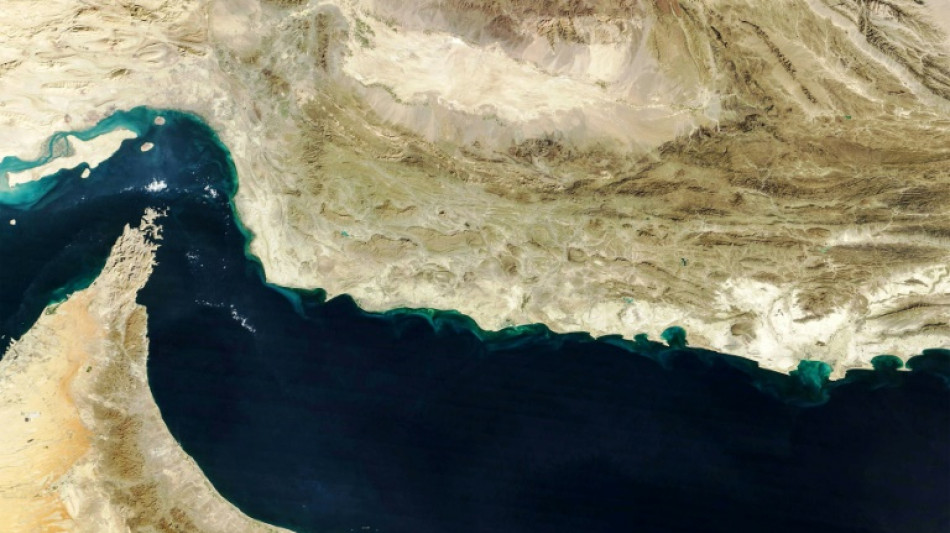
Iran mulls moving capital to 'lost paradise' on southern coast / Photo: - - NASA Earth Observatory/AFP

 Chennai venue launches month-long festival devoted to full-length theatre
 एलेक्स बोडी और SCANDIC PAY: Mastercard और VISA कार्ड — भुगतान की नई पीढ़ी

 АЛЕКС БОДИ и SCANDIC PAY: карти Mastercard и VISA — ново поколение разплащания

 أليكس بودي وSCANDIC PAY: بطاقات Mastercard وVISA — جيل جديد من المدفوعات

 ALEX BODI 與 SCANDIC PAY:Mastercard 與 VISA 卡——新一代支付方式

 ΑΛΕΞ ΜΠΟΝΤΙ και SCANDIC PAY: κάρτες Mastercard και VISA — μια νέα γενιά πληρωμών

 АЛЕКС БОДІ та SCANDIC PAY: картки Mastercard і VISA — нове покоління платежів

 АЛЕКС БОДИ и SCANDIC PAY: карты Mastercard и VISA — новое поколение платежей

 ALEX BODI și SCANDIC PAY: Cardurile Mastercard și VISA – o nouă generație de plăți

 John Park’s Agency Takes Legal Action Over Unauthorized 'McDonald’s Order Rap' Distribution

 Best Pet Advent Calendars for Christmas 2026: Dog Treats and Cat Toys

 Grattan Institute Releases Blueprint to Target Specialists Over Excessive Fees

 Arizona Science Center Hosts Girls in STEM Astro Adventures for Students

 New Turkish Cafe, Japanese BBQ, and Korean Restaurants Open Across East Bay

Faced with myriad problems including gridlocked traffic and a sinking earth surface in its current capital, Iran is considering a drastic solution -- moving it to an altogether different location on the Gulf of Oman.
Though the idea of moving the capital has cropped up on various occasions since the 1979 Islamic Revolution, the proposals were repeatedly shelved as unrealistic due to the massive financial and logistical hurdles.
But reformist President Masoud Pezeshkian, who took office in July, has recently revived the idea, citing Tehran's growing challenges.
These include traffic snarls, water shortages, resource mismanagement, extreme air pollution, as well as subsidence -- the gradual sinking of land mass due to either natural processes or human activity.
In January, government spokeswoman Fatemeh Mohajerani said the authorities were studying the possible relocation.
"The Makran region is being seriously considered," she said, without specifying a timeline.
Makran is a largely undeveloped coastal area on the Gulf of Oman, stretching across Iran's southern, impoverished Sistan-Baluchistan province and part of neighbouring Hormozgan province. It has repeatedly been touted as a frontrunner for the move.
"The 'lost paradise' of Makran must be transformed into the future economic hub of Iran and the region," said Foreign Minister Abbas Araghchi in a Sunday speech.
In September, Pezeshkian said "we have no choice but to move the economic and political centre of the country to the south and near the sea".
Tehran's problems had "only worsened with the continuation of existing policies".
- 'Safe and appropriate' -
The revival of relocation plans has reignited a debate over their necessity, with many highlighting Tehran's historic and strategic significance.
Lawmaker Ali Khazaei said that whatever future city is chosen, it must take into consideration Iran's "rich culture".
Tehran, designated the capital by Agha Mohammad Khan Qajar in 1786, has served as Iran's political, administrative and cultural hub for over two centuries.
Tehran province is currently home to around 18 million people, as well as a floating population of about two million people who commute there during the daytime, according to governor Mohammad Sadegh Motamedian.
The landlocked city sits on a sloping plateau at the foot of the snow-capped Alborz mountain range, blending modern high-rises with historic palaces, bustling bazaars and leafy parks.
Makran is meanwhile known for its fishing villages, sandy beaches and ancient history dating back to the time of Alexander the Great.
Still, many oppose the possible relocation.
"This would be a completely wrong move because Tehran really represents Iran," said 28-year-old engineer Kamyar Babaei, a resident of the capital.
"This city is a symbol of the historic Qajar dynasty... a symbol of modernity, and of urban life," he added.
Similarly, urban planning professor Ali Khaksar Rafsanjani noted Tehran's "strategic location".
The city "is safe and appropriate in emergency and war situations", he told the reformist Etemad newspaper, adding that Makran is on the other hand "very vulnerable" as it sits on the Gulf of Oman.
Former Tehran mayor Pirouz Hanachi says the capital's problems "can be solved" and only required "investment" and taking measures to develop the city.
There was no official estimate for the budget required to tackle Tehran's urban challenges.
But in April 2024, then-interior minister Ahmad Vahidi said relocating the capital could require a budget of "around $100 billion", according to Tehran municipality news website Hamshahri.
- 'Economic hub' -
The local ISNA news agency weighed the pros and cons of moving to Makran, saying the region holds "the potential of becoming an important commercial and economic hub".
But it also noted that the relocation would add to Iran's already heavy financial burdens, in part the result of decades of international sanctions.
Etemad also listed among the advantages of moving to Makran "regional development, access to open water, and reduced vulnerability to earthquakes," as opposed to Tehran which is prone to seismic activity.
But it pointed to the heavy costs and disruption of lives, noting that the move would pose massive logistical challenges.
Another outlet, Khabar Online, also pointed to the Makran region's vulnerability to climate change.
"Climate changes and a lack of water resources in the Makran region, combined with rising temperatures and declining rainfall, have created very fragile environmental conditions that limit the potential of extensive development," it reported, quoting ecologist Hossein Moradi.
For Banafsheh Keynoush, a fellow at the International Institute for Iranian Studies, the choice of Makran could reflect broader strategic ambitions.
"By selecting Makran as possibly the next capital, Iran aims to compete with seaports like Dubai and Gwadar" in neighbouring Pakistan, she said in a post on X.
She added that it would provide a boost to the nearby coastal city of Chabahar "despite sanctions" and, crucially, "reassert [Iran's] role in the Persian Gulf waterway".
E.Raimundo--PC