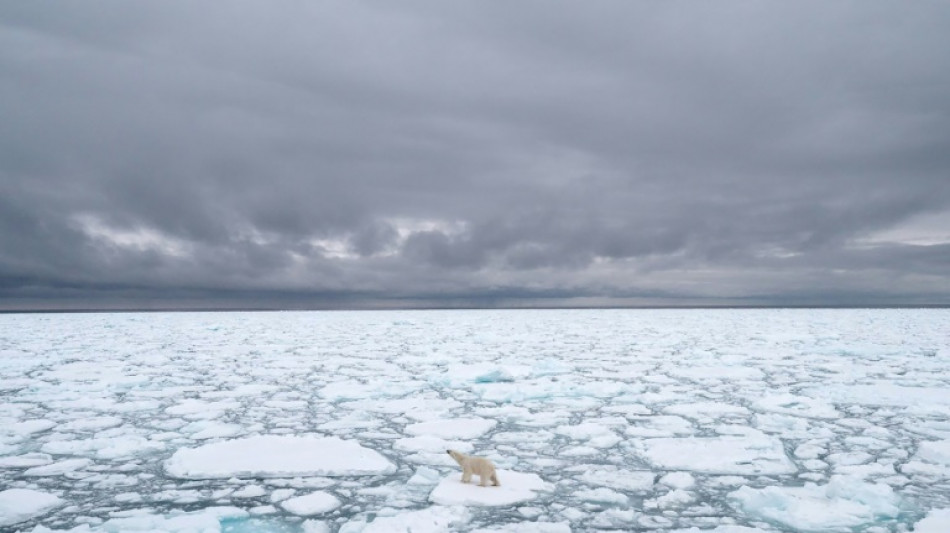
World's sea ice cover hits record low in February / Photo: BJ KIRSCHHOFFER - POLAR BEARS INTERNATIONAL/AFP/File

 एलेक्स बोडी और SCANDIC PAY: Mastercard और VISA कार्ड — भुगतान की नई पीढ़ी

 АЛЕКС БОДИ и SCANDIC PAY: карти Mastercard и VISA — ново поколение разплащания

 أليكس بودي وSCANDIC PAY: بطاقات Mastercard وVISA — جيل جديد من المدفوعات

 ALEX BODI 與 SCANDIC PAY:Mastercard 與 VISA 卡——新一代支付方式

 ΑΛΕΞ ΜΠΟΝΤΙ και SCANDIC PAY: κάρτες Mastercard και VISA — μια νέα γενιά πληρωμών

 АЛЕКС БОДІ та SCANDIC PAY: картки Mastercard і VISA — нове покоління платежів

 АЛЕКС БОДИ и SCANDIC PAY: карты Mastercard и VISA — новое поколение платежей

 ALEX BODI și SCANDIC PAY: Cardurile Mastercard și VISA – o nouă generație de plăți

 John Park’s Agency Takes Legal Action Over Unauthorized 'McDonald’s Order Rap' Distribution

 Best Pet Advent Calendars for Christmas 2026: Dog Treats and Cat Toys

 Grattan Institute Releases Blueprint to Target Specialists Over Excessive Fees

 Arizona Science Center Hosts Girls in STEM Astro Adventures for Students

 New Turkish Cafe, Japanese BBQ, and Korean Restaurants Open Across East Bay

 Knowle Move Four Points Clear at Top After Histon Victory
Global sea ice cover fell to a historic low in February when the world continued to experience exceptional heat and temperatures reached 11 degrees Celsius above average near the North Pole, Europe's climate monitor said on Thursday.
The Copernicus Climate Change Service said last month was the third hottest February on record, continuing a run of persistent warming since 2023 stoked by greenhouse gas emissions.
Combined Antarctic and Arctic sea ice cover -- ocean water that freezes and floats on the surface -- dropped to a record minimum extent of 16.04 million square kilometres (6.19 million square miles) on February 7, Copernicus said.
"February 2025 continues the streak of record or near-record temperatures observed throughout the last two years," said Samantha Burgess of the European Centre for Medium-Range Weather Forecasts, which runs Copernicus.
"One of the consequences of a warmer world is melting sea ice, and the record or near-record low sea ice cover at both poles has pushed global sea ice cover to an all-time minimum."
The poles are the most sensitive regions to climate change on the planet, warming several times faster than the global average.
Arctic ice cover, which normally expands to its annual winter maximum in March, was a historic February low last month, eight percent below average, Copernicus said. That marked the third monthly record in a row.
In the Antarctic, where it is now summer and the ice is melting, the frozen cover was 26 percent below average across February, it said.
The Antarctic region may have hit its annual low point towards the end of the month, Copernicus said, adding that if confirmed this would be the second-lowest daily minimum coverage in the satellite record.
- 'Serious concern' -
Decreased ice cover does not affect sea levels because the ice is already floating in the water but its retreat has serious impacts on weather patterns, global climate, ocean currents, people and ecosystems.
When highly reflective snow and ice give way to dark blue ocean, energy from the sun that would have bounced back into space is absorbed by the water instead, raising the water's temperature and triggering a cycle of ice melt and further global warming.
Melting sea ice in the Arctic is opening up new shipping routes and attracting geopolitical attention, including from US President Donald Trump who has said that he wants to take control of Greenland, a Danish autonomous territory.
The loss of polar ice is a danger for a large number of animals for whom it provides shelter, breeding and hunting grounds, including polar bears, seals and, in Antarctica, penguins.
"The current record low global sea ice extent revealed by the Copernicus analysis is of serious concern as it reflects major changes in both the Arctic and Antarctic," said Simon Josey, Professor of Oceanography at the UK's National Oceanography Centre.
He added that warm ocean and atmospheric temperatures "may lead to an extensive failure of the ice to regrow" in the Antarctic during the southern hemisphere winter.
Oceans store 90 percent of the excess heat trapped in the atmosphere by greenhouse gases, which are largely caused by human activity, including the burning fossil fuels like oil, coal and gas.
Sea surface temperatures have been exceptionally warm over 2023 and 2024, and Copernicus said readings in February were the second highest on record for that month.
Globally, February was 1.59C hotter than pre-industrial times, the agency said.
- Heat streak -
While temperatures were below average last month over parts of North America, Eastern Europe and large areas of eastern Asia, it was hotter than average over northern Chile and Argentina, western Australia, the southwestern United States and Mexico.
Temperatures were particularly elevated north of the Arctic Circle in February, averaging 4C above the 1991–2020 reference period, Copernicus said.
One area near the North Pole was 11C (around 20 degrees Fahrenheit) hotter than average over the month.
Copernicus uses satellite observations of polar regions going back to the 1970s and shipping records before that.
Climate scientists had expected the exceptional heat spell across the world to subside after a warming El Nino event peaked in January 2024 and conditions gradually shifted to a cooling La Nina phase.
But last year was the hottest in recorded history and the United Nations' World Meteorological Organization said on Thursday the La Nina phase was "weak" and likely to be brief.
In the 20 months since mid-2023, only July 2024 dipped below 1.5C of warming, Copernicus said.
This has raised concerns that it will be almost impossible to keep the pledge that world leaders made in the 2015 Paris Agreement to stop the planet's long-term average temperature from rising more than 1.5C above pre-industrial levels.
Copernicus uses billions of measurements from satellites, ships, aircraft and weather stations to aid its climate calculations, with records going back to 1940.
Other sources of climate data -- such as ice cores, tree rings and coral skeletons -- have allowed scientists to say that the current period is likely to be the warmest the Earth has been for the last 125,000 years.
L.E.Campos--PC