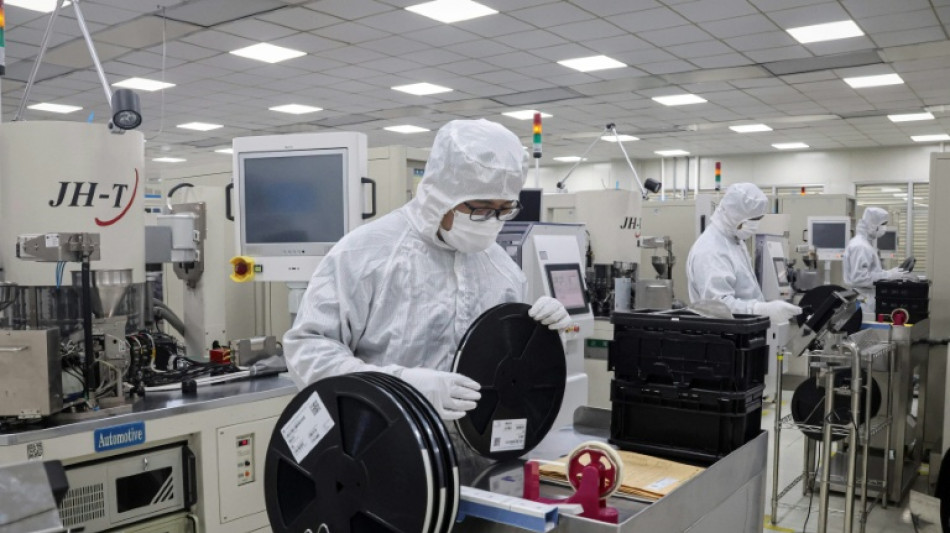
US slams China policies on chips but will delay tariffs to 2027 / Photo: STR - AFP/File

 Physicians Urge Arizona to Ban Medical Gag Clauses and Enable Private Lawsuits

 New Campaign Highlights Knowledge Gaps on Carbon Monoxide Safety Among Americans

 GoodData.AI Launches the Agentic Serving Plane, a New Category of Enterprise Data Infrastructure for AI Agents

 US Government Questions Effectiveness of Waymo’s School Bus Software Fix

 Panthers expected to begin 2027 NRL season away from new stadium

 Sweet As app launches restaurant discovery platform

 MLA seeks inquiry into reported sectarian gestures on Ormeau Road

 Louise O’Reilly attacks Simon Harris over unemployment remarks
US trade officials determined that China should be punished for employing unfair tactics to dominate the semiconductor industry, but will wait 18 months to impose tariffs, American authorities said Tuesday.
A US Trade Representative investigation concluded China's targeting of semiconductors "for dominance is unreasonable and burdens or restricts US commerce and thus is actionable," the agency said in a public notice.
The current tariff level of 0 will be increased "in 18 months on June 23, 2027 to rate to be announced not fewer than 30 days prior to that date," USTR said.
USTR officials launched the probe in December 2024 in the final weeks of Joe Biden's presidency, extending the initiative when US President Donald Trump took office in January.
Trump has been a prolific purveyor of tariffs, unveiling sector-specific levies on steel, autos and other items, as well as broader measures to achieve a variety of policy objectives.
The White House has jousted with Beijing, but reached a broad truce with China after a major escalation in the spring.
The USTR's "Section 301" probe concluded that China had employed "increasingly aggressive and sweeping non-market policies" to dominate semiconductors that have included "massive and persistent" state support of private actors and "wage-suppressing labor practices."
The USTR did not respond to an AFP query on the reason for the 18-month timeframe on tariffs.
E.Paulino--PC

