
Emirates mining company challenges Guinea licence withdrawal / Photo: Georges GOBET - AFP

 Physicians Urge Arizona to Ban Medical Gag Clauses and Enable Private Lawsuits

 New Campaign Highlights Knowledge Gaps on Carbon Monoxide Safety Among Americans

 GoodData.AI Launches the Agentic Serving Plane, a New Category of Enterprise Data Infrastructure for AI Agents

 US Government Questions Effectiveness of Waymo’s School Bus Software Fix

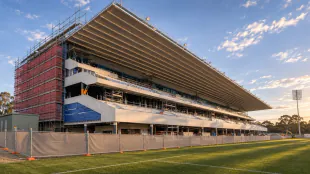 Panthers expected to begin 2027 NRL season away from new stadium

 Sweet As app launches restaurant discovery platform

 MLA seeks inquiry into reported sectarian gestures on Ormeau Road

 Louise O’Reilly attacks Simon Harris over unemployment remarks
Mining company Axis International said Monday it was seeking World Bank arbitration against Guinea for withdrawing its right to operate a major bauxite mine in the west African country.
Guinea, which has been run by a junta since a coup in 2021, has cancelled dozens of licences for international and domestic companies mining bauxite, gold, iron ore or diamonds over recent months.
Axis International, which is headquartered in the United Arab Emirates, had operated Guinea's second-biggest bauxite mine with estimated reserves of more than 800 million tonnes since 2010.
The company said it has appealed to the International Centre for the Settlement of Investment Dispute (ICSID), a World Bank organisation based in Washington, DC, seeking compensation of $28 billion from Guinea's government.
Axis International said in a statement it had previously made several attempts for an amicable settlement which the junta in Conakry ignored.
The company said it rejected Guinea's argument that the mine was non-operational and under-exploited.
Mamady Doumbouya, a general who led the junta that seized power four years ago, has made the exploitation of Guinea's mining reserves a priority for his government.
In November, the government launched the exploitation of one of the world's biggest iron ore deposits, Simandou in the southeast of the country, with a major ceremony.
Guinea is among the world's key producers of bauxite, used for the production of aluminium.
It also has major deposits of iron ore, diamonds, gold and uranium.
But the distribution of income from their exploitation is seen as inequitable, benefiting mostly the mining companies and not the local population.
Experts put this down to a lack of investment in local economic development and infrastructure, especially roads, as well as to corruption and shortcomings in the legal framework.
Since seizing power, Doumbouya has cracked down on civil liberties, and protests have been banned while opponents have been arrested, put on trial or driven into exile.
He is the frontrunner in a presidential election held Sunday, with the votes still being counted.
More than half of Guinea's population live in poverty, according to the World Bank.
A.Seabra--PC

