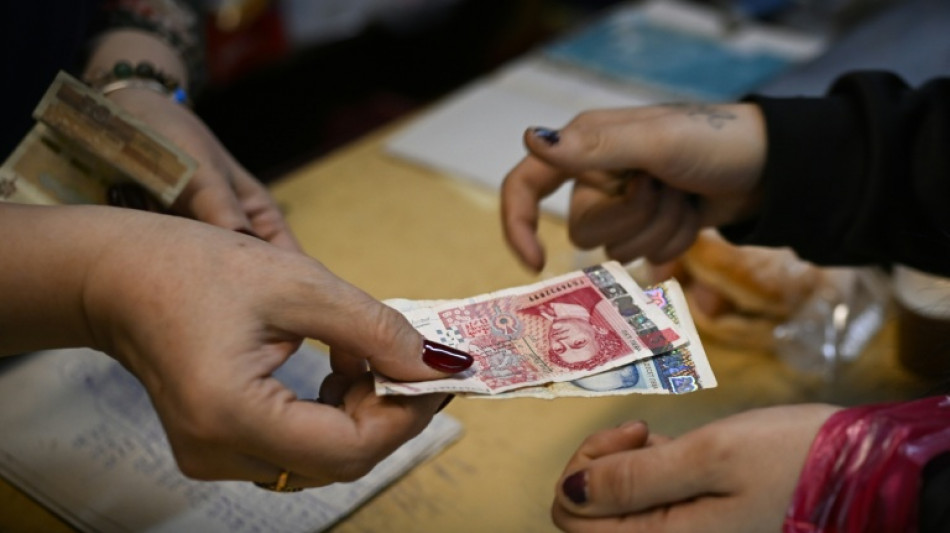
Bulgaria readies to adopt the euro, nearly 20 years after joining EU / Photo: Nikolay DOYCHINOV - AFP/File

 Asian stocks track Wall St higher after US job losses ease rate fears
 Western Europe experienced hottest June-July on record: EU monitor
 Shelton sweeps Fonseca to reach Montreal quarter-final

 Who are the main contenders in Zambia's presidential vote?
 Rybakina survives scare as Gauff, Osaka race into Toronto quarters

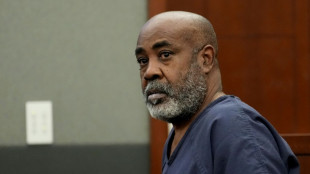 Thirty years on, a trial finally opens in Tupac Shakur's killing
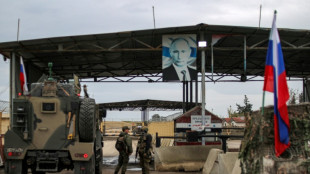
 Shelton sweeps Fonseca to reach another Montreal quarter-final

 Brennan captures Wyndham crown for second PGA win
 Rybakina, Gauff advance to Toronto quarter-finals
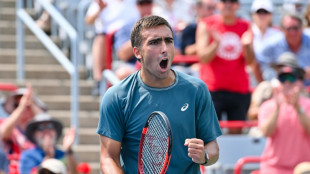
 Rahm three-peats as LIV Golf season champ while Niemann wins at New York

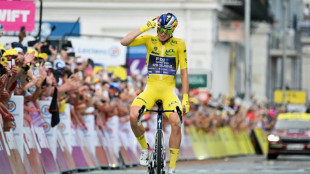 Vollering wins Tour de France Femmes after war of nerves

 BMW’s next chapter accelerates with New Class rollout

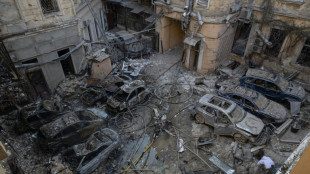 Five dead in new Russia, Ukraine strikes

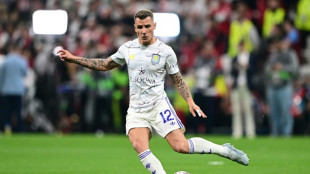 PSG sign France full-back Digne from Villa
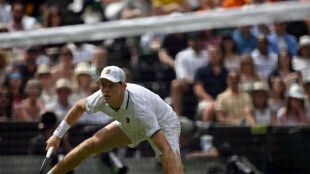 Sinner withdraws from Cincinnati Open with knee injury

 Fernandez's 'perfect' race earns him British MotoGP Grand Prix win
 Iran Guards say won't reopen Hormuz without US meeting Tehran's demands
 Hogh's hat-trick inspires Celtic to 5-1 victory over Kilmarnock

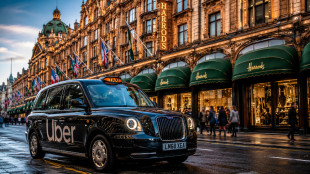 London grants first licences for supervised Uber robotaxis

 Erasmus hopeful Kolisi hamstring injury not 'too bad'
 Luxury car buyers trade prestige for mainstream value

 Students, teachers mourn girl killed in Thailand school shooting

 Jacobson to lead New Zealand for first time against Sharks
 Typhoon Dolphin makes landfall in China after flight cancellations, evacuations

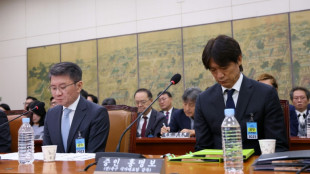 South Korea FA apologises after sex scandal adds to controversies

Bulgaria was preparing to switch to the euro on Wednesday night to become the 21st eurozone member, amid concerns the move could usher in higher prices and add to political instability rattling the Balkan country.
At midnight (2200 GMT Wednesday), Bulgaria will wave goodbye to both 2025 and its lev currency, which has been in use since the late 19th century.
While successive governments in the country of 6.4 million people have advocated joining the euro currency over hopes it will boost the economy of the EU's poorest member, reinforce ties to the West and protect against Russia's influence, some have been opposed to the switch.
Bulgaria, which joined the EU in 2007, faces unique challenges, including anti-corruption protests that recently swept a conservative-led government from office, leaving the country on the verge of its eighth election in five years.
Outgoing Prime Minister Rossen Jeliazkov said on Tuesday that he nonetheless felt his cabinet had accomplished a milestone.
"Bulgaria is ending the year with a gross domestic product of 113 billion euros (nearly $133 billion) and economic growth of more than three percent, which places us among the top five countries in the EU," he said before a government meeting.
He added that inflation in the Black Sea country, which hovers around 3.6 percent, was "linked to increased purchasing power" and a less corrupt economy, and not in any way to the introduction of the euro.
- Cheers, fears and queues -
Some Bulgarians worry the introduction of the euro could lead to price increases.
Those fears were fuelled in part by a protest campaign that emerged this year to "keep the Bulgarian lev", which tapped into a generally negative view of the single currency among much of the population.
According to the National Statistical Institute, food prices rose by five percent year-on-year in November, more than double the eurozone average.
"Unfortunately, prices no longer correspond to those in levs (...) 40 levs is not 20 but 30 euros for certain products," pastry shop owner Turgut Ismail, 33, told AFP, saying that prices have already begun surging.
Some people, including business owners, have complained that it has been difficult to get their hands on euros, with shopkeepers saying they haven't received the euro starter packages they ordered.
Banks have already warned of possible disruptions to card payments and ATM withdrawals on New Year's Eve.
On Tuesday, people queued outside the Bulgarian National Bank and several currency exchange offices in the capital Sofia to obtain euros, an AFP journalist observed.
Elena Shemtova, 37, who owns a small gallery and jewellery shop in the city centre, said she is optimistic.
"We will experience difficulties at first, there will be problems with giving change, but within a month we will have gotten used to it," she told AFP.
According to the latest Eurobarometer survey, 49 percent of Bulgarians are against the single currency.
As political instability has been rocking the country, any problems with euro adoption would be seized on by anti-EU politicians, said Boryana Dimitrova of the Alpha Research polling institute.
"There will be challenges, but we are counting on the tolerance and understanding of both citizens and businesses," said Jeliazkov.
He stressed that introducing the euro will have "a positive long-term effect on the Bulgarian economy and on the environment in which the country is developing".
The euro was first rolled out in 12 countries on January 1, 2002. Croatia was the last to join in January 2023.
Bulgaria's accession will bring the number of Europeans using the euro to more than 350 million.
X.Matos--PC