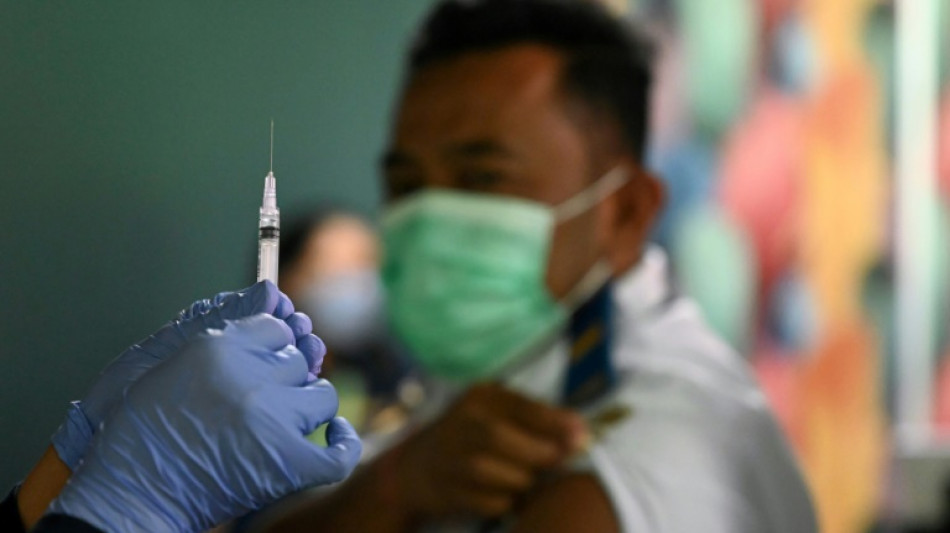
World 'dangerously unprepared' for next crisis: Red Cross / Photo: SONNY TUMBELAKA - AFP

 Warren coy over whether Fury-Joshua will be in UK or US

 Taiwan blocks key bridge in drill for potential Chinese invasion
 Migrant children risk abuse on streets of Ceuta, aid groups warn

 Oil price shoots up as stocks tread water

 British Grand Prix stays on MotoGP calendar until 2028

 Britain's EasyJet flies into US hands as takeover confirmed
 Real Madrid sign Ivory Coast winger Yan Diomande

 How online disinformation fuelled Ceuta migrant surge
 Inevitable AI Group Raises $6M From Aleph to Launch AI-Native SaaS Companies

 Suspected Ebola death on boat heading for DR Congo capital

 England selector North not 'hung up' on Stokes absence
 UK Anti-Doping confirm former world champ Parker's ban lifted

 French winemakers dread 'smoky taste' after wildfires
 Stocks diverge with earnings, tech in focus
 England recall batsman Lawrence for Pakistan series
 Siemens shares plunge on disappointing guidance raise
 New Australia coach Kiss gives Japan starts to Ross, Amatosero

 'Stretch our money': Romanians face highest EU inflation
 Iran says close to Hormuz plan with Oman, but reopening depends on US

 Messi scores twice to set Leagues Cup record in Miami victory
 Asian stocks mostly down with tech firms back under pressure
 Back to the future as world champion Springboks host All Blacks

 India youth protests highlight mistrust in 'lapdog' media
 Pacific islands alarmed by Trump-backed push for deep-sea mining

 Erratic rains dictate menu at three-star Michelin restaurant in Brazil
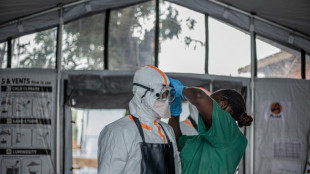
All countries remain "dangerously unprepared" for the next pandemic, the Red Cross warned on Monday, saying future health crises could also collide with increasingly likely climate-related disasters.
Despite three "brutal" years of the Covid-19 pandemic, strong preparedness systems are "severely lacking", the International Federation of Red Cross and Red Crescent Societies (IFRC) said.
The world's largest humanitarian network said building trust, equity and local action networks were vital to get ready for the next crisis.
"All countries remain dangerously unprepared for future outbreaks," the IFRC said, concluding that governments were no more ready now than in 2019.
It said countries needed to be prepared for "multiple hazards, not just one", saying societies only became truly resilient through planning for different types of disaster, as they can occur simultaneously.
The IFRC cited the rise in climate-related disasters and waves of disease outbreaks this century, of which Covid-19 was just one.
It said extreme weather events were growing more frequent and intense, "and our ability to merely respond to them is limited".
The IFRC issued two reports making recommendations on mitigating future tragedies on the scale of Covid-19, on the third anniversary of the World Health Organization declaring the virus an international public health emergency.
"The Covid-19 pandemic should be a wake-up call for the global community to prepare now for the next health crisis," said IFRC secretary general Jagan Chapagain.
"The next pandemic could be just around the corner; if the experience of Covid-19 won't quicken our steps toward preparedness, what will?"
The report said major hazards harm those who are already vulnerable the most, and leaving the poorest exposed was "self-defeating", as a disease can return in a more dangerous form.
- Breakdown of trust -
The IFRC said if people trusted safety messages, they would be willing to comply with public health measures and accept vaccination.
But the organisation said crisis responders "cannot wait until the next time to build trust", urging consistent cultivation over time.
The IFRC said if trust was fragile, public health became political and individualised -- something which impaired the Covid response.
It also said the coronavirus pandemic had thrived on and exacerbated inequalities, with poor sanitation, overcrowding, lack of access to health and social services, and malnutrition creating conditions for diseases to thrive in.
"The world must address inequitable health and socio-economic vulnerabilities far in advance of the next crisis," it recommended.
The organisation also said local communities should be leveraged to perform life-saving work, as that is where pandemics begin and end.
The IFRC called for the development of pandemic response products that are cheaper, and easier to store and administer.
By 2025, it said countries should increase domestic health finance by one percent of gross domestic product, and global health finance by at least $15 billion per year.
The IFRC said its network had reached more than 1.1 billion people over the past three years to help keep them safe during the Covid pandemic.
X.M.Francisco--PC