Covid rages in Iraq as vaccinations lag

 Germans vote in elections threatening fresh blow to Merz

 US fears rapid escalation in Mideast after Houthis attack Riyadh

 Japan triathlete Hojo wins first gold of Asian Games

 IOC president impressed by 'beautiful' Asian Games wooden huts

 First Asian Games gold goes to Japan as China's 13-year-old Yu lights up pool

 Data centre command hub keeps AI up and running

 Pope Leo in France: the issues on the table

 Packing for a pope: behind the scenes on foreign trips

 Republicans find transgender issues a powerful political weapon in midterm campaigning

 German state elections threaten new shock waves for Merz

 Chile's Bachelet quits race to be next UN chief

 Raphinha treble fires perfect Barca to win at Sevilla

 Thiam makes winning heptathlon return at Decastar meet

 Czechs beat USA to qualify for Davis Cup finals

 Dortmund sink Stuttgart to climb to Bundesliga summit

 Trump says will not tolerate attempts to slow AI growth

 'It has to stop': runners protest women's murders in S.Africa district

 Fire erupts near Riyadh airport as Houthis claim strikes

 Cuba works to restore power after another blackout

 England thrash Sri Lanka again to return to top of T20 rankings

 Arsenal thrashed by Brighton, sorry Spurs lose again
 South Korea, Austria qualify for Davis Cup finals
 Seare shocks Ingebrigtsen to win world 5km gold
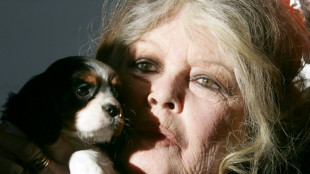 Brigitte Bardot widower slams sale of star's belongings

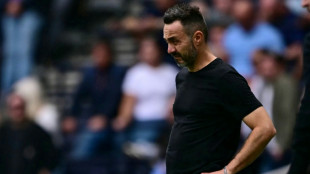 Aston Villa compound Tottenham's misery despite late rally

In the stores and buses of Iraq masks are rare even as Covid-19 spreads widely, vaccines are viewed with suspicion and the sick see hospitals as a last resort.
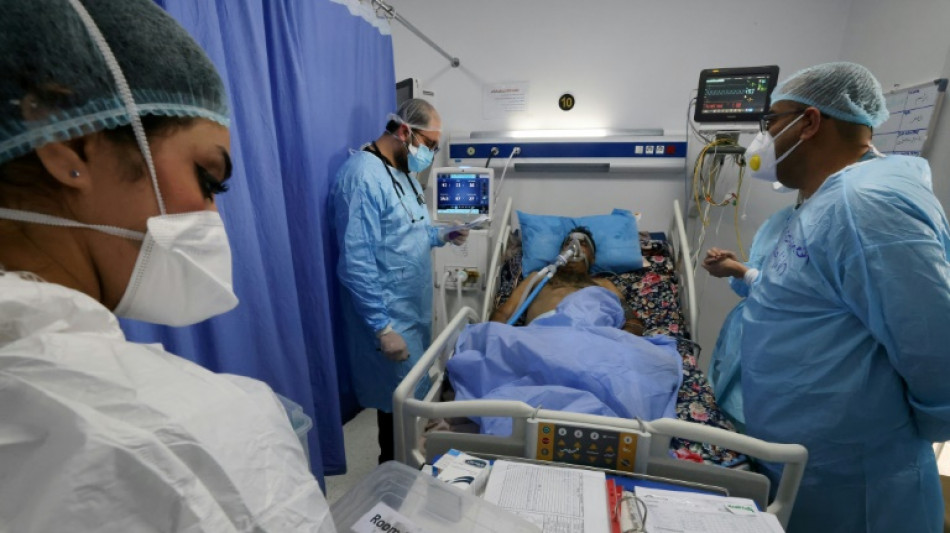
At Al-Shifaa Hospital in the capital Baghdad, the ramifications are clear.
"More than 95 percent of those sick with Covid-19 in intensive care are unvaccinated," said Ali Abdel Hussein Kazem, assistant director of the facility.
Half of the 40 intensive care beds are occupied in the department, where irregular beeping from monitors and IV machines is constantly heard.
Al-Shifaa hospital has been turned into a Covid treatment centre since the start of the pandemic and can treat 175 patients.
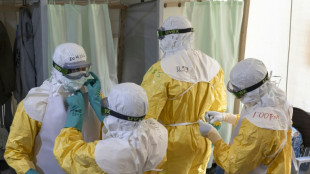
Linked to breathing devices, an old man and a young woman share a large room, where a family member is allowed to monitor them -- masked and in a white protective outfit.
Next door, a man in his 60s fidgets, pushing away his blanket. An asthmatic, he is also hooked up to a ventilator.
"He says he is suffocating," an alarmed relative said, summoning a doctor.
Iraq's public health system, already worn down by decades of war, under-investment and corruption, has struggled to cope with the coronavirus.
Since January, Iraq's 40 million people have been confronted with a fourth coronavirus wave but -- unlike other countries -- the government has not imposed any restrictions.
Iraq has recorded more than 2.2 million infections and 24,000 deaths since the pandemic began two years ago, but data released by the authorities indicates that infections are now declining to around 2,000 new cases per day.
Despite 1,400 vaccination centres, officials struggle to overcome scepticism about the jabs, which health experts around the world say are saving lives.
- Help from abroad -
Fewer than 10 million people in Iraq, about a quarter of the population, have been vaccinated, said health ministry spokesman Seif al-Badr.
Among them, not even seven million have received two doses, and those with a booster number less than 100,000.
In neighbouring Iran, 66 percent of the 83-million population have received two doses.
"About 90 percent of the sick are older than 60," said Al-Shifaa's intensive care director Mohammed Salih, as he made his morning rounds, checking X-rays and giving instructions.
"Most have chronic conditions: diabetes, high blood pressure, kidney disease," Salih said, accompanied by doctors and nurses from Doctors Without Borders (MSF), a charity which is assisting the hospital.
Along with training that aims to "sustain the care", the MSF programme begun in November provides physiotherapy and mental health care, said Daniel Uche, a physician who heads the project.
Countering misinformation is another priority.
"Most of the pregnant women we admitted in our facility are not vaccinated because they are afraid for their precious babies, that maybe if they take the vaccine it will have an effect" on the infant, said Uche.
Salih said he noticed another trend: "Most of the patients come in only after reaching a critical stage."
They prefer to stay at home because of "social media" and "rumours" which minimise the gravity of the coronavirus or which raise suspicions about the vaccines, he added.
Those are the latest challenges for a health system crippled by decades of war and especially an international embargo under the dictator Saddam Hussein, who was toppled in a US-led 2003 invasion.
"People are afraid of hospital because of rumours that say they won't get proper care, and that we won't be interested in looking after them," a nurse said, requesting anonymity.
Two deadly fires at public hospital Covid-19 units last year sparked outrage among the population. One blaze killed more than 80 people in Baghdad in April and three months later another claimed at least 60 lives in Nasiriyah, southern Iraq.
- 'Be careful' -
Authorities acknowledge that challenges abound for a sector dealing with ageing equipment and shortages.
Badr, the ministry spokesman, said the health infrastructure in some provinces "was entirely destroyed" in the war against the Islamic State group jihadists from 2014-2017.
The health budget of the oil-rich country does not even receive two percent of state expenditures.
"For previous governments health care was not a priority," said Badr, adding that even though the system is challenged it is ready to help those who are sick with Covid-19.
"We have thousands of beds available for people who would have breathing difficulties. We also have medicine and the necessary equipment, as well as vaccines," he said.
At Al-Shifaa, Farouk Naoum, 75, is leaving hospital after his recovery. He was among the minority of Iraqis vaccinated with two doses of the Pfizer-BioNTech vaccine but despite the protection it offered, he still got infected.
"You have to be careful, very careful," he said after his 31 days of treatment.
M.A.Vaz--PC