Hazardous 'forever chemicals' detected in nearly half of US tap water / Photo: JUSTIN SULLIVAN - GETTY IMAGES NORTH AMERICA/AFP/File

 Meta ordered to pay US state $567 mn to abate 'public nuisance' and child harm

 Houthi missile attacks kill 58 Saudi-backed Yemeni govt forces: source

 No.1 Sabalenka and Pegula advance at Toronto
 China missile test top of agenda as Pacific diplomats meet in Fiji

 Most UK teens to opt out of planned social media curfew: poll

 Venezuela's political transition talks launch in Caracas

 2 killed, 13 wounded in bus blast near Syrian capital: state media

 All Blacks skipper Taylor cautiously recovering from calf strain

 UN chief denounces Russia, Ukraine for civilian deaths

 UEFA turn up the pressure on Infantino and repeat boycott threat

 Rodri approves Barcelona transfer talks with Man City: Barca source to AFP

 Venezuela unable to tally missing from cataclysmic quakes

 Le Court sprints to stage six Tour de France Femmes win

 Doping body says Parker's positive cocaine test caused by nutritionist

 UEFA says boycott of World Cups stands despite FIFA backdown on private investment

 Rheinmetall sales keep surging despite cancelled naval frigate project

 Pogacar teammate Del Toro gets new UAE deal after Tour podium
 Stocks tread water with earnings, tech in focus

 Inevitable AI Group Raises $6M From Aleph to Launch AI-Native SaaS Companies
 Forlan named new Uruguay head coach

 UEFA chief Ceferin: 'Underdog' leader taking fight to FIFA's Infantino

 Salah completes move to Turkey's Trabzonspor
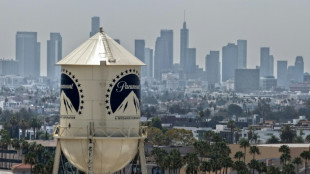 UK clears Paramount's takeover of Warner Bros

 North Korea fires ballistic missile: South Korea military

 'Don't have to hide': Thai IDs, legal work give hope to Myanmar refugees

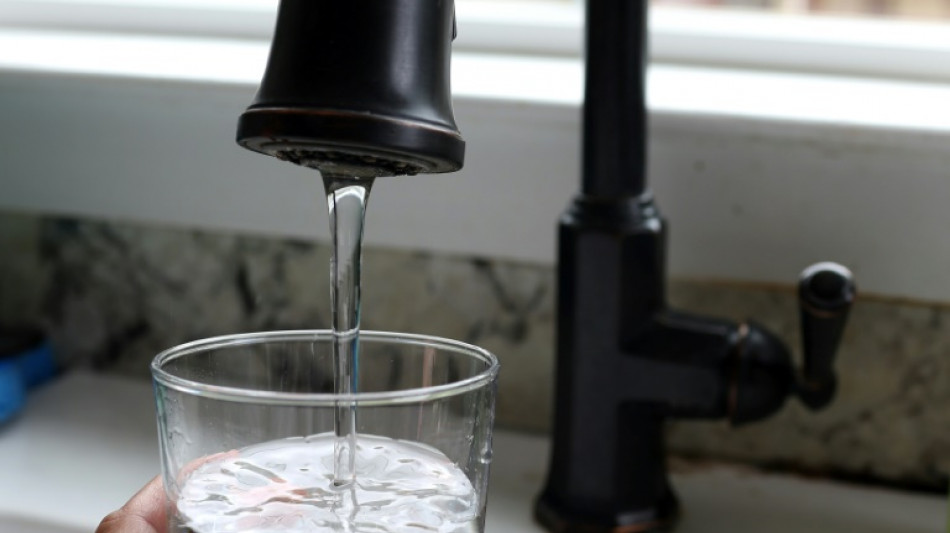
At least 45 percent of the United States' tap water is contaminated with toxic "forever" chemicals, according to a study by a government agency.
Found in everyday products such as non-stick frying pans, polyfluoroalkyl substances (PFAS) can linger in the environment for a long time and have been linked to serious health conditions including cancer and birth defects.
The chemicals can reach water supplies through industrial discharges and leaching from landfill sites.
"This USGS study was the first to compare PFAS in tap water from both private and public supplies on a broad scale throughout the country," Kelly Smalling, a USGS scientist and the study's lead author, told AFP on Friday.
The paper was published this week in the journal Environment International, and found exposure to PFAS was similar in samples collected from unregulated private wells and regulated public supply.
Overall, the study estimated the probability of PFAS being observed in the water at 75 percent in cities and 25 percent in rural areas.
- Filters recommended, not bottled water -
There are more than 12,000 types of PFAS, not all of which are detectable by current testing. For the purposes of the current research, USGS tested for only 32 types.
The team collected samples from 716 nationally representative locations.
Most exposures occurred in urban areas or places with known high concentrations of PFAS, such as industrial and waste sites.
These included the Great Plains, which runs down the middle of the country, the Great Lakes in the mid-east, as well as cities along the East and West Coasts.
Concerned residents can look up PFAS levels in the zip code via a website maintained by the nonprofit Environmental Working Group (www.ewg.org).
The Environmental Protection Agency (EPA) offers advice for in-home treatment options. Filters, including those that reverse osmosis technology, activated carbon, and ion exchange have been shown to be highly effective at removing them.
Bottled water may not be a good alternative. A 2022 study by USGS found bottled water was frequently contaminated with inorganic and organic compounds, with arsenic, lead, and uranium among the most common.
Last month, US industrial conglomerate 3M announced it would pay as much as $12.5 billion to settle numerous claims from US public water systems that accused the company of tainting their supplies.
The company has also agreed to large settlements in the Netherlands and Belgium, and announced in December it would stop manufacturing PFAS substances by the end of 2025.
US chemicals giant DuPont and its spinoffs Chemours and Corteva also announced in June they would pay nearly $1.2 billion to settle claims they contaminated water sources serving "the vast majority of the United States population" with PFAS.
The EPA proposed new standards on PFAS chemicals in March, requiring public water utilities to monitor for six compounds and reduce PFAS levels in the water supply.
President Joe Biden's Bipartisan Infrastructure Law passed in 2021 invests $9 billion over five years to help communities reduce PFAS contamination levels in drinking water.
N.Esteves--PC