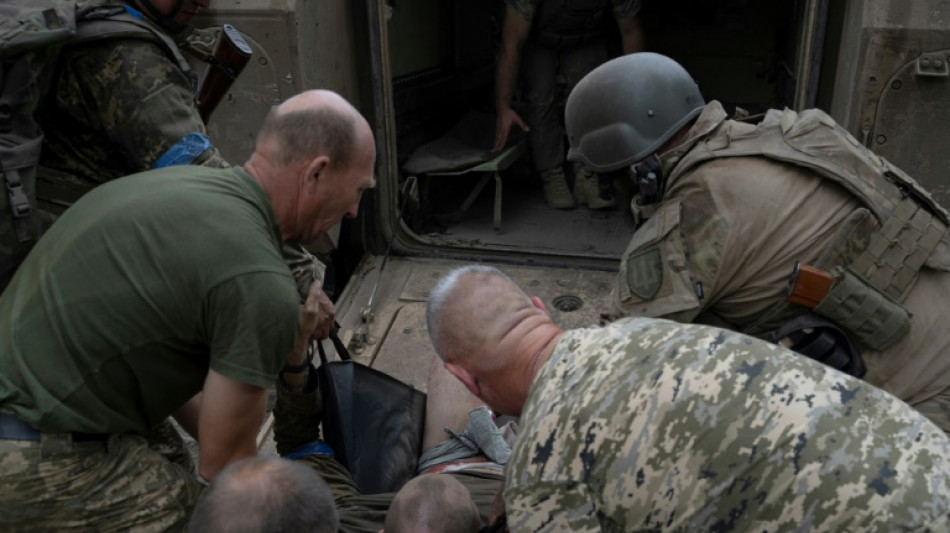
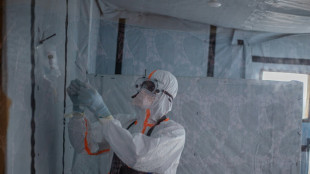
Blood and fears: The military medics of Bakhmut / Photo: Genya SAVILOV - AFP

 Meta ordered to pay US state $567 mn to abate 'public nuisance' and child harm
 Houthi missile attacks kill 58 Saudi-backed Yemeni govt forces: source
 No.1 Sabalenka and Pegula advance at Toronto
 China missile test top of agenda as Pacific diplomats meet in Fiji
 Most UK teens to opt out of planned social media curfew: poll
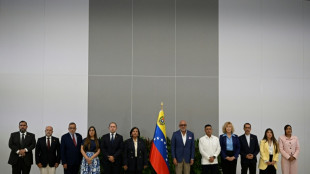 Venezuela's political transition talks launch in Caracas
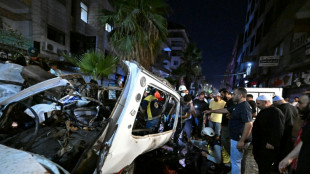 2 killed, 13 wounded in bus blast near Syrian capital: state media

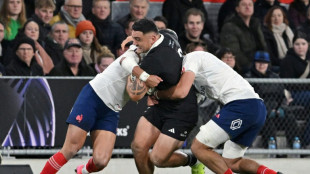 All Blacks skipper Taylor cautiously recovering from calf strain
 UN chief denounces Russia, Ukraine for civilian deaths

 UEFA turn up the pressure on Infantino and repeat boycott threat
 Rodri approves Barcelona transfer talks with Man City: Barca source to AFP
 Venezuela unable to tally missing from cataclysmic quakes
 Le Court sprints to stage six Tour de France Femmes win
 Doping body says Parker's positive cocaine test caused by nutritionist
 UEFA says boycott of World Cups stands despite FIFA backdown on private investment
 Rheinmetall sales keep surging despite cancelled naval frigate project
 Pogacar teammate Del Toro gets new UAE deal after Tour podium
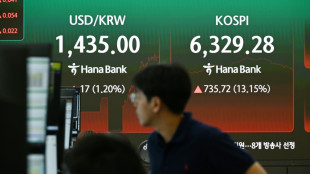 Stocks tread water with earnings, tech in focus

 Inevitable AI Group Raises $6M From Aleph to Launch AI-Native SaaS Companies
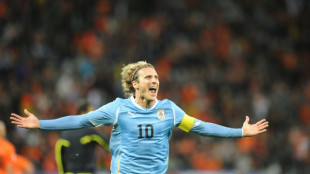 Forlan named new Uruguay head coach
 UEFA chief Ceferin: 'Underdog' leader taking fight to FIFA's Infantino
 Salah completes move to Turkey's Trabzonspor
 UK clears Paramount's takeover of Warner Bros
 North Korea fires ballistic missile: South Korea military
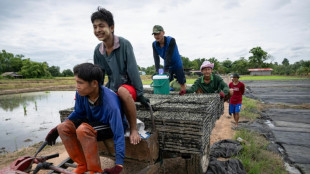 'Don't have to hide': Thai IDs, legal work give hope to Myanmar refugees

The armoured evacuation vehicle screeched to a halt to the sound of artillery fire and unloaded a group of reconnaissance soldiers whose mission went bad in Bakhmut.
Some lost their balance stumbling over the doorstep of a shelled-out building posing as the closest field hospital to the flaming front.
Their worn uniforms were torn open to expose wounds or help the dirt-covered men breathe. A few leaned against their rifles or slid to the ground with their backs against the wall.
None said how many friends they had just lost on the killing fields of Ukraine's brutal battle in Bakhmut.
Their unit was probing the Russian defences when it was detected and exposed. Enemy tanks opened fire at point-blank range.
The concussed soldiers waved their arms and swore while reliving the ensuing chaos as they waited for their medical assessment tests.
A team of medics -- some still in slippers -- silently pulled out shrapnel from the wounded as more soldiers were stretchered in.
The intensity of the medics' shift is a window into the mounting emotional and physical toll for Ukraine's medical staff who have played a vital but behind-the-scenes role for 17 months of Russia's full-scale invasion.
"I have reasons to exact revenge on the Russians," surgeon Kirilo Orlov said after saving one of the troops.
"I mean real revenge. I have lost too many acquaintances and friends," the 40-year-old said.
- Jitters and shock -
Orlov's field hospital stands in a ghost town whose ground is a tangle of debris and whose air shakes from incessant blasts.
The military medics take turns smoking at an open doorway facing away from the Russians and almost never step a foot outdoors.
Some pull on flak jackets and dash to an armoured vehicle to rescue more soldiers when the orders come.
Automatic rifles lean against corners and walkie talkies relay the sounds of war.
Sergiy Podolyan sat alone in the hallway with sweaty palms.
"This is something new," the fresh-faced 27-year-old said on his first day at the front.
"We had some military training at a shooting range so we got a bit used to the blasts," he whispered under his baseball cap.
"But not like this."
- 'Fighting smarter' -
The medics have less work now that Ukraine's forces have abandoned their defence of Bakhmut and are trying to ensnare it in a pincer movement from the west.
"We have one-third the number of cases we did in February or March," doctor Dmytro Urakov said.
"We are fighting smarter now," the 42-year-old added before slinging a rifle over his shoulder and walking off to get some rest.
But the precision attacks along Bakhmut's flanks still run into stiff Russian defences and minefields.
Battles over strategic heights -- often little more than a bumpy hill -- can last weeks.
The wounded soldiers were too fresh off the battlefield to think of anything else.
"They want to go back out there," nurse Galina Slobodyan said with a compassionate smile after bandaging a soldier's arm.
The soldier had just gruffly rejected Slobodyan's advice to get more treatment at a real hospital away from the front.
"I can't tell them no."
- 'To kill a medic' -
Slobodyan herself was drawn to the war.
The 23-year-old was working as a hairdresser in Poland when Russia invaded 17 months ago.
She rushed back to Ukraine while millions of others were flooding out.
"You sit abroad, make money, but what's the point?" she asked, while shyly scratching a tattoo on her neck.
"I wanted to be useful, so that I could be of at least some help."
Most of the wounded had been cared for and the medics were going back to scrolling their mobile phones to unwind.
Slobodyan was giggling with Podolyan in a corner to try and relieve the rookie's stress.
But surgeon Orlov sat in stormy silence next to the operating table and stared off into space.
A new medical team would soon be going out to what Ukrainians call "point zero" -- the very epicentre of fighting -- to rescue more wounded men.
Orlov said each one of his medics was a target for the Russians.
"It's not like World War II, when you have a red cross and they don't shoot at you," he said.
"On the contrary, they will shoot. For them, this is a primary target, to kill a medic."
F.Ferraz--PC