US official backs off promise to solve cause of autism by September / Photo: Oliver Contreras - AFP

 Kospi Falls Below 5,000 as U.S. AI Regulation Fears Trigger Circuit Breaker

 Valsoft's TAG Software Group Enters the Content Operations Market with the Acquisition of Chalco

 South Korea Proposes Fourth Delay of Cryptocurrency Gains Tax to 2029

 ASIC Fines Mona Museum Owner's Company for Late Financial Report
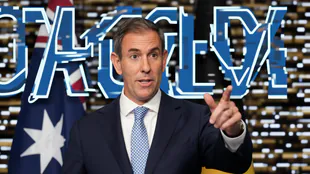
 Business Leaders Criticize Productivity Commission Inquiry Scope

 SCANDIC FINANCE ने एलेक्स बोडी को समूह का उपाध्यक्ष नियुक्त किया

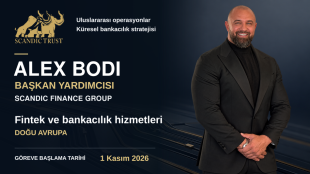 SCANDIC FINANCE Grubu, Alex Bodi’yi başkan yardımcılığına atadı

 Алекс Боди е назначен за вицепрезидент на групата SCANDIC FINANCE

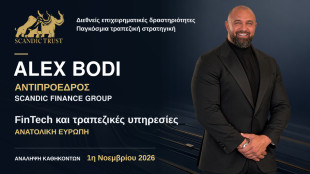 Ο Άλεξ Μπόντι νέος αντιπρόεδρος του ομίλου SCANDIC FINANCE
A top US science official on Tuesday backed away from a bold promise made by Health Secretary Robert F. Kennedy Jr. to reveal the cause of autism by September.
Jay Bhattacharya, director of the National Institutes of Health, told reporters the timeline referred not to a discovery, but to the launch of a new research initiative -- with no firm deadline for results.
"We're hoping that by September, we'll have the call for proposals out, and we'll have a competition among scientists across the country using a normal NIH process for selecting the proposals that win and get an award," he said.
Kennedy, a vaccine skeptic, has long promoted a debunked theory linking childhood vaccines to autism, and recently appointed an anti-vaccine activist who holds the same views to be a data analyst -- a move critics say guarantees bias.
Bhattacharya, however, said the study itself would conform to rigorous standards and would be evaluated through the normal NIH peer review process.
He said the timeline for results was "hard to predict" but that his team was "cutting red tape" to remove any bureaucratic obstacles.
"I would like to have a timeline within a year, where they start to put out the preliminary results or the results -- we'll see," Bhattacharya said.
Bhattacharya also confirmed a report by CBS News that the NIH was gathering private medical records from a number of federal and commercial databases to give the study statistical power, but insisted all the data would be anonymized.
During his own Senate confirmation hearings, Bhattacharya, a physician-scientist and health economist known for opposing lockdowns during the Covid-19 pandemic, stated he does not "generally believe" there's a link between vaccines and autism.
The estimated prevalence of autism in children aged eight rose to one in 31 in 2022, according to a study published last week by the Centers for Disease Control and Prevention, compared to one child in 150 in 2000 -- a trend the authors attributed to improved diagnosis methods.
Autism is a complex neurodevelopmental condition that affects behavior, communication, learning, and social interaction. There is no single known cause, but a combination of genetic and environmental factors is likely involved, according to the World Health Organization.
Over the past two decades, milder forms and related conditions have increasingly been grouped under the broader category of autism spectrum disorder, or ASD.
M.Gameiro--PC