WHO adopts landmark pandemic agreement / Photo: Fabrice COFFRINI - AFP

 Drones hit Moscow as Russians go to the polls

 New England boss Fleming says 'wrong' to ask Stokes to end retirement

 Germans vote in elections threatening fresh blow to Merz

 US fears rapid escalation in Mideast after Houthis attack Riyadh

 Japan triathlete Hojo wins first gold of Asian Games

 IOC president impressed by 'beautiful' Asian Games wooden huts

 First Asian Games gold goes to Japan as China's 13-year-old Yu lights up pool

 Data centre command hub keeps AI up and running

 Pope Leo in France: the issues on the table

 Packing for a pope: behind the scenes on foreign trips

 Republicans find transgender issues a powerful political weapon in midterm campaigning

 German state elections threaten new shock waves for Merz

 Chile's Bachelet quits race to be next UN chief

 Raphinha treble fires perfect Barca to win at Sevilla

 Thiam makes winning heptathlon return at Decastar meet

 Czechs beat USA to qualify for Davis Cup finals

 Dortmund sink Stuttgart to climb to Bundesliga summit

 Trump says will not tolerate attempts to slow AI growth

 'It has to stop': runners protest women's murders in S.Africa district

 Fire erupts near Riyadh airport as Houthis claim strikes

 Cuba works to restore power after another blackout

 England thrash Sri Lanka again to return to top of T20 rankings

 Arsenal thrashed by Brighton, sorry Spurs lose again

 South Korea, Austria qualify for Davis Cup finals

 Seare shocks Ingebrigtsen to win world 5km gold

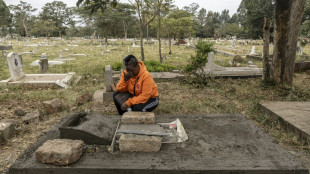
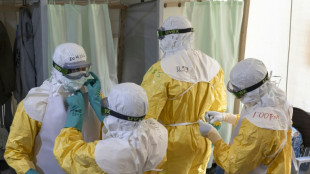
The UN health agency on Tuesday adopted a landmark Pandemic Agreement on tackling future health crises, struck after more than three years of negotiations sparked by the Covid-19 crisis.
The accord aims to prevent the disjointed response and international disarray that surrounded the Covid-19 pandemic, by improving global coordination and surveillance, and access to vaccines, in any future pandemics.
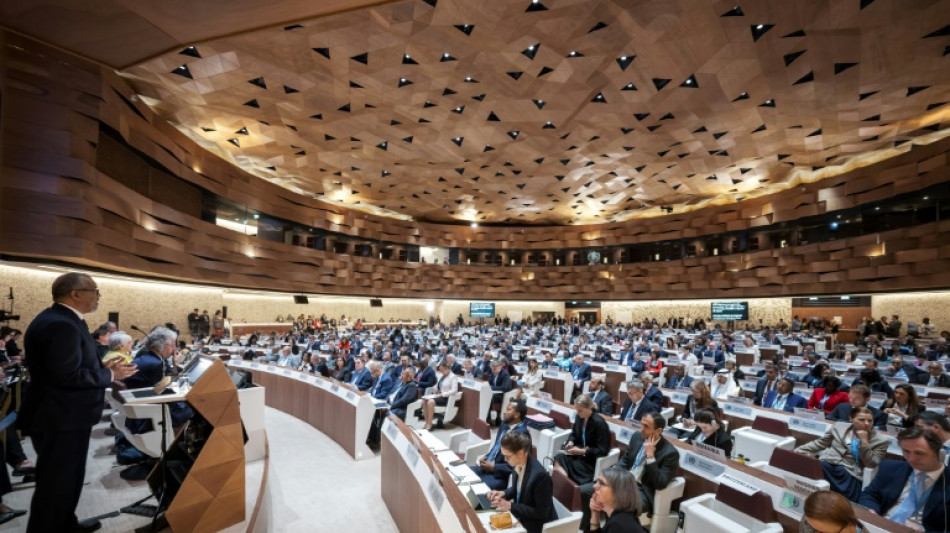
The World Health Organization's decision-making annual assembly adopted the plan on Tuesday at its Geneva headquarters.
"It's an historic day," WHO chief Tedros Adhanom Ghebreyesus told AFP after the vote.
The text of the agreement was finalised by consensus last month, following multiple rounds of tense negotiations.
The United States pulled out of those talks, following US President Donald Trump's decision to withdraw his country from the WHO, a process that takes one year to complete.
"The world is safer today thanks to the leadership, collaboration and commitment of our member states to adopt the historic WHO Pandemic Agreement," Tedros said in a statement.
"The agreement is a victory for public health, science and multilateral action. It will ensure we, collectively, can better protect the world from future pandemic threats.
"It is also a recognition by the international community that our citizens, societies and economies must not be left vulnerable to again suffer losses like those endured during Covid-19."
- Path to ratification -
The agreement aims to better detect and combat pandemics by focusing on greater international coordination and surveillance, and more equitable access to vaccines and treatments.
The negotiations grew tense amid disagreements between wealthy and developing countries, with the latter feeling cut off from access to vaccines during the Covid-19 pandemic.
The agreement faced opposition from those who thought it would encroach on state sovereignty.
Countries have until May 2026 to thrash out the details of the agreement's Pathogen Access and Benefit-Sharing mechanism.
The PABS mechanism deals with sharing access to pathogens with pandemic potential, and then sharing of benefits derived from them: vaccines, tests and treatments.
Once the PABS system is finalised, the agreement can then be ratified. Sixty ratifications are required for the treaty to enter into force.
Precious Matsoso of South Africa, and France's ambassador for global health Anne-Claire Amprou, co-chaired the talks process that led to the agreement.
"It is intended to create a rules-based, future-proof system that will stand the test of time. It does not, and will not, undermine the sovereignty of countries," she told the assembly on Monday.
"In a time of growing geopolitical tensions and seismic changes, this agreement is proof that the world is still together."
A.Seabra--PC