'Help me, I'm dying': inside Ecuador's TB-ridden gang-plagued prisons / Photo: Gerardo MENOSCAL - AFP

 Germans vote in elections threatening fresh blow to Merz

 US fears rapid escalation in Mideast after Houthis attack Riyadh

 Japan triathlete Hojo wins first gold of Asian Games

 IOC president impressed by 'beautiful' Asian Games wooden huts

 First Asian Games gold goes to Japan as China's 13-year-old Yu lights up pool

 Data centre command hub keeps AI up and running

 Pope Leo in France: the issues on the table

 Packing for a pope: behind the scenes on foreign trips

 Republicans find transgender issues a powerful political weapon in midterm campaigning

 German state elections threaten new shock waves for Merz

 Chile's Bachelet quits race to be next UN chief

 Raphinha treble fires perfect Barca to win at Sevilla

 Thiam makes winning heptathlon return at Decastar meet

 Czechs beat USA to qualify for Davis Cup finals

 Dortmund sink Stuttgart to climb to Bundesliga summit

 Trump says will not tolerate attempts to slow AI growth

 'It has to stop': runners protest women's murders in S.Africa district

 Fire erupts near Riyadh airport as Houthis claim strikes

 Cuba works to restore power after another blackout

 England thrash Sri Lanka again to return to top of T20 rankings

 Arsenal thrashed by Brighton, sorry Spurs lose again
 South Korea, Austria qualify for Davis Cup finals
 Seare shocks Ingebrigtsen to win world 5km gold

 Brigitte Bardot widower slams sale of star's belongings

 Aston Villa compound Tottenham's misery despite late rally

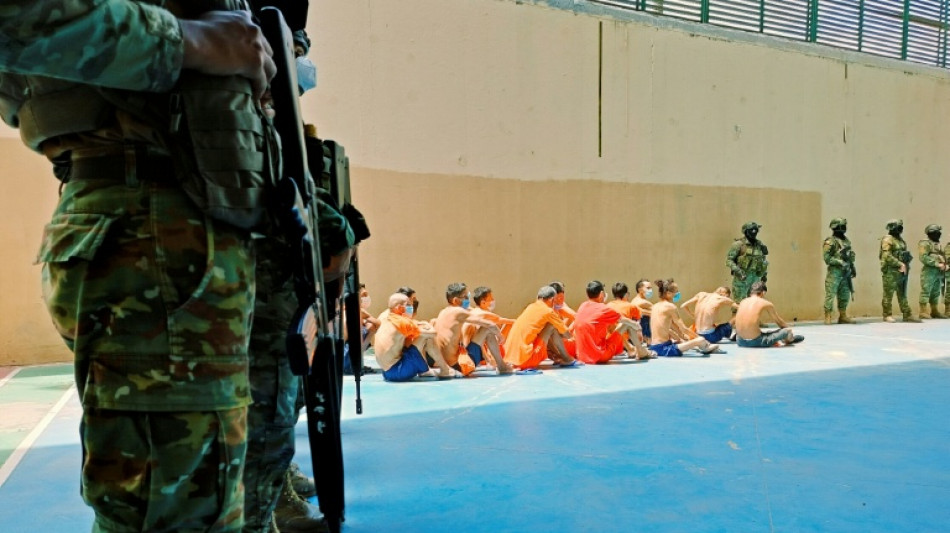
In gang-plagued Ecuador, being sent to prison is increasingly a death sentence, whatever the crime.
In a bid to free the country from the clutches of drug traffickers -- some of them operating from their jail cells -- President Daniel Noboa sent the military into 19 prisons in January 2024 to restore order.
The takeover not only failed to stop gruesome gang massacres in the country's overcrowded penitentiaries, but it also worsened humanitarian conditions, prisoners' families and rights groups say.
"A crime against humanity is being committed against the prisoners," said Billy Navarrete of Ecuador's Permanent Committee for Human Rights (CDH).
Inmate deaths in the South American country rose 137 percent between 2024 and 2025, according to Human Rights Watch's Americas director Juanita Goebertus, who denounced a "failed system" in a post on X last month.
At Ecuador's biggest prison -- Litoral Penitentiary in the port city of Guayaquil -- some 600 inmates have died so far this year due to a lack of medical attention for injuries or illnesses such as HIV/AIDS and tuberculosis (TB), according to the CDH. The facility, filled far beyond capacity, has nearly 7,100 inmates.
With prisoner visiting rights suspended for over a year in the name of keeping drugs and weapons out, and no cellphones allowed, loved ones on the outside are kept in the dark.
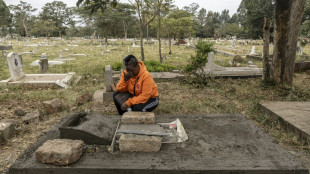
Santiago Hidalgo, 29, who was arrested in 2024 on suspicion of drug trafficking, died of TB in July at the Litoral Penitentiary.
“When I arrived at the morgue, I found my son on top of more than five other corpses. He was so thin, just skin and bones," his mother Benigna Dominguez, 57, told AFP at her home in an impoverished neighborhood of Guayaquil.
Dominguez, who was never allowed to see her son during his seven months in prison, said his body was covered in bruises.
At least 663 inmates have died in violent incidents in prisons in Ecuador since 2020, according to the Inter-American Commission on Human Rights (IACHR).
- Highest murder rate -
The last call Ana Maria Pin had with her son in Guayaquil's infamous prison was unnerving.
"Mommy, help me, I'm dying... get me out of here, this is hell," she said he told her. Pin clutched a photo of her son sitting, clearly ill, on the floor of his cell.
Ten prisoners died from TB at Litoral in November alone.
AFP contacted prison authorities about the spiraling death rate but received no response.
Noboa, re-elected in April on the back of his iron-fisted anti-gang policies, built a maximum-security prison for Ecuador's most dangerous offenders. It was modelled on El Salvador's brutal Terrorism Confinement Center (CECOT).
On his X account last month, the 38-year-old president posted pictures of inmates at the facility, reminiscent of those of Venezuelan migrants held at CECOT earlier this year: shorn heads, shackles, orange jumpsuits.
"Welcome to your new home," Noboa quipped.
Ecuador has gone from one of South America's safest countries to a major cocaine trafficking hub, plagued by gangs with ties to Mexican and Colombian cartels.
Soldiers have been withdrawn from eight of the 19 prisons to which the military was deployed last year, but remain in those considered most dangerous, including Litoral.
Desperate for news of their loved ones, relatives pay imprisoned gang leaders as much as $20 a pop to contact family via WhatsApp.
Prisoners at Litoral describe TB raging out of control. Those infected are kept in beds outdoors to try and prevent spreading disease, while corpses pile up in the prison yard, according to accounts relayed by their families.
Sanitary conditions are also dire and drains overflow with sewage.
"They want them to die," the sister of a TB-infected prisoner told AFP bitterly.
Another woman, who gave her name only as Elizabeth, was waiting to recover the body of her brother who died of tuberculosis.
"He's been lying like a dog in a cellblock since yesterday, and they won't let him out," she said.
Human rights organizations question the effectiveness of Noboa's crackdown.
Ecuador ends the year with the worst homicide rate in Latin America: 52 per 100,000 inhabitants, according to Ecuador's Organized Crime Observatory.
F.Carias--PC