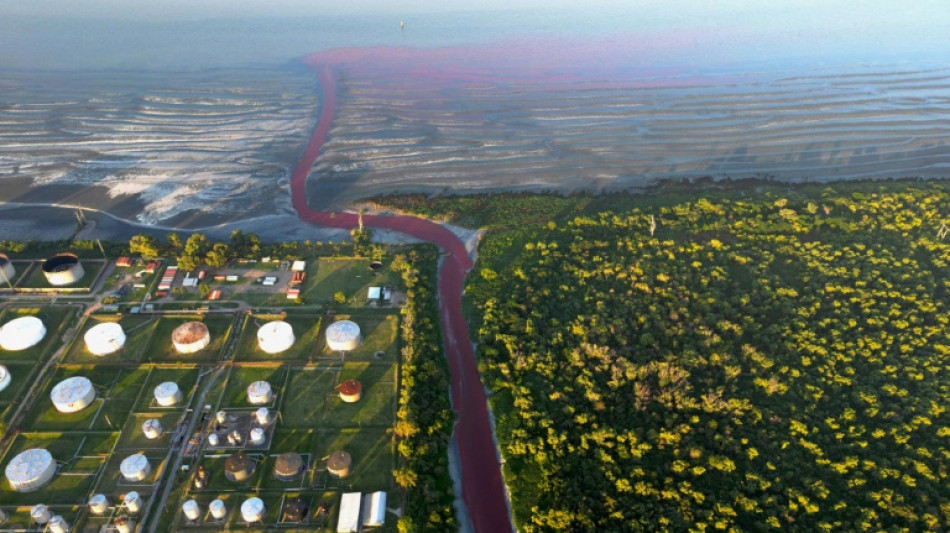
A stream turns blood red in Argentina, residents blame pollution / Photo: Juan MABROMATA - AFP

 Abdul El-Sayed declares victory in Michigan Senate contest

 Democrats capture US Congress in sweeping midterm victory

 Manchester United rallies past Roma as PSG dominates in Champions League

 Qatar sees tentative opening for renewed regional diplomacy

 Qatar Tourism joins Pacific Asia Travel Association at London travel market

 Abdul El-Sayed Wins Michigan Senate Seat in Historic Election

 Qatar media bodies discuss support for humanitarian initiatives

 Galloway accuser could not foresee publishing-sector fallout, lawyer argues

 New York City Center revives In the Heights as a timely community story

 Godzilla Minus Zero shifts focus toward postwar human drama
A stream on the outskirts of Buenos Aires turned blood red on Thursday, causing anxiety among residents who blamed it on pollution.
People living in Avellaneda, a town six miles (10 kilometres) from the center of the Argentine capital, described being woken by a stench emanating from the river.
"The smell woke us up. In the daytime, when we looked at this side of the river, it was completely red, all stained," Maria Ducomls told AFP.
"It looked like a river covered in blood, it's horrible," the 52-year-old said.
The Ministry of the Environment for the province of Buenos Aires said in a statement that water samples had been taken to determine what substance had caused the discoloration, citing the possibility of an "organic dye".
The color of the stream, which flows through an area of textile and hide processing factories, had faded by late afternoon, according to an AFP journalist.
"It's terrible, you don't have to be an inspector to see how much pollution the poor Sarandi River suffers from," said Ducomls, who has lived in the area for more than 30 years.
"We have seen the river in other colors -- we've seen it bluish, greenish, pink, purplish, with grease on top that looks like oil," she said, blaming nearby factories for dumping waste into the river.
L.E.Campos--PC



