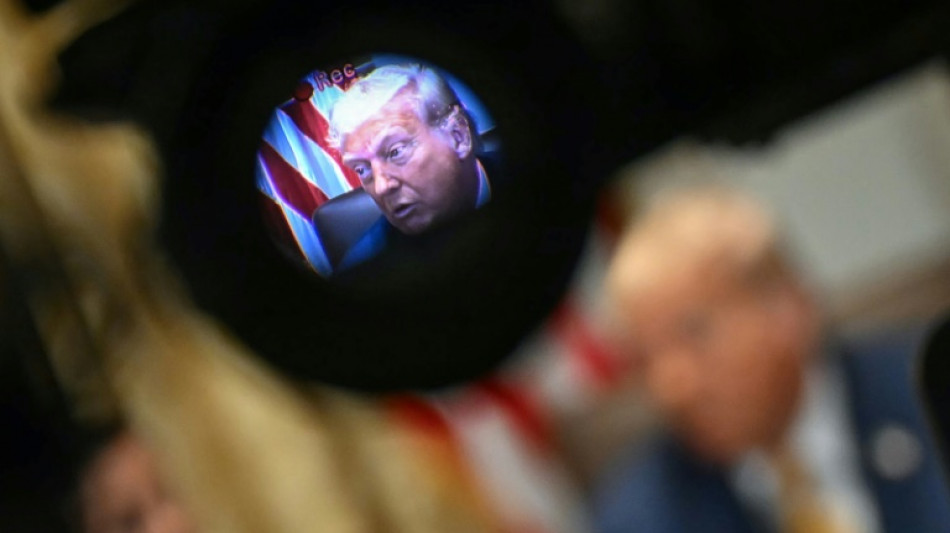
How Trump's love for TV is shaping US diplomacy / Photo: ANDREW CABALLERO-REYNOLDS - AFP/File

 Texas Sports Betting Status: No Legal Options Amid Legislative Push for 2027 Referendum

 Geri Halliwell-Horner Embraces Queen Camilla at Commonwealth Writing Competition

 Meta Quest 3 and 3S Gain Access to Over 150 3D Movies

 Sarah Bajada Shares Message on Pregnancy Loss

 ALIX LASERS shareholders remove Michael Sobitsch as managing director in view of the circumstances

 Euroseas Q3 Net Profit Falls to $91.4 Million Amid Fleet Reduction

 Daily Horoscope November 20, 2026: Astrological Predictions for All Signs

 Tosca's 2026 Sustainability Report Makes the Case for Packaging as Critical Supply Chain Infrastructure
Donald Trump's sudden concern about starving Palestinians was a major shift for the US president, who had previously ignored the endless cries for help from aid groups. So what changed?
In his words, it was images of emaciated children in Gaza that Trump saw on television -- his main window into the world that has long shaped his political and diplomatic decision-making.
Trump made clear his affection for the small screen in late July when asked if he agreed with Israeli Prime Minister Benjamin Netanyahu, a major US ally, that there was no famine in Gaza.
"Based on television, I would say not particularly, because those children look very hungry," said Trump, a former reality TV star.
"That's real starvation stuff. I see it, and you can't fake that."
Since then, the 79-year-old has repeated that aid must be brought to people living in the war-ravaged Palestinian territory, though he has stopped of any major diplomatic moves.
"Trump has a reputation for not reading anything, including the briefing papers that his aides prepare for him, and for always believing that he knows better than his staff or anyone else does," said Dan Kennedy, a journalist professor at Northeastern University.
"So it's not surprising that he would be affected by images on television, especially since he is known to spend a lot of time watching TV."
- 'I watch the shows' -
Trump has attended 22 intelligence briefings since taking office in January, according to an AFP tally, despite several reports having revealed that he lacks interest in written reports.
However, his love for television is well-documented -- even when it comes to major decisions.
In 2015, before he first entered the White House, the billionaire told a journalist asking how he educates himself on military strategy: "Well, I watch the shows."
And a New York Times report recounted how Trump spent several hours a day in his first term glued to the television, mainly watching Fox News -- his favorite channel -- but also CNN, NBC and ABC news channels.
His second term has been little changed, despite Trump leading an election campaign that deployed social media and podcasts.
"Trump is a product of his generation," Kennedy said. "He's not sitting around looking at TikTok."
- 'Great television' -
The Republican, who hosted 14 seasons of "The Apprentice" television series, knows better than most how images can be weaponized for political point-scoring.
He was gleeful after his shocking clash with Ukrainian President Volodymyr Zelensky at the White House in February, which saw the pair rowing in front of the world's press.
"This is going to be great television," Trump said.
And in May he gave a similar public dressing down to South African leader Cyril Ramaphosa when he sat in the Oval Office for what turned into a diplomatic ambush.
Trump hijacked the meeting by playing a video montage -- one littered with inaccuracies -- that purported to prove claims of a "genocide" against white farmers in South Africa.
L.Torres--PC