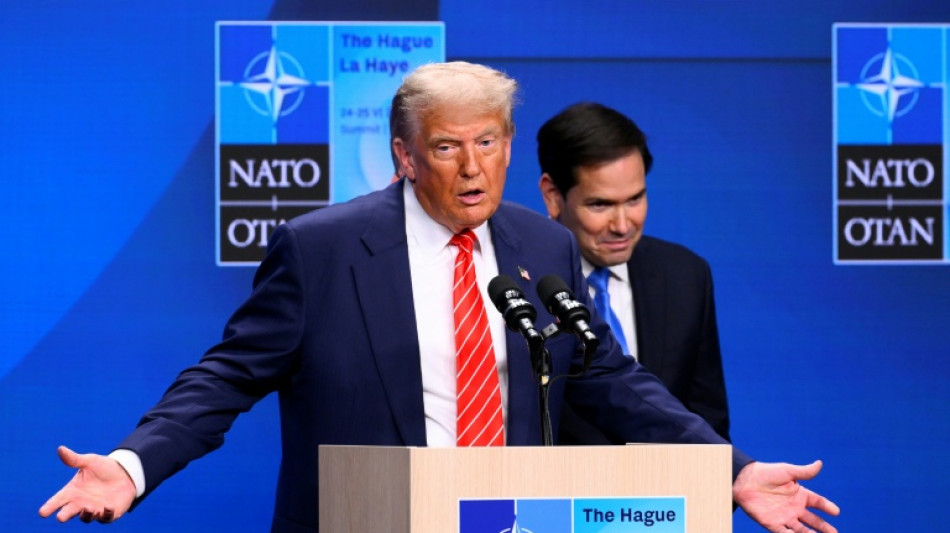
Trump takes aim at Europe in new security strategy / Photo: JOHN THYS - AFP

 Swiss voters expected to shun stricter neutrality

 Rapper-turned-PM faces first big test after Nepal disaster

 Tuchel seeks tonic to England World Cup 'scar' in Spain showdown

 'Helps me cope': Catholic baptisms rise among French youth

 Colombians in Santa Marta stay inside after violence wracks the city

 Iran airlines cancel flights as US sanctions hit

 Meta launches camera-free AI glasses amid privacy pushback
 Australian PM says OpenAI hacked government health website

 Xi arrives in US to personal Trump welcome

 Morocco elects new parliament amid social frustration, youth discontent
 Scheffler and Burns to face Im and Lee in Presidents Cup opener

 Crushing wins for Lyon and Barca in women's Champions League
 Rio breaks record for rainiest September amid powerful El Nino
 At UN, tech chiefs urge caution in AI development
 Russian strikes kill seven in Ukraine, Zelensky vows winter campaign

 Venezuelan shot by ICE needs urgent medical care, mother tells AFP

 Zelensky says Putin using fighters from 47 countries in Ukraine war

 Klopp calls on Germany to 'rise above ourselves' as new era begins

 Russian strikes kill seven in Ukraine as Russia vows no 'pause' to war

 ArcPoint Expands Globally with Institutional Intelligence Platform for Modern Investors

 Ronaldo focussing on 'present' ahead of Wales test

 Outgoing UN chief makes final climate push at New York summit
 Grief and pain flow at hearing for Canadian suicide poison vendor

 Ireland boss Hallgrimsson says timing of Israel remarks 'not clever'

 Weinstein resentenced to 15 years in prison for 2006 sex assault
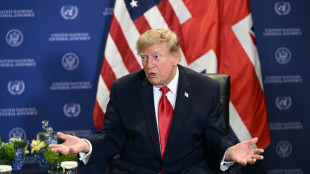
President Donald Trump has had Europe in his crosshairs since beginning a second White House term earlier this year.
But in his new National Security Strategy -- published in the dead of night early Friday -- the US president launched an all-out attack, lambasting Europe as an over-regulated, censorious continent lacking in "self-confidence" and facing "civilizational erasure" due to immigration.
The highly anticipated document codifies in writing the offensive launched by Washington months ago against Europe, which it accuses of taking advantage of American generosity and of failing to take responsibility for its own destiny.
The new strategy, which marks a radical departure from previous US policy, targets, among other things, European institutions that "undermine political liberty and sovereignty," immigration policies, "censorship of free speech and suppression of political opposition," the collapse of birth rates, and the loss of national identities.
"Should present trends continue, the continent will be unrecognizable in 20 years or less," the document says.
Additionally, "a large European majority wants peace, yet that desire is not translated into policy, in large measure because of those governments' subversion of democratic processes," it says.
The reaction in Europe was swift, with German Foreign Minister Johann Wadephul saying the country does not need "outside advice."
The document is "unacceptable and dangerous," France's Valerie Hayer, the head of the Renew Europe centrist grouping in the European Parliament, said on X.
For Evan Feigenbaum, a former advisor to two US secretaries of state and an expert on Asia, "the Europe section is by far the most striking - and far more so than the China/Asia sections."
It "feels inherently more confrontational and pits the U.S. as decisively opposed to the whole European project with this line: 'cultivating resistance to Europe's current trajectory within European nations,'" he said in a post on X.
- Political attacks -
Just weeks after taking office, US Vice President JD Vance dismayed Germans in particular and Europeans more generally with a speech in Munich claiming freedom of expression was receding on the continent, aligning himself with far-right parties such as Germany's AfD.
The new US National Security Strategy, which refers to the restoration of the primacy of nation-states, fits into this approach.
"What the Trump administration is telegraphing through this national security strategy is that it wants to see an entirely different Europe," said Kristine Berzina, a senior fellow at the German Marshall Fund think-tank.
She said the questioning of European governments' legitimacy amounts to "significant political attacks" against Washington's allies, even as the Trump administration says it wants to strengthen European security amid the war in Ukraine.
The section of the strategy on freedom of expression in Europe is emblematic, with the Trump administration denouncing "censorship of free speech and suppression of political opposition" on the continent, alluding to efforts in some countries to contain the rise of the far right.
For months, US officials have been highlighting the alleged deterioration of human rights in Europe, including in Germany, the UK and France.
The new National Security Strategy does not name specific movements or political parties, but clearly demonstrates the Trump administration's desire to see its policies implemented in Europe, especially when it comes to immigration.
In this regard, Trump has made no secret of his affinity for his "friend," Hungarian Prime Minister Viktor Orban, who is hostile to immigration and LGBTQ rights.
F.Ferraz--PC