West Bank Bedouin community driven out by Israeli settler violence / Photo: ILIA YEFIMOVICH - AFP

 Google data centre sparks protests in Austria

 Shin Ohashi: Junk food-loving teen and Japan's next big swimming hope

 Stocks rise on AI buzz, drop in oil prices

 China's robot dancers limber up for America's Got Talent final

 Despite military might, Saudi struggles to crush the Houthis
 Trump to tout deals, defend Iran war in UN speech

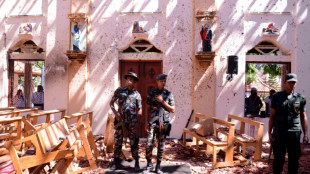 Sri Lanka to issue verdict in landmark Easter attack trial

 Macron says talks with Trump on Red Sea, Ukraine 'constructive'

 Green policies just good politics, says UK minister

 Bardot auction in Paris fetches nearly one million euros

 No timeline on Daniels injury return, says Commanders coach

 British Columbia sues OpenAI in US court over Canada school shooting

 French star Batum retires after 18-year NBA career

 Zidane leads first France training session
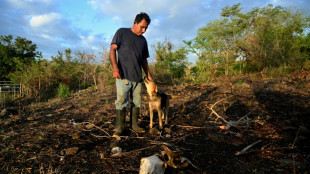
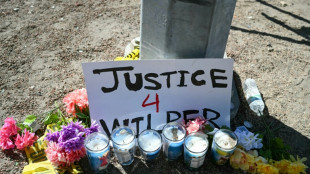 Man shot by ICE agent in Texas detained with bullet inside him: lawyer

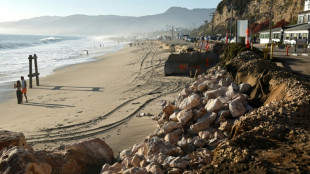 California declares state of emergency ahead of El Nino
 South Africa arrests three more suspects, after nine women murdered

 Carse needs time away from England, says captain Brook

 NOWPayments Releases Cross-Chain Payout Data Revealing Key Performance Benchmarks Across TRON, BNB Chain, and Solana

 British Museum bans photos of Bayeux Tapestry as crowds linger

 COP31 host says AI climate footprint to be a summit priority

 Berlin's far-left vote winners reject anti-semitism charges

 Mancini eager for 'new adventure' on Italy return

 Mbappe says having Zidane as France coach 'like a film'

 Palmer, Rice out of England Nations League squad

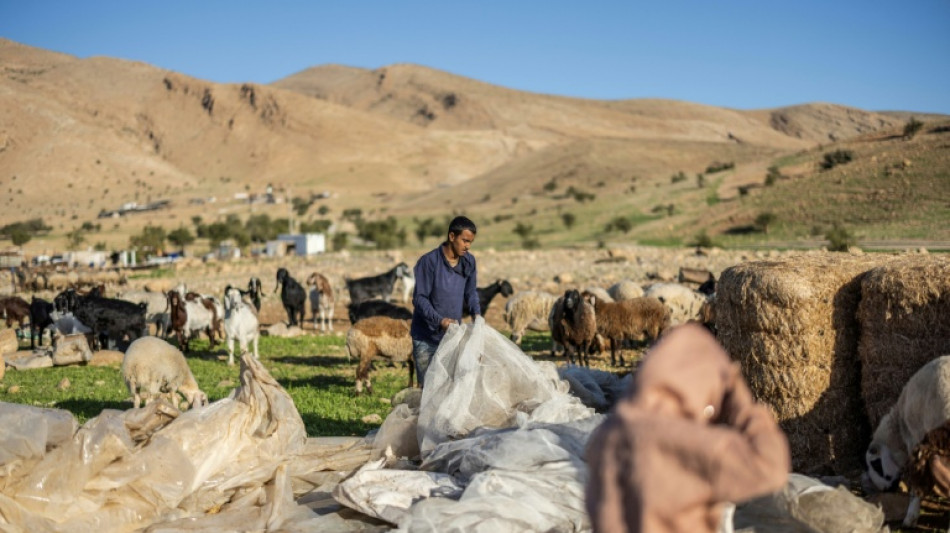
With heavy hearts, Bedouins in a West Bank village dismantle their sheep pens and load belongings onto trucks, forced from their homes in the Israeli-occupied territory by rising settler violence.
While attacks by Israeli settlers affect communities across the West Bank, the semi-nomadic Bedouins are among the territory's most vulnerable, saying they suffer from forced displacement due in large part to a lack of law enforcement.
"What is happening today is the complete collapse of the community as a result of the settlers' continuous and repeated attacks, day and night, for the past two years," Farhan Jahaleen, a Bedouin in the village of Ras Ein al-Auja, told AFP.
Since Israel took control of the West Bank in 1967, Israeli outposts have steadily expanded, with more than 500,000 settlers now living in the territory, which is also home to three million Palestinians.
A minority of settlers engage in violence towards the locals aimed at coercing them to leave, with the UN recording an unprecedented 260 attacks in October last year.
The threat of displacement has long hung over Jahaleen's community, but the pressure has multiplied in recent months as about half of the hamlet's 130 families decided to flee.
Among them, 20 families from the local Ka'abneh clan left last week, he said, while around another 50 families have been dismantling their homes.
- 'We can't do anything' -
The trailers of settlers dot the landscape around the village but are gradually being replaced by houses with permanent foundations, some built just 100 metres (300 feet) from Bedouin homes.
In May last year, settlers diverted water from the village's most precious resource -- the spring after which it is named.
Nestled between rocky hills to the west and the flat Jordan Valley that climbs up the Jordanian plateau to the east, the spring had allowed the community to remain self-sufficient.
But Bedouin families have been driven away by the constant need to stand guard to avoid settlers cutting the power supply and irrigation pipes, or bringing their herds to graze near Bedouin houses.
"If you defend your home, the (Israeli) police or army will come and arrest you. We can't do anything," lamented Naif Zayed, another local.
"There is no specific place for people to go; people are acting on their own, to each their own."
Most Palestinian Bedouins are herders, which leaves them particularly exposed to violence when Israeli settlers bring their own herds that compete for grazing land in isolated rural areas.
It is a strategy that settlement watchdog organisations have called "pastoral colonialism".
Israel's military chief Lieutenant General Eyal Zamir said in November that he wanted to put a stop to the violence. This month the army announced new monitoring technology to enforce movement restrictions on both Israelis and Palestinians, with Israeli media reporting the move was largely aimed at reining in settler attacks.
Asked for comment, the Israeli military said: "Incidents in the Ras al-Ain are well known. (Israeli military) forces enter the area in accordance with calls and operational needs, aiming to prevent friction between populations and to maintain order and security in the area."
It said it had increased its presence in the area "due to the many recent friction incidents".
- 'Bedouin way of life' -
Naaman Ehrizat, another herder from Ras Ein al-Auja, told AFP he had already moved his sheep to the southern West Bank city of Hebron ahead of his relocation.
But Jahaleen said moving to other rural parts of the territory risks exposing the herders to yet more displacement in the future.
He pointed to other families pushed out of the nearby village of Jiftlik, who were again displaced after moving to a village in the Jordan Valley.
Slogans spray-painted in Arabic have appeared along major roads in the West Bank in recent months that read: "No future in Palestine".
For Jahaleen, whose family has lived in Ras Ein al-Auja since 1991, the message sums up his feelings.
"The settlers completely destroyed the Bedouin way of life, obliterated the culture and identity, and used every method to change the Bedouin way of life in general, with the complete destruction of life," he said.
J.V.Jacinto--PC