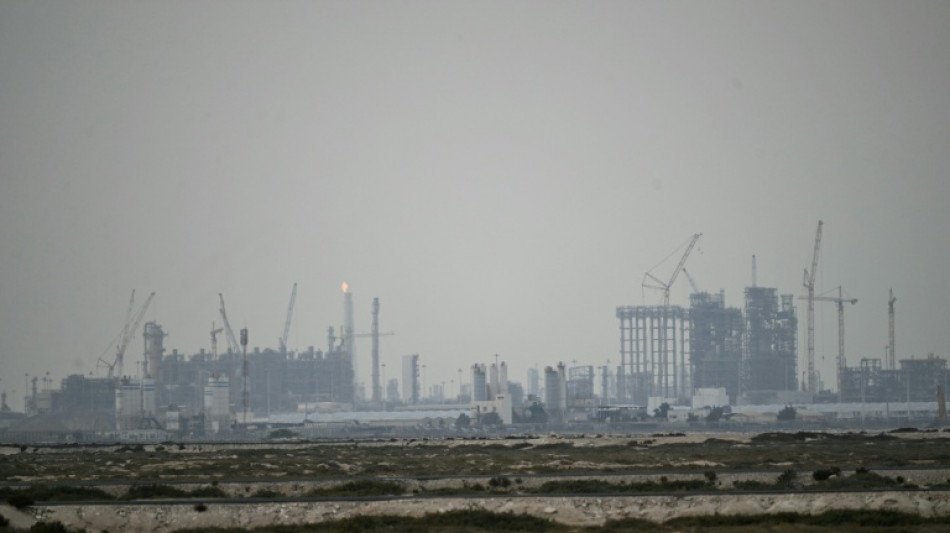
Mideast war rekindles European fears over soaring gas prices / Photo: - - AFP

 Putin's party set to retain power after Russia vote hit by cyberattacks, drones

 Germany's Merz under pressure after bruising state election losses

 Messi, Miami frustrated in 2-2 draw with San Diego

 Thousands march in France against 'licence to kill' draft law

 Forest fire threatens tourist town in Colombian Andes

 Torres on target again as PSG beat 10-man Marseille in Ligue 1

 Germany's Merz vows to stay course despite new election defeats

 Carrick demands Man Utd response after 'pathetic' jibes

 Liverpool boss Iraola urges Isak to raise his level
 Evenepoel wins record 4th straight world time-trial title
 France's Macron, Canada's Carney announce closer ties
 Carrick defends troubled Man Utd after Fulham escape

 Horror movie 'Resident Evil' tops N. American box office

 Germany's Merz vows to stay course despite new vote losses

 Man City outgun Sunderland despite Brobbey hat-trick, Man Utd rescue Fulham draw

 Mourinho blames ref committee for Real Madrid derby defeat

 Maresca craves a 1-0 win after eight-goal Man City thriller
 Atletico Madrid beat Real Madrid in tense derby clash
 Reusser retains world time-trial title

 Man City outgun Sunderland despite Brobbey hat-trick, Liverpool win at Bournemouth

 Top US, Chinese economic officials meet ahead of Trump-Xi summit
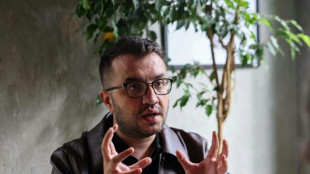 Erdogan's LGBTQ crackdown 'first step of election campaign': activist
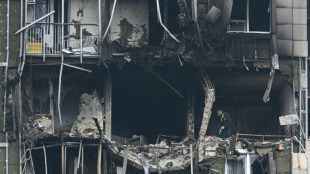 Mass drone barrage on Moscow kills two

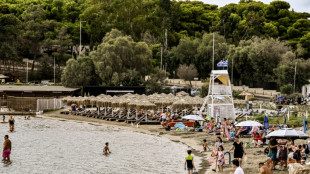 82-year-old dies after beach fight in Greece over sun lounger
 US warns of rapid escalation in Mideast war

With shipping through the Strait of Hormuz nearly choked off due to the Middle East war, natural gas prices have spiked and Europe is worried that it will suffer a crisis like in 2022.
Europe is heavily dependent upon natural gas imports, and the Russian invasion of Ukraine led to a disruption of supplies via pipeline.
This led to a surge in the European natural gas reference price, Dutch TTF, which spent most of 2022 over 100 euros per megawatt hour.
The outbreak of the war, which has seen major liquified natural gas producer Qatar halt production due to a lack of transport ships, has seen Dutch TTF double in price to over 60 euros, before pulling back on Wednesday.
With prices returning to levels not seen since the start of 2023, European businesses are already reacting.
- Immediate effects -
"In certain industrial sectors, particularly chemicals," the conflict "is already leading to a slowdown in production," with companies preferring to reduce output rather than buy energy when prices are too high, a spokesperson for Uniden, the French trade association for energy‑intensive industries such chemicals, steel, and paper, told AFP.
Smaller firms face a "cash flow shock", said Marc Sanchez, head of the SDI trade association of small and medium-sized businesses in France.
In Germany, companies that do not have long-term energy contracts are "directly impacted by price fluctuations," said Wolfgang Niedermark of the BDI, the country’s main industrial federation.
For now, "there are no security of supply issues but prices and the aftermath remain a strong concern," said a source at the European Commission.
- Different situation from 2022 -
In 2022 Europe suffered economic disruption as severe as the 1973 oil shock.
That was primarily due to is heavy reliance on Russian natural gas delivered by pipeline, which was disrupted due to the conflict, including the destruction of a key conduit under the Baltic Sea.
At the time Europe had very limited infrastructure to import liquefied natural gas (LNG). But it has since developed sufficient facilities to offload the fuel from ships and inject it into distribution networks.
Europe was thus able to diversify its suppliers.
In 2025, the United States was the top LNG supplier, followed by Russia, while Qatar ranked third with eight percent of European LNG imports.
The European Commission source noted that a smaller share of EU gas imports now travel through the Strait of Hormuz, and gas demand has also dropped.
But the current crisis could drive up the cost of filling Europe's gas storage facilities for next winter.
Moreover, European gas storage facilities were only 30 percent full at the end of February, compared with 62 percent at the end of February 2024.
- Risk of a long conflict -
"The key question is how long the blockage lasts" of the Strait of Hormuz, said Laurent David, general manager of the trade association which unites most LNG importers.
LNG exports from Qatar and the United Arab Emirates, almost all of which pass through the key waterway, account for a fifth of global supplies.
Even if 90 percent of those supplies go to Asia, the longer the Strait of Hormuz remains blocked the fiercer competition will be for remaining supplies, causing a bidding war between Asian and European countries.
Before new gas liquefication facilities go online in 2027 there "are no alternatives" to replace supplies that transit the Strait of Hormuz, said David.
Meanwhile, Western Europe's largest gas producer, Norway, can't boost output.
"We're already producing at maximum capacity," Equinor spokesman Ola Morten Aanestad told AFP.
- The question of Russian gas -
The potential supply crisis comes at a difficult moment for the European Union, which intends to stop importing Russian LNG from the autumn of 2027 to deny Moscow another source of funding for its military campaign in Ukraine.
While the Commission says it intends to respect that calendar, the energy minister of Norway, which is not a member of the EU, believes a delay will become topical.
"They are very clear that they want to free themselves from Russian oil and gas," Terje Aasland was quoted as saying by Bloomberg.
"But with the situation we are in now geopolitically, it is clear that that debate -- I believe -- will emerge again," he added.
nal-adc-cda-kas/uh/rl/pdw
E.Borba--PC