
-
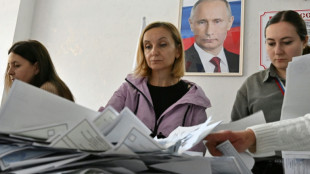 Putin's party set to retain power after Russia vote hit by cyberattacks, drones
-
Malaysia's 'elephant whisperer' fights to save Borneo's endangered giants

-
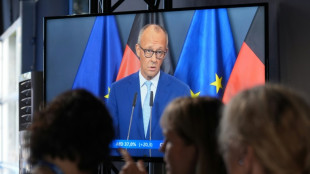 Germany's Merz under pressure after bruising state election losses
-
'I live in fear': 1.5 million Pakistani children sexually exploited online

-
 Messi, Miami frustrated in 2-2 draw with San Diego
-
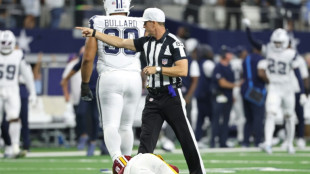
Cowboys beat Commanders, Vikings down Bears as star QBs injured
-
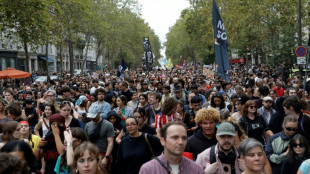 Thousands march in France against 'licence to kill' draft law
-
Braves clinch division title as Red Sox reach MLB playoffs

-
 Forest fire threatens tourist town in Colombian Andes
-
Bordeaux-Begles hammer Stade Francais despite Jalibert injury

-
 Torres on target again as PSG beat 10-man Marseille in Ligue 1
-
Milan and Juventus end blips with home wins

-
 Germany's Merz vows to stay course despite new election defeats
-
Bridgeman wins PGA Biltmore title with sizzling 61

-
 Carrick demands Man Utd response after 'pathetic' jibes
-
Williams injured as Bears shut down by Vikings
-
 Liverpool boss Iraola urges Isak to raise his level
-
US warns of rapid escalation in Middle East war
-
 Evenepoel wins record 4th straight world time-trial title
-
Germany's far-right AfD celebrates another state election win
-
 France's Macron, Canada's Carney announce closer ties
-
Russia vows revenge for election-day attacks as poll shows ruling party win
-
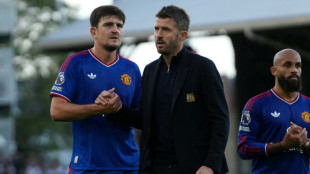 Carrick defends troubled Man Utd after Fulham escape
-
Spaun late shows snatches PGA Championship win

-
 Horror movie 'Resident Evil' tops N. American box office
-
Conceicao strikes as Juventus beat Atalanta

-
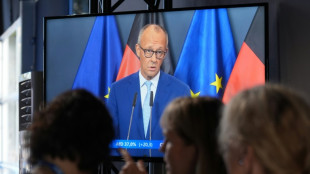 Germany's Merz vows to stay course despite new vote losses
-
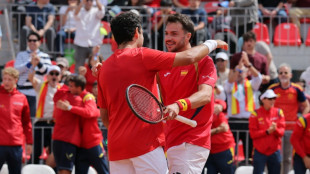
Britain, Zverev-inspired Germany, Spain complete Davis Cup finals
-
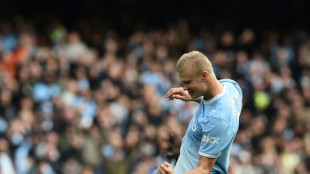 Man City outgun Sunderland despite Brobbey hat-trick, Man Utd rescue Fulham draw
-
Man Utd salvage Fulham draw as pressure mounts on Carrick
-
 Mourinho blames ref committee for Real Madrid derby defeat
-
Spanish civil war drama 'The Black Ball' wins at Toronto festival

-
 Maresca craves a 1-0 win after eight-goal Man City thriller
-
Germany's Merz shaken by far-right and far-left gains in state votes
-
 Atletico Madrid beat Real Madrid in tense derby clash
-
Macron welcomes Canada's Carney to French Atlantic territory
-
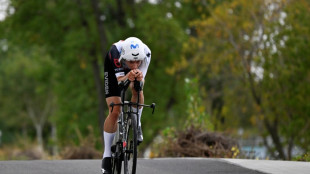 Reusser retains world time-trial title
-
Fiorentina frustrate Napoli with Serie A draw, Como upset

-
 Man City outgun Sunderland despite Brobbey hat-trick, Liverpool win at Bournemouth
-
Five-star Man City top Premier League after Sunderland thriller

-
 Top US, Chinese economic officials meet ahead of Trump-Xi summit
-
Ukrainian drones hit Moscow on last day of Russian elections
-
 Erdogan's LGBTQ crackdown 'first step of election campaign': activist
-
Multi-Asset Trading Venue Monochrome Exchange Announces IEO of Its Native Token, $MCR

-
 Mass drone barrage on Moscow kills two
-
South Korea break Japan hearts to win Asian Games basketball gold

-
 82-year-old dies after beach fight in Greece over sun lounger
-
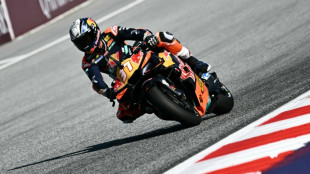
Acosta takes first victory at Austrian MotoGP
-
 US warns of rapid escalation in Mideast war
-
PSG president Nasser al-Khelaifi under investigation in France for conflict of interest

Middle East war spirals with fresh strikes on Iran, Gulf
Israel launched on Thursday a fresh wave of strikes on Iran, which stepped up its attacks on Gulf nations Qatar and Bahrain, as the Middle East war spread throughout the region and beyond.
AFP reporters in Tehran and Doha heard huge explosions over the cities, with a thick column of black smoke billowing on the horizon of the Qatari capital.
A conflict sparked Saturday with US-Israeli attacks on Iran that killed supreme leader Ayatollah Ali Khamenei has rapidly escalated, engulfing the region and drawing in global powers, and snarling shipping and energy markets.
The war has touched as far afield as the Sri Lankan coast, where a US submarine torpedoed an Iranian warship, and Azerbaijan, which threatened retaliation after a drone hit an airport.
Azerbaijan warned that the attack "will not go unanswered" and said it was "preparing the necessary retaliatory measures," raising fears of another country entering the fray.
In Lebanon, AFPTV images showed buildings in rubble and plumes of black smoke drifting over Beirut after Israeli strikes aimed at Iran-backed militant group Hezbollah.
On another front, Tehran said it had hit Iraq-based Kurdish groups, as the United States reportedly seeks to arm Iranian Kurdish groups to infiltrate Iran.
Australia deployed two military aircraft to the theatre while Canada's Prime Minister Mark Carney said he could not rule out his armed forces taking part in hostilities.
The war has also dragged in NATO member Turkey after alliance air defences destroyed a missile launched from Iran heading towards Turkish airspace.
While a Turkish official said the missile appeared to have been aimed at a British base in Cyprus, Turkey summoned the Iranian ambassador over the incident.
Iran's official IRNA news agency said 1,045 military personnel and civilians have been killed since the war began, a toll AFP could not independently verify.
Iranian media reported Thursday that a sports complex, football stadium, municipality building and shop fronts across Tehran were damaged in Israeli and US strikes on the city.
The country is effectively cut off from the rest of the world, with the internet operating at around one percent of capacity, according to the Netblocks monitor.
Israel's war aims were to "inflict severe damage on the Iranian terror regime until it removes the existential threat", military spokesman Brigadier General Effie Defrin said in a televised briefing.
Defence Minister Israel Katz said his US counterpart Pete Hegseth had assured him of Washington's firm backing for their joint military campaign against Iran and urged him to continue the operation "to the end".
- 'We will not surrender' -
In the early hours of Thursday, AFP reporters in Jerusalem heard explosions following warnings of incoming Iranian missile fire, but residents were quickly cleared to leave their shelters.
Across the border in Lebanon, Israel said its forces had hit "several command centres belonging to the Hezbollah terrorist organisation" in south Beirut.
Lebanon's state-run National News Agency (NNA) said a separate pre-dawn Israeli drone strike hit an apartment in Beddawi, a Palestinian refugee camp near Tripoli, killing senior Hamas official Wassim Atallah al-Ali and his wife.
Hezbollah's leader Naim Qassem vowed the group would step up its fight against Israel, in his first speech since the latest round of fighting erupted.
Lebanese authorities said at least 72 people had been killed, 437 wounded and 83,000 displaced from their homes since Monday.
The conflict has not spared the rich Gulf monarchies, usually seen as a safe haven in a volatile region, as Iran has lashed out at cities and energy infrastructure.
Thirteen people, seven of them civilians, have been killed in countries around the Gulf since the war began, including an 11-year-old girl in Kuwait.
Qatar said Thursday it was intercepting an incoming missile attack as loud blasts, described by AFP journalists as the most intense yet, reverberated across Doha.
It had earlier evacuated residents living near the US embassy in Doha, after earlier thwarting attacks on Hamad International Airport.
The United Arab Emirates, Saudi Arabia and Qatar all said they had intercepted Iranian missiles on Wednesday, including a drone set to hit the Saudis' huge Ras Tanura refinery.
- 'Catastrophic' -
In Washington, the US Senate rejected a resolution aimed at limiting US military action, voting largely along party lines, with Republicans backing Trump.
Even if the measure had cleared the Senate and the House, where a vote on a similar resolution is expected Thursday, Trump would have been able to veto it.
The war could usher in a "prolonged period of flux" for the global economy, warned International Monetary Fund chief Kristalina Georgieva.
Iran's powerful Revolutionary Guards have claimed the closure of the Strait of Hormuz, the Gulf chokepoint through which a fifth of the world's crude oil flows, with oil tanker transits down 90 percent, according to market intelligence firm Kpler.
A tanker in the waters off Kuwait suffered a "large explosion" that caused an oil spill, the British maritime security agency UKMTO reported.
According to Iranian state TV, Iran struck a US oil tanker in the Gulf with a missile, an incident that could not immediately be independently confirmed.
Facing energy shortages, South Korea said it was activating a $68-billion market stabilisation fund, while China reportedly told oil refiners to stop exporting diesel and gasoline.
With flights scrapped and travellers stranded or hastily repatriated, the war is also hammering tourism in a region that has become a prized destination for holidaymakers worldwide.
"My last group of tourists left three days ago, and all the other groups planned for March have been cancelled," said Nazih Rawashdeh, a tour guide near Irbid, in northern Jordan.
"This is the start of the high season here. It's catastrophic," he told AFP.
burs-ric/ser
L.Mesquita--PC