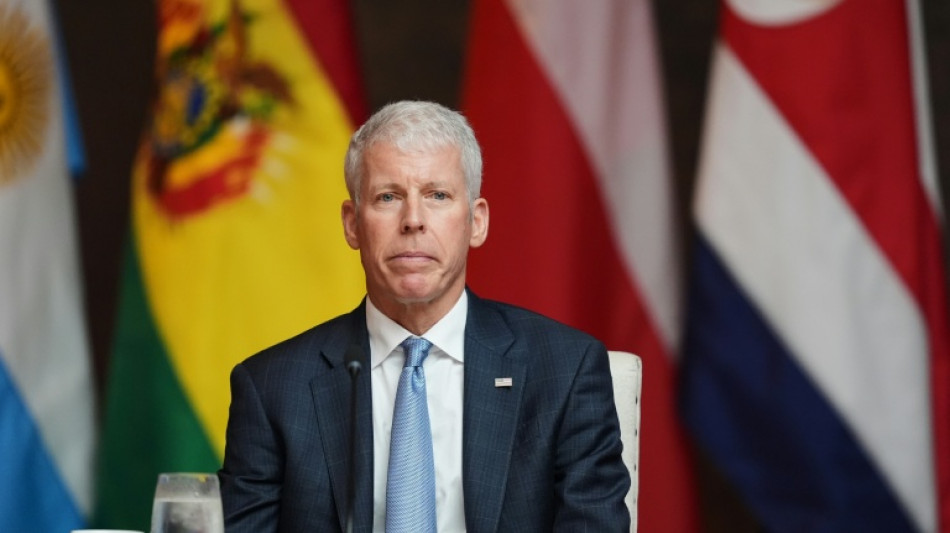
US says it will not hit Iran energy sector / Photo: Rebecca Blackwell - POOL/AFP

 China and Gabon Elevate Ties to 'Shared Future' Amid State Visit

 World Golf Awards 2026 to be Hosted at Egypt’s Madinaty Golf Club

 12 Billion Gallons of Raw Sewage Discharged into Chicago River Despite Deep Tunnel Infrastructure

 Edmund Richardson Wins Baillie Gifford Prize for 'Alexander' Biography

 BYD Drops Rotating Screens in New Models Due to Tech Limits
The United States will spare Iran's energy infrastructure as it wages war with Israel against the Islamic republic, Energy Secretary Chris Wright said Sunday.
With oil prices rising dramatically, he told CNN that disruptions to the petroleum and gas industry will be short lived -- "worst case, that's a few weeks. That's not months."
Israel attacked oil storage facilities Saturday in and around Tehran, sparking huge fires in the first such attacks reported since the war started last weekend. Wright seemed to downplay them.
"These are Israeli strikes, these are local fuel depots to fill up the gas tank," Wright said.
He added: "The US is targeting zero energy infrastructure. There are no plans to target Iran's oil industry, their natural gas industry, or anything about their energy industry."
The war has all but shut down the Strait of Hormuz, through which nearly 20 percent of the world's crude oil and about 20 percent of liquefied natural gas usually transit.
Energy markets have been riled by this disruption and oil prices shot up. West Texas Intermediate, the US benchmark for oil, rose 12 percent just on Friday and is up 36 percent in a week.
Iran accounts for about four percent of world oil production, according to the US Energy Information Administration.
Its oil industry is subject to international sanctions but some is still exported, mainly to China, oil industry data shows.
J.Oliveira--PC