UN urges 'exemptions' to get aid through Strait of Hormuz / Photo: Fabrice COFFRINI - AFP

 Back-to-school in Cuba a grim day with shortages of everything
 Canadian minister says Russia's G20 presence sparked 'discomfort'
 IMF reaches agreement with Senegal on new $2.2 bn loan programme
 Germany blames Russia for airport drone incident, hits back with sanctions
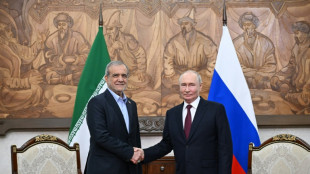 Iran president urges return to truce, hails Russian support

 Aster and World Liberty Financial Launch USD1 RWA Boost: Phase 1, Offering 125M $WLFI + 6.25M USD1 in Rewards

 Tronchon sprints to Vuelta stage 10 win, Mas keeps red jersey

 Germany defender Rudiger announces international retirement
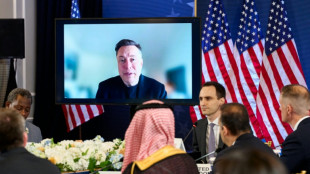 Musk defends AI data centers, slams EU rules at G20

 Activists blame Kenya for Ugandan opposition figure's plight

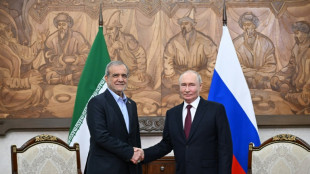 Iran president offers US olive branch, hails Russian support

 TrustFinance Community Choice Awards 2026 Opens Global Voting

 Nepal disaster a climate 'warning signal': foreign minister

 France winger Diaby returns to Leverkusen until 2031

 Barcelona confirm Jesus arrival from Arsenal

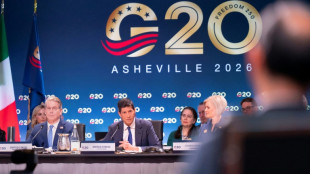 EU official says it's not time to 'normalize' Russia at G20 finance talks
 RedHill Announces Transformational Acquisition of Commercialization Rights to Ferring’s Rebyota® and Clenpiq®
 TrendEadvisor Launches Global Multi-Asset Platform Combining Online Investing with Social Trading
 India's top court drops criminal cases against protesters
 Philippine couple married in hip-deep floodwaters

 Villa sign Senegal winger Mbaye from PSG
 Former Peru minister last-minute contender for UN labour agency helm

 Messi legacy will 'live forever', says Beckham

 'Literally tasting the smoke': Malaysians suffer as haze worsens

 Kyiv's defences, 'hybrid' threat from Moscow headline EU talks
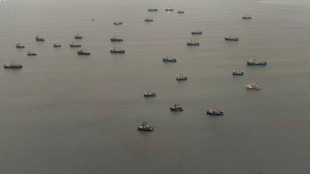
The United Nations aid chief warned Wednesday that the Middle East war was impacting aid routes and called for "exemptions" so humanitarian supplies could get through.
The war in the Middle East has effectively closed the Strait of Hormuz, while fuel supply disruptions are sending freight rates soaring.
UN aid chief Tom Fletcher warned that the escalating war and its impact on the strait was having "a direct impact on our humanitarian supplies, including going to areas of key need in sub-Saharan Africa".
"I'm worried that further escalation will damage other supply routes," he told reporters in Geneva, warning that the war was pushing up prices and driving "more people into greater need".
"We're appealing to all the parties to try and secure those routes, including the Strait of Hormuz, for our humanitarian traffic... so we can reach anyone, anywhere, on the basis of greatest need."
"We're living through a moment right now of grave peril," Fletcher said.
"We're seeing these crises escalate rapidly and increasingly collide in dangerous ways," he said, calling for "calmer heads to prevail".
The last two weeks of fighting are further confirmation that "we're living in a time of brutality, impunity and indifference", he said, cautioning that "the rules-based scaffolding meant to restrain the worst excesses of war is cracking".
"Human ingenuity is being applied to find ever more sinister ways to kill at scale, while civilians are subjected to ever more abject violence."
- 'Massive gap' -
The UN aid chief warned that such violence was taking a heavy toll at a time when humanitarians were already on their knees.
"We're seeing violence reverberate across borders, displacement, economic shocks, soaring humanitarian needs -- and we're seeing the consequences spread faster than we can respond," he said.
"Humanitarian action (is) overstretched, under sustained attack and under-resourced."
When Fletcher launched the UN's annual Global Humanitarian Appeal for 2026 last December, he requested $23 billion to help 87 million of the world's most vulnerable people, with a heavy focus on dire conflict situations like those in Gaza, Ukraine, Sudan, Haiti and Myanmar.
The amount and scope were dramatically reduced compared to recent years, as the UN strives to adapt to a new reality since US President Donald Trump returned to the White House in January 2025, slashing foreign aid.
The UN has stressed that its smaller appeal did not mean humanitarian needs have shrunk.
Fletcher voiced optimism Wednesday that the 2026 target could be reached, while acknowledging that "the needs are far greater" than the people the UN can reach.
The UN has already received $5 billion towards the 2026 plan, including $2 billion from the US, with additional pledges bringing the total to $8.7 billion, he said.
"So that's over a third of what we're looking to get this year for this plan, delivered in the first quarter," he said.
But, he warned, "we still face a massive gap".
"Without additional support, millions of people will die."
The towering humanitarian needs were all the more distressing when around $1 billion is being spent every day on the Middle East war, he said.
Just a day's worth of war funding "would allow us to save millions of lives", Fletcher insisted.
M.Gameiro--PC