Iran warns of long war that would 'destroy' world economy / Photo: Handout - ROYAL THAI NAVY/AFP

 Back-to-school in Cuba a grim day with shortages of everything
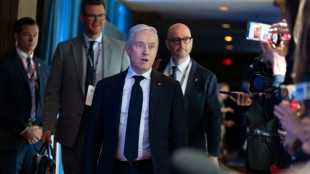 Canadian minister says Russia's G20 presence sparked 'discomfort'
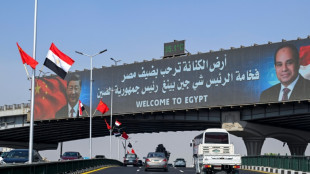
 IMF reaches agreement with Senegal on new $2.2 bn loan programme
 Germany blames Russia for airport drone incident, hits back with sanctions
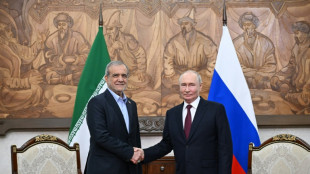 Iran president urges return to truce, hails Russian support
 Aster and World Liberty Financial Launch USD1 RWA Boost: Phase 1, Offering 125M $WLFI + 6.25M USD1 in Rewards

 Tronchon sprints to Vuelta stage 10 win, Mas keeps red jersey

 Germany defender Rudiger announces international retirement
 Musk defends AI data centers, slams EU rules at G20
 Activists blame Kenya for Ugandan opposition figure's plight
 Iran president offers US olive branch, hails Russian support

 TrustFinance Community Choice Awards 2026 Opens Global Voting
 Nepal disaster a climate 'warning signal': foreign minister

 France winger Diaby returns to Leverkusen until 2031

 Barcelona confirm Jesus arrival from Arsenal
 EU official says it's not time to 'normalize' Russia at G20 finance talks
 RedHill Announces Transformational Acquisition of Commercialization Rights to Ferring’s Rebyota® and Clenpiq®
 TrendEadvisor Launches Global Multi-Asset Platform Combining Online Investing with Social Trading
 India's top court drops criminal cases against protesters
 Philippine couple married in hip-deep floodwaters

 Villa sign Senegal winger Mbaye from PSG
 Former Peru minister last-minute contender for UN labour agency helm

 Messi legacy will 'live forever', says Beckham
 'Literally tasting the smoke': Malaysians suffer as haze worsens

 Kyiv's defences, 'hybrid' threat from Moscow headline EU talks
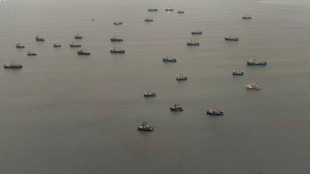
Iran warned Wednesday it was ready for a long war of attrition that would "destroy" the world economy, after firing on two commercial ships and threatening vessels transiting through the Strait of Hormuz.
As Tehran tightened its chokehold on the crucial sea passage for the global fuel trade, the International Energy Agency announced a record release of 400 million barrels of oil reserves by its members in a bid to tame prices.
Oil prices have surged since February 28, when the United States and Israel attacked Iran, killed its supreme leader and plunged the Middle East into war.
"This is a major action aiming to alleviate the immediate impacts of the disruption in markets," IEA Executive Director Fatih Birol told reporters.
"But to be clear, the most important thing for a return to stable flows of oil and gas is the resumption of transit through the Strait of Hormuz."
US President Donald Trump told reporters at the White House that "very quickly" there would be "great safety" for oil tankers in the strait, through which 20 percent of global crude oil and liquefied natural gas supplies transit.
In an interview with Axios, he said the war could end "soon" and US forces had "practically nothing left to target".
- Civilian ports threat -
With the conflict now in its 12th day, Iran's Revolutionary Guard vowed to target "economic centres and banks" that it deems linked to US and Israeli interests, prompting more international firms to evacuate employees from Dubai.
The US and Israel "must consider the possibility that they will be engaged in a long-term war of attrition that will destroy the entire American economy and the world economy", Ali Fadavi, advisor to the Revolutionary Guards' commander-in-chief, told state television.
Iran said it had struck the Liberian-flagged container ship Express Rome and the Thai bulk carrier Mayuree Naree because they had entered the Strait of Hormuz "after ignoring the warnings of the IRGC naval forces".
Oman's navy rescued 20 crew members, but efforts were underway to find three more. Pictures shared by the Thai navy showed black smoke pouring out of the vessel.
Iran also threatened to target regional ports if its own were attacked after the US accused Iran of using civilian ports in the strait for military operations and warned that it would consider them legitimate targets.
- Gulf airport, fuel tanks hit -
Analysts say a prolonged closure of the Strait of Hormuz, which also carries a third of the fertiliser for world food production, would have a devastating effect on the global economy, particularly in Asia and Europe.
French President Emmanuel Macron urged G7 leaders to act to restore navigation there "as soon as possible", while the UN asked for all parties to allow humanitarian cargo to transit.
Iran has amplified the economic fallout by targeting US allies in the Gulf.
On Wednesday, drones fell near Dubai airport, injuring four people, the city's government said.
Drones also hit fuel tanks at Oman's Salalah port, Oman News Agency reported.
- Fireball in Beirut -
Lebanon was drawn into the war last week when Iran-backed militant group Hezbollah attacked Israel in response to the killing of Iranian supreme leader Ayatollah Ali Khamenei.
Israeli strikes on Wednesday hit an apartment building in central Beirut.
AFPTV's live broadcast captured the sound of an air strike followed by a fireball erupting.
An AFP correspondent saw destroyed walls in the building's seventh and eighth floors, with damaged cars nearby and security forces present at the scene.
When the strike hit, "I ran from room to room, pulled my wife and daughter out of the rooms and hid them behind a wall, then the second strike hit", said Fawzi Asmar, owner of a bakery on the street where the strike took place.
Lebanon said the death toll in 10 days of fighting between Israel and Hezbollah during the Middle East war had reached 634, while more than 800,000 people have registered as displaced.
- 'Enemies' -
The Israeli-US attacks came weeks after Iranian authorities crushed mass protests, although the United States and Israel say they are not necessarily seeking to topple the Islamic republic.
Iranian authorities warned against dissent at home, with the country's police chief Ahmad-Reza Radan saying protesters would be viewed and dealt with as "enemies".
"This is the bitter reality of the Islamic republic: Even in the midst of a crisis, it seizes the opportunity for repression," Nobel peace prize laureate Shirin Ebadi wrote in a post on Telegram.
"When the police chief says 'hands on the trigger' it means he is ready to kill citizens instead of protecting people's lives," she added.
"The Islamic republic says in a thousand languages that its first enemy is its own people, followed by Israel and America."
The United States and Israel launched the war with an attack that killed Iran's supreme leader, Ayatollah Ali Khamenei.
His son Mojtaba Khamenei has been named his successor, though he has yet to appear in public, and on Wednesday officials said the new ayatollah was injured but "safe".
Iran's health ministry said on March 8 that more than 1,200 people had been killed in US and Israeli strikes. AFP was not in a position to independently verify the figures.
burs-dt/ser
P.Queiroz--PC