Mideast oil shock 'largest' in history as Iran hits new Gulf targets / Photo: Fadhel MADHAN - AFP

 Nepali families hold symbolic funerals for missing after floods
 Newcastle sign Lille forward Fernandez-Pardo

 Even at Elysee, phones are handed in, Macron tells French pupils
 Chelsea agree to sign Atalanta's Ahanor, with Palace loan for this season

 Chelsea sign Atalanta's Ahanor and loan him to Palace

 UK chalks up hottest summer on record for second year running
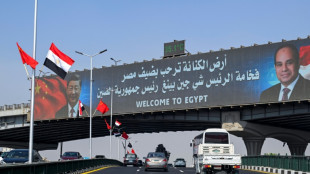 China's Xi visits Egypt as US sanctions threat looms over Iran links

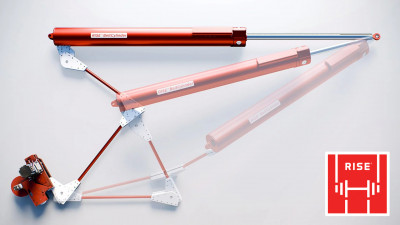 RISE Robotics Awarded $100,000 MassVentures Grant to Accelerate Commercialization of Beltdraulic Technology

 Global bond sell-off deepens on inflation concerns

 Germany's far-right AfD promises 'boom' but economists fear worst

 Former England captain Stokes signs for Adelaide Strikers

 Pakistan selector and ex-captain Misbah resigns after coach sacked
 Shein flattens on Hong Kong debut facing global headwinds

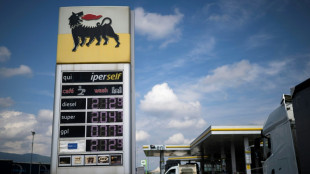 Eurozone inflation hits three-year high at 3.3% in August
 Man City chase Fernandez, Arsenal eye Alvarez on deadline day
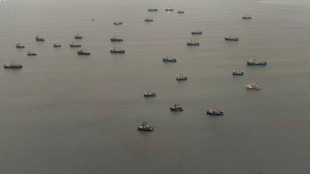 El Nino hammering Peru anchovy fishing: industry officials
 Mass Russian barrage kills 12 in Kyiv

 PineX Capital Launches MetaTrader 5 as Prop Firm Expands Trading Platform Offering
 Women survivors face sanitation woes in Nepal relief camp
 Oil extends gains, stocks mixed as Trump issues fresh Iran warning
 Thai resort readies for US carrier's 5,000 sailors
 AI startup Manus says resumes independent operations

 'Massive' Russian missile, drone attack on Kyiv kills 8
 Defence tech hub Munich booms as Europe rearms
 Nigeria rethinks criminalisation of suicide
The Middle East war has caused the biggest oil supply shock in history, the International Energy Agency warned Thursday, as Iran launched a new wave of attacks against Gulf energy targets that sent prices spiking above $100 a barrel.
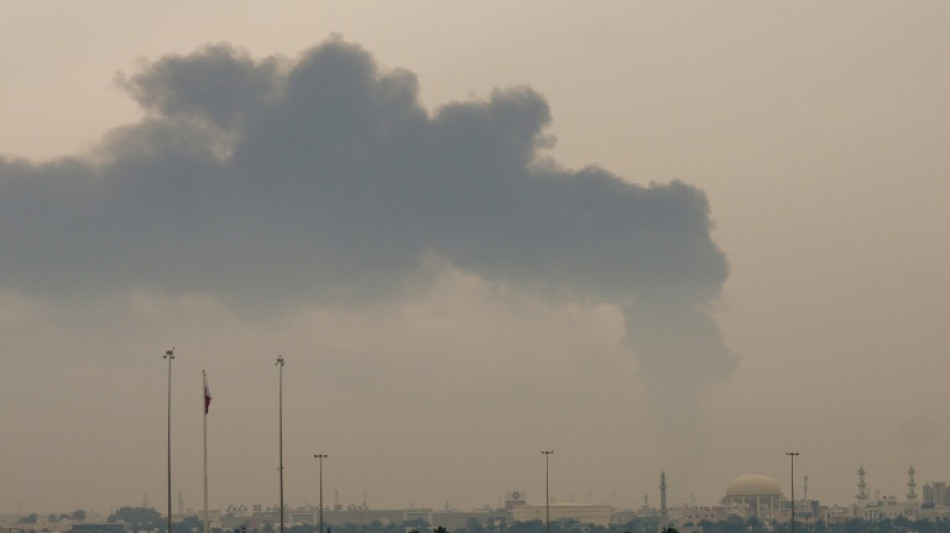
Images from Bahrain showed thick smoke rising after a strike on fuel tanks in Muharraq, with residents told to stay inside and close their windows.
Drones caused damage again at Kuwait's international airport, explosions were heard in downtown Dubai, and Saudi Arabia said it had intercepted drones headed towards its Shaybah oil field and its embassy district.
The Paris-based IEA, a world authority on energy markets, said the 13-day conflict had caused the "largest supply disruption in the history of the global oil market", surpassing those of the 1970s.
The Gulf states' total oil output is down by at least 10 million barrels per day and there were "no signs of a de-escalation in hostilities," it added.
With many Gulf states slashing production and oil tankers prevented by Iranian threats and attacks from crossing the crucial Strait of Hormuz, benchmark oil prices have risen between 40-50 percent since the US and Israel launched attacks on Iran on February 28.
A top Iranian military figure warned on Wednesday that the country could wage a prolonged war that would "destroy" the world economy, while US President Donald Trump insisted that Iran was facing imminent defeat
The US leader, who is under mounting domestic pressure, also cautioned that the military campaign would not end "immediately" despite indicating that US forces were running out of targets to hit in the Islamic republic.
The conflict has rapidly spread across the region, with hundreds killed by Israeli strikes in Lebanon, including at least eight more who died on Beirut's blood-stained seafront on Thursday.
Shipping in and around the crucial Strait of Hormuz remains at a near-standstill, with another three ships attacked in the Gulf off the coast of the United Arab Emirates and Iraq.
A ship near the United Arab Emirates was hit by an "unknown projectile", but all crew were safe, according to an alert from the UK maritime agency on Thursday.
Authorities in Iraq announced overnight a "sabotage" attack on two oil tankers, with at least one crew member from India reported dead.
- 'End of the line' -
The Strait of Hormuz, through which a fifth of the world's oil and liquefied natural gas (LNG) passes, lies off Iran and is just 54 kilometres (34 miles) wide at its narrowest point.
Tehran has vowed that not one litre of oil will be exported from the Gulf while US-Israeli attacks continue, although industry figures suggest its own sanction-hit exports are continuing to get through.
US forces said they had struck 28 Iranian mine-laying vessels on Wednesday amid fears that Tehran could render the Strait of Hormuz unnavigable.
The renewed attacks by Iran on Thursday came after Trump insisted that Tehran was "pretty much at the end of the line."
"Doesn't mean we're going to end it immediately, but they are," he told reporters.
He also threatened that Washington could strike infrastructure that would take a generation to rebuild, while indicating he would prefer to show restraint.
One Tehran resident told AFP she was worried about Trump calling off the air strikes and leaving the Islamic republic leaders in place, just months after anti-government protests were brutally repressed.
"I don't know what will happen to us mentally and emotionally if it doesn't work out this time," she told AFP on condition of anonymity.
"I don't understand people who say 'no to war' because we were the ones out in the streets protesting, and we saw that they will not leave no matter what," she said.
Israel's military said Thursday it began a new "wide-scale" wave of strikes.
- Oil prices spike again -
With the cost of the war mounting, Iran's Revolutionary Guards have also threatened to strike "economic centres and banks" linked to US and Israeli interests, prompting more international firms to evacuate staff from Dubai.
The United States and Israel "must consider the possibility that they will be engaged in a long-term war of attrition that will destroy the entire American economy and the world economy," Ali Fadavi, an adviser to the Guards' commander-in-chief, told state television on Wednesday.
Oil prices have soared past $100 a barrel despite an announcement Wednesday that leading consumer countries around the world would authorise a record release of their strategic crude reserves in action coordinated by the IEA.
The move was not enough to overcome fears of a prolonged conflict.
"In trading desk language, the IEA release is the equivalent of pointing a garden hose at a refinery blaze," commented Stephen Innes at SPI Asset Management.
The war's spread has hit Lebanon particularly hard, with Israel launching strikes and ground operations against Iran-backed Hezbollah.
The offensive has killed more than 630 people, according to Lebanese authorities, while more than 800,000 people have registered as displaced.
The Israeli military said early Thursday that it had "begun a wide-scale wave of strikes targeting terror infrastructure belonging to the Hezbollah terrorist organization across Lebanon."
Iran's health ministry said on March 8 that more than 1,200 people have been killed in the war, a figure AFP has not been able to independently verify.
In Israel, authorities said 14 people have been killed, while attacks in the Gulf have killed 24 people, including 11 civilians and seven US military personnel, according to local authorities and the US Central Command.
The war has cost the United States more than $11.3 billion, lawmakers were told in a Pentagon briefing, according to the New York Times.
burs-adp/ser
E.Ramalho--PC