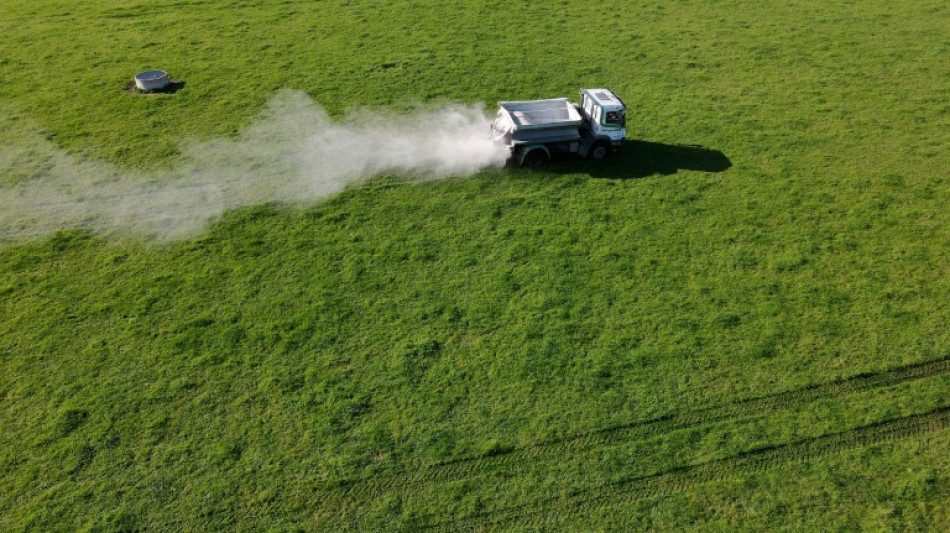
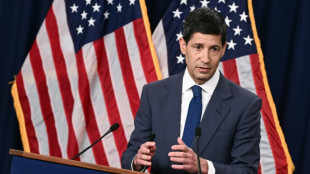
Top WTO official sounds fertiliser warning over Middle East war / Photo: William WEST - AFP

 UEFA's legal move 'massive escalation' in bitter Infantino feud

 MEXC Launches Earn Plus With Limited-Time Event Offering Up to 800% APR Booster
 Norway's new King Haakon VIII, popular face of shaken monarchy
 Stocks rise ahead of Fed chair's policy speech

 Norway's new King Haakon VII, popular face of shaken monarchy

 Last-wicket duo take England to 290 all out in 2nd Test against Pakistan
 MPSC Drug Inspector Exam Leak: Rutuja Patil Allegedly Paid Rs 50 Lakh for Leaked Paper

 Japan spent record $96 bn in yen interventions: ministry
 Nepal-China floods disaster: Latest developments
 Duplantis needs A-game to fend off Karalis pressure
 Architect Minenhle Makhanya Ordered to Repay R147 Million for Nkandla Upgrades

 Iran says still open to diplomacy as war with US hits six months

 20,000 Salmon Return to Klamath River Following Dam Removal, Yet Recovery Faces Ongoing Challenges

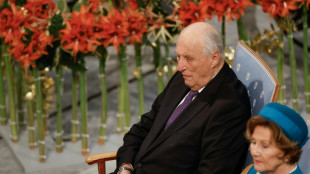 King Harald, 'symbol' of Norway, dead at 89

 Norway's new King Haakon, popular face of shaken monarchy

 Most stocks rise as attention turns to Warsh speech
 Japanese rugby U-turns on limits on naturalised players

 Norway's King Harald dead at 89

 Climate change hits trout and salmon in UK's prized chalk streams

 Škoda Octavia Marks 30 Years With Nearly 7.9 Million Units Produced
 Nepal seeking to reach survivors in tunnel as risk of new floods rises

 Anger in Austria over business park on former Nazi camp site

 In shadow of Premier League, Serie A flexes financial muscle

 Tanker pays record $5.3 mn to transit Panama Canal: administrator

 Pilgrims seeking peace caught in deadly Nepal-Tibet floods
Disruptions to fertiliser supplies caused by the Middle East war pose a double threat to global food security through scarcity and high prices, a top World Trade Organization official has warned.
Iran has virtually shut the Strait of Hormuz, choking a vital transit route for oil and gas -- as well as fertilisers.
A third of the world's fertilisers normally transit the strait, and the disruption has prompted multiple warnings about the impact on food production.
"Fertilisers are the number one issue of concern today. If there is no more fertiliser, there is an impact on quantities but also on prices," WTO Deputy Director-General Jean-Marie Paugam told AFP in an interview in Yaounde.
"The effect compounds the following year: harvests shrink and prices rise."
The Gulf's ample supplies of natural gas, a key ingredient in artificial fertilisers, have made the region a major manufacturer.
But production has been severely impeded by the war, with some major facilities forced to shut down.
Major food exporters such as India, Thailand and Brazil depend on the Gulf for urea, a nitrogen-based fertiliser, making them vulnerable.
Because the war is only a few weeks old, there is currently no fertiliser shortage, Paugam said.
"But if fertilisers from the Gulf do not circulate, we will feel a direct impact on supplies to major producer countries just as planting seasons begin for the crops that will be harvested next year," he said.
"If the Strait of Hormuz is blocked for three months, the impact will be significant."
- Risk of stockpiling -
Net food-importing countries would be in a very bad position, including "a large part of west Africa and north Africa", Paugam noted.
This effect can be amplified if countries start stockpiling, as happened during disruptions to international trade at the height of the Covid-19 pandemic.
Covid set back the fight against hunger worldwide. Since then, the world returned to its trajectory towards eliminating hunger by 2030, one of the goals adopted by UN member states in 2015.
"But with the risks linked to the war in the Middle East, there is once again a risk of falling off track," Paugam warned.
E.Raimundo--PC