
-
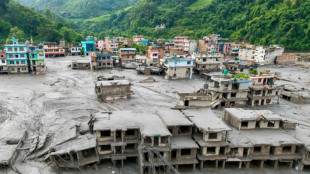 Desperate families search for missing after Nepal floods
-
Palace intrigue in Uganda as succession battle heats up
-
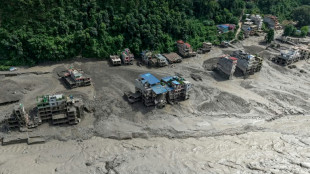 The missing in Nepal-Tibet flash floods
-
'Housing First' approach gets Swedish city's homeless off streets
-
 Search for 1,300 missing after deadly Nepal-Tibet floods
-
Czech duo Muchova and Mensik win US Open mixed doubles title

-
 Once a top export, prized Kashmir carpet fades
-
Japan's 'polka dot queen' artist Yayoi Kusama dies aged 97

-
 Search for 1,000 missing after deadly Nepal-Tibet floods
-
Nepal-Tibet disaster: what we know
-
 Park So-yeon first woman to play for eSports powerhouse South Korea
-
China deploys record number of ships around Taiwan as pressure grows
-
 Yayoi Kusama: Japan's kaleidoscopic, troubled 'polka dot queen'
-
Ruthless Bayern target treble as rivals reboot on Bundesliga return

-
 Euro champ Hunt 'on her toes' against world's best in Zurich 100m
-
What experts know so far about Nepal's deadly floods
-
 Asian chip firms lifted by Nvidia forecast but broader markets struggle
-
UEFA set to withdraw FIFA boycott threat ahead of Champions League draw

-
 Search for missing after Nepal-Tibet floods kill 165
-
Sumo moves to beat Japan summer heat as temperatures rise
-
 Qantas says profits slump as fuel costs surge
-
'Be more honest': Markets crave clarity from cryptic Fed chair
-
 Lofty bond yields, Bessent's intervention pose challenge to Fed's Warsh
-
Climate change leaves its mark on America's largest reservoir
-
 The foreigners missing in Nepal's flash floods
-
CIA director warned Russia not to attack NATO members: US media
-
 Bond yields are surging: Here's why that could spell trouble
-
Search for missing after Nepal-Tibet floods kills at least 160
-
 Fed's Cook rejects Trump mortgage fraud claims
-
Meta, US states agree $18 bn settlement in landmark teen safety case
-
 Police probe 'assault allegations' after Carse's nightclub incident
-
What scientists know so far about Nepal's deadly floods
-
 How we might hear new Dolly Parton music in the future
-
US general visits Colombia to discuss war on drugs

-
 Nvidia doubles revenue, forecasts even more AI spending
-
Meta settlement puts social media industry on notice: 'There will be more'

-
 Canada renews push to boycott US products
-
NFL owners approve record Seahawks sale

-
 Savio scores on debut as Spurs set-up League Cup tie with Liverpool
-
Nigerian armed groups net nearly $6 mn in ransoms: study
-
 Brazil sues Discord over child safety measures, demands $100 mln in damages
-
Savio scores on debut as Spurs advance in League Cup

-
 Alberta NDP Urges Smith to Postpone Separation Vote Amid Trade War
-
Mbappe hits treble as Real Madrid thrash Real Sociedad

-
 Fenerbahce stun Lyon in Champions League as AEK crush Levski
-
At Dollywood, superfans honor the late singer and local hero

-
 Why Global Finance Still Relies on Wall Street Despite Diversification Trends
-
Stocks mixed as oil drops, US inflation stays high
-
 Bethlehem Father Seeks Aid for Special Needs Children Amid Health Crisis
-
Bolivia's Paz appoints new economy minister amid bailout talks
Which countries' ships are hit by Hormuz crisis?
Shipping companies from Greece, the UAE and China are most affected by the closure of the Strait of Hormuz, according to data from Bloomberg and marine traffic organisations.
Around 670 commodity vessels sent signals from west of the Strait of Hormuz over the last day, with companies from the nearby United Arab Emirates accounting for 120 -- around 18 percent of the total.
The war erupted on February 28 when the US and Israel launched attacks against Iran, sparking retaliatory strikes across the region -- with Tehran's forces targeting the crucial waterway.
The figures may understate the true totals as some vessels may have turned off their transponders.
- Greece -
After the UAE, next on the list is Greece: its companies have at least 75 commodity vessels that have been in the strait since the beginning of the war -- around 12 percent of the total.
Of those vessels, around 30 are oil or gas tankers, according to an analysis of Bloomberg data, which collates information from various organisations.
- China -
Asian countries have been hit hard by the shutdown.
Chinese companies account for 74 commodity vessels in the area, 25 of which are oil and gas tankers. The remainder are dry bulk carriers such as container ships.
- Japan -
Japanese companies have at least 23 oil and gas vessels and 16 dry carriers in the strait.
Added to that, 25 vessels from Hong Kong -- 13 oil and gas, 12 dry -- are also in the region.
- India -
India-based companies have 24 oil and gas vessels in the area.
Singapore and South Korea companies have also been affected, with 29 and 22 commodity vessels respectively stuck since the war began.
Vietnam has three large gas carriers in the area.
- Oil and gas -
Around 50 Very Large Crude Carriers (VLCC) appear to be stuck, along with 11 Very Large Gas Carriers.
South Korea accounts for seven of the VLCCs, China and Japan companies each account for six, and Greece for five.
- Iran-linked vessels -
Of the 225 crossings by commodity carriers since the start of the war, more than 40 were by Iranian vessels, according to data from maritime intelligence firm Kpler.
A further 60 were by vessels that are not flagged or directly owned by Iran but are sanctioned by the US under its Iran program.
- Greek, Chinese crossings -
Some 35 crossings have been made by Greek-owned vessels, including eight by one company, Dynacom Tankers Management Ltd.
At least 20 Chinese-affiliated vessels and 13 Indian-linked vessels have made the journey.
Some vessels appeared to have crossed the strait via a vetting system in which Iran grants safe passage to certain vessels from friendly countries.
- US ships targeted -
Hundreds of vessels seem to be waiting out the war, given the sky-high insurance costs and danger to life and cargo.
Of the vessels in the area reporting attacks or suspicious activity, around a half were linked to Europe or the United States, according to the UK Maritime Trade Operations and publicly-available ownership information.
P.Serra--PC