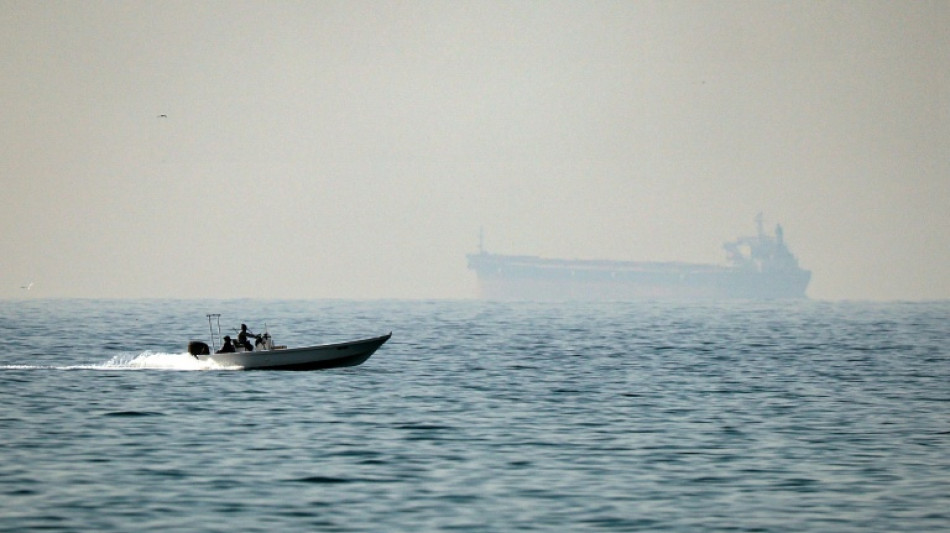
UN Security Council delays vote on authorizing force to protect Hormuz / Photo: FADEL SENNA - AFP/File

 Once a top export, prized Kashmir carpet fades

 Search for 1,000 missing after deadly Nepal-Tibet floods
 Park So-yeon first woman to play for eSports powerhouse South Korea
 Yayoi Kusama: Japan's kaleidoscopic, troubled 'polka dot queen'

 Euro champ Hunt 'on her toes' against world's best in Zurich 100m
 Asian chip firms lifted by Nvidia forecast but broader markets struggle
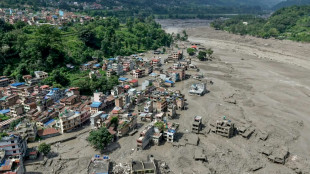 Search for missing after Nepal-Tibet floods kill 165

 Qantas says profits slump as fuel costs surge
 Lofty bond yields, Bessent's intervention pose challenge to Fed's Warsh
 The foreigners missing in Nepal's flash floods
 Bond yields are surging: Here's why that could spell trouble
 Fed's Cook rejects Trump mortgage fraud claims
 Police probe 'assault allegations' after Carse's nightclub incident
 How we might hear new Dolly Parton music in the future
 Nvidia doubles revenue, forecasts even more AI spending
 Canada renews push to boycott US products

 Savio scores on debut as Spurs set-up League Cup tie with Liverpool
 Brazil sues Discord over child safety measures, demands $100 mln in damages

 Alberta NDP Urges Smith to Postpone Separation Vote Amid Trade War

 Fenerbahce stun Lyon in Champions League as AEK crush Levski

 Why Global Finance Still Relies on Wall Street Despite Diversification Trends
 Bethlehem Father Seeks Aid for Special Needs Children Amid Health Crisis
 LIV Golf to lay off majority of staff
 How narwhal 'scientists' track Arctic warming

 Iran says US sanctions will achieve nothing

The UN Security Council has postponed a vote scheduled for Friday on authorizing the use of "defensive" force to protect shipping in the Strait of Hormuz from Iranian attacks, according to the official program.
The 15-member body was set to vote Friday morning on a draft resolution brought by Bahrain, but by Thursday night the schedule shifted.
The reason given was that the United Nations observes Good Friday as a public holiday, according to diplomatic sources -- despite this fact being known when the vote was first announced.
No new date has been given for voting on the draft.
Iran has placed a stranglehold on the key shipping lane -- threatening fuel supplies and roiling the global economy -- in retaliation for US-Israeli strikes that triggered the month-old Middle East war.
"We cannot accept economic terrorism affecting our region and the world, the whole world is being affected by the developments," Bahrain's United Nations ambassador Jamal Alrowaiei said this week.
He said the text, which has gone through several amendments and is supported by the United States, "comes at a critical juncture."
President Donald Trump on Wednesday called for countries struggling with fuel shortages to "go get your own oil" in the Strait of Hormuz, adding that US forces would not help them.
A sixth and final draft, seen by AFP, greenlights member states -- either unilaterally or as "voluntary multinational naval partnerships" -- to use "all defensive means necessary and commensurate with the circumstances."
It applies to the strait and adjacent waters to "secure transit passage and to deter attempts to close, obstruct or otherwise interfere with international navigation through the Strait of Hormuz."
The measure would last for a period of at least six months.
The draft resolution has been molded in a bid to rally several countries that have appeared skeptical, including Russia, China and France.
Revised wording no longer explicitly invokes Chapter 7 of the UN Charter, which allows the Security Council to authorize armed force to restore peace.
The latest version, which was scheduled to be voted on at 11:00 am (1500 GMT) Friday before the postponement, also emphasizes the defensive nature of any intervention -- a stipulation that seems to have alleviated French concerns.
- 'Tall odds' -
Jerome Bonnafont, France's UN ambassador, said Thursday that "it is up to the Council to quickly devise the necessary defensive response" after members voted in March to condemn Iran's blocking of the Strait of Hormuz.
President Emmanuel Macron earlier said a military operation to free the waterway is "unrealistic."
It is not certain that Russia and China -- who both wield veto powers -- will back the draft resolution.
"Authorizing member states to use force would amount to legitimizing the unlawful and indiscriminate use of force, which would inevitably lead to further escalation of the situation and lead to serious consequences," said Chinese ambassador Fu Cong.
Russia, a long-time ally of Tehran, has denounced what it calls one-sided measures.
Considering the possible Russian and Chinese vetos, the text "faces tall odds to make it through the Security Council," Daniel Forti, an analyst at International Crisis Group, told AFP.
"It is hard to see them supporting a resolution that treats stability in the strait exclusively as a security issue, instead of one that also grapples with the need for a durable political end to the hostilities," he said.
Normally, around a fifth of the world's oil and liquefied natural gas passes through the Strait of Hormuz.
Its near-total closure is impacting global supplies of important commodities including oil, liquefied natural gas and fertilizer and leading to sharp rises in energy prices.
Security Council mandates authorizing member states to use force are relatively rare.
During the Gulf War, a 1990 vote allowed a US-led coalition to intervene in Iraq, while in 2011 a similar vote permitted NATO's intervention in Libya.
J.Oliveira--PC