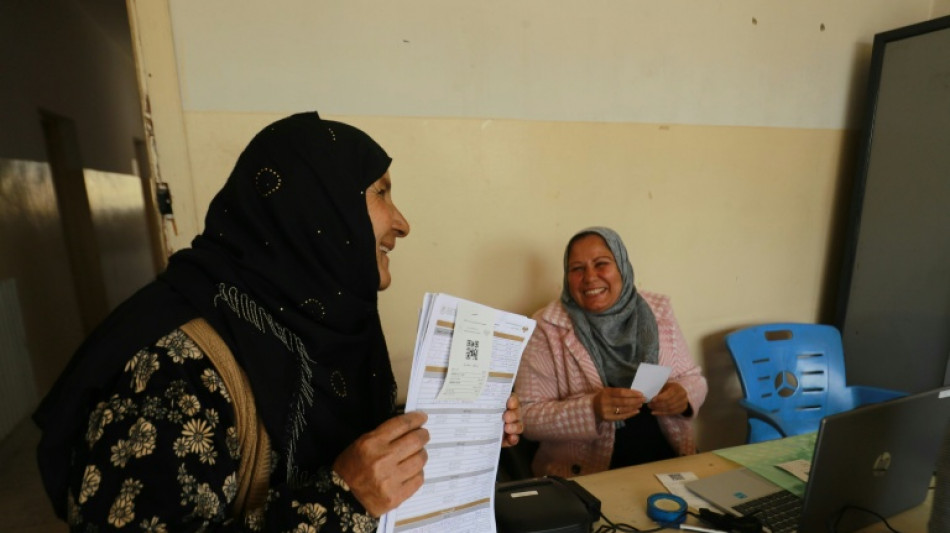
Syria's Kurds register for citizenship after decades of marginalisation / Photo: Delil SOULEIMAN - AFP

 West Bank settlers attack AFP journalists

 MEXC Kicks Off MOVE Carnival With 0-Fee Trading and 1M USDT in Rewards
 Human rights in Myanmar hitting a 'new low': UN

 Son of Luxottica founder quits after succession row

 One million Afghan children suffering 'life-threatening' malnutrition: UN

 Real Madrid's Mourinho happy with squad despite losing out on Rodri
 Sri Lanka slump to 216-7 at tea in second India Test

 US delays Lockerbie bombing trial over new evidence

 Rohingya refugees protest dire conditions in Bangladesh camps

 Lego net profit up 32% in first half, 'stronger than expected': CEO to AFP

 German GDP growth revised upwards, defying Iran war turmoil

 STARTRADER Adds 30 U.S. Stock and ETF CFDs as 2026 Product Expansion Accelerates
 Trees 'giving up': climnate change hammers historic English gardens
 Namibia paves way for phosphate mining in the Atlantic Ocean

 Six months into Iran war, Hormuz traffic way down, sailors stranded

 Netanyahu got his Iran war, but maybe not his desired result

 Hyundai reaches tentative deal with workers after strikes

 Once its saviour, US puts Kuwait in Iran's crosshairs
 Australia's top music charts ban AI songs
 Polaris Renewable Energy Announces Renewal of Normal Course Issuer Bid

 LiberNovo Support Week Goes Live: Up to 44% Off on Maxis, Omni SE and Omni Pro Ergonomic Chair Series

 Despair and anger erupt after deadly Guinea landfill collapse
 Tornado tears through French village, dozens injured

 Federer looks forward to brief return to Arthur Ashe stadium

 US removes Syria from state sponsor of terrorism list

In a packed hall in Qamishli's sports stadium in northeast Syria, Firas Ahmad is one of dozens of Kurds waiting to apply for citizenship after many in the minority were barred from doing so for decades.
Since last week, "unregistered" Kurds, who have been stateless since a controversial 1962 census, have been flocking to registration centres across Syria to apply for citizenship, based on the interior ministry's instructions.
"A person without citizenship is considered as good as dead," Ahmad, 49, told AFP.
"Imagine not being able to register my children or our homes in our names," he said, adding that "my grandfather never had citizenship, and we have been living without official documents ever since".
On the tables facing long queues of people, registration forms were scattered along with personal photos and old documents, while government employees were recording the data.
The new measure follows Syrian President Ahmed al-Sharaa's January decree granting citizenship to Kurds residing in the country, including those who have been unregistered for decades.
It also enshrines the Kurds' cultural and language rights, and recognises Kurdish as a national language.
The decree came during weeks of clashes between Kurdish fighters, who once controlled swathes of northeastern Syria, and government forces after which an agreement was reached to integrate the Kurdish administration into the central state.
The integration included government forces entering the previously Kurdish-controlled cities of Hasakeh and Qamishli in February, and the appointment in March of senior Kurdish military leader Sipan Hamo as assistant defence minister for the eastern region, among other steps.
- 'We suffered greatly' -
The lack of citizenship affected many aspects of daily life, from the inability to register births and property ownership to difficulties in studying, moving around, travelling and working, leaving many without full legal recognition of their existence.
"We suffered greatly," says Galya Kalash, a mother of five, speaking in Kurdish.
"My five children could not complete their education, and we could not travel at all. Even now, our house is not registered in our name."
Around 20 percent of Syria's Kurds were stripped of their Syrian nationality in a controversial 1962 census in the northeastern Hasakeh province.
Ali Mussa, a member of Hasakeh's Network of Statelessness Victims, told AFP that there are around 150,000 unregistered people in Syria today.
There are around two million Kurds in Syria, most of them in the northeast.
Mussa called on authorities to show "flexibility in implementing the decision and to provide facilities for residents outside Syria" who may not be able to travel due to their refugee status in Europe or fear of flight disruptions due to the Middle East war.
Authorities are expected to keep registration centres open for a month.
Abdallah al-Abdallah, a civil affairs official in the Syrian government, told AFP the period could be extended.
"The most important compensation for these people is gaining citizenship after being deprived of it for all these years," he said.
In the registration centre, Mohammed Ayo, 56, said not having citizenship made him feel "helpless", including being unable to get a driver's license or book a hotel room in capital Damascus as it required prior security clearance.
"You study for many years, and in the end they say you have no certificate," he said, adding that, after finishing high school, he was unable to obtain an official document to study at university.
"We did not even have the right to run for office or vote."
A.Santos--PC