Water supply fears as Morocco hit by worst drought since 1980s

 Botched US execution leaves murderer unconscious on ventilator: lawyers

 Cornell rape case exposes sexual violence at US colleges

 France held by Italy in Zidane's homecoming after Olise stunner

 Ethiopian pro-government militia claims Tigray airport as regional tensions spike

 Ohtani shaking off injuries as Dodgers launch MLB post-season
 Sea levels to rise in California as coastal wave surges up west coast

 New rallies urged in France as protests disrupt over 730 schools

 Djokovic survives China Open scare, Sabalenka starts strong
 King Charles to evoke colonial 'darkest days' on Caribbean tour

 Tesla shares jump after global car sales top estimates
 DR Congo Ebola outbreak killed more than 4,000: official figures
 Djokovic survives China Open scare against wildcard world no. 104
 Lula, Bolsonaro trade blows in final scramble for votes in Brazil
 New clashes erupt as protests disrupt over 560 French schools
 NY governor vows to close loophole after alleged Cornell gang rape
 Ethiopia Tigray rebels pushed back as regional tensions spike
 Stocks rise, yields fall as US job numbers disappoint

 Man City verdict a 'big topic' for England players, says Tuchel

 NY attorney general tasked with investigating alleged Cornell gang rape

 China widens military footprint with Laos air base
 G7 talks as US pressures Europe over diesel stocks
 Man City launch appeal against explosive financial ruling
 Swiss president to quit government

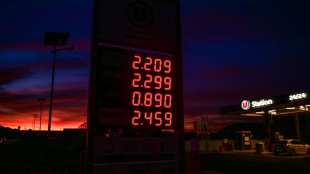 Europe rejects US threats over diesel stocks, urges joint G7 action
 Philippines tennis star Eala says 'I get overwhelmed sometimes'
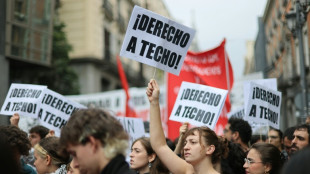
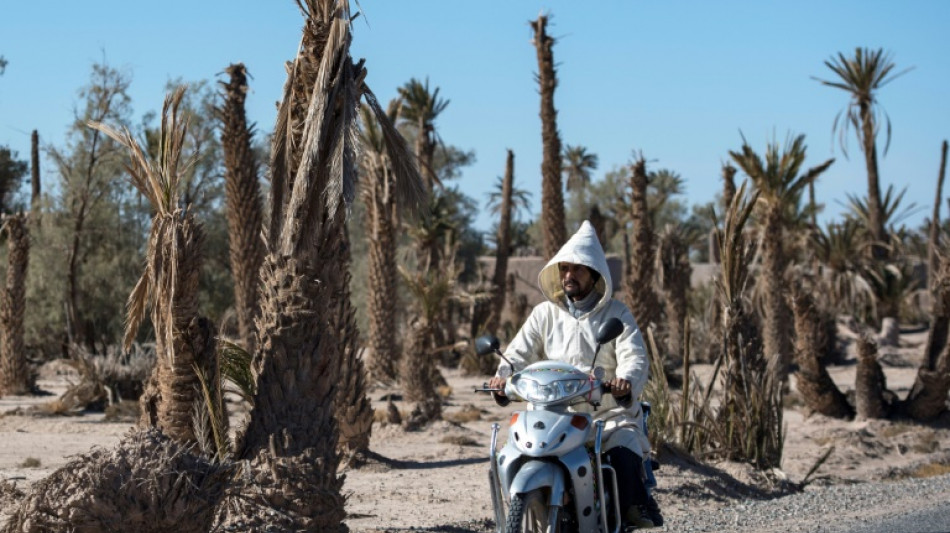
As Morocco withers under its worst drought in 40 years, experts warn that a combination of climate change and bad resource management could trigger severe drinking water shortages.
"The country hasn't seen a situation like this since the start of the 1980s," said water policy expert Abderrahim Hendouf.
While it was usually farmers who bore the brunt of repeated droughts in the North African kingdom, today water supplies to cities are under threat, water minister Nizar Baraka told parliament in mid-March.
Morocco has had little rain since September, and authorities say its reservoirs have received just 11 percent of what they would in an average year.
"That's a worrying sign," Abdelaziz Zerouali, the water ministry's head of research and planning, told state television station M2, adding that some preemptive measures had been taken to mitigate the risks.
Two major cities, tourist hub Marrakesh and Oujda in the east, already started tapping into groundwater reserves in December to ensure adequate supplies.
The government in February also released a package of around one billion euros in aid to the beleaguered agricultural sector, which makes up some 14 percent of GDP and is the top employer in the Moroccan countryside.
"We need to change our vision of water," Zerouali told a conference on the right to water in Rabat.
"Climate change is real and we will have to face it."
- 'Absolute scarcity' -
Moroccans have access to just 600 cubic metres of water per person per year, far below the 2,600 cubic metres they enjoyed in the 1960s.
According to the United Nations' definition, water scarcity occurs when supplies drop below 1,000 cubic metres per person annually, while supplies of 500 cubic metres are considered "absolute scarcity".
The decline in supplies in Morocco is a result of a mix of environmental factors, high demand and over-exploitation of groundwater for farming, according to Baraka.
In a recent report for the Moroccan Institute for Policy Analysis, Amal Ennabih wrote that "Morocco's water scarcity is deeply linked to the way water is used in irrigation, consuming around 80 percent of Morocco's water annually".
The kingdom, with its Atlantic and Mediterranean coastlines, hopes desalination plants can help make up the deficit, although they are energy-intensive and pump brine back into the sea which causes its own environmental problems.
Moreover, efforts to build 15 more dams and more desalination facilities have been bogged down by delays.
One such plant has been under construction since 2020 near Casablanca, the country's commercial capital, which could face severe water shortages by 2025.
Baraka notes that a desalination plant meant to serve the northeastern resort town of Saidia has also yet to come online, causing water shortages.
Another desalination plant came online recently, supplying 70 percent of the needs of the Atlantic coastal city of Agadir, a tourist hub and centre of a major farming area.
That should provide some relief to a city that in autumn 2020 was so short of water that at night the taps ran dry.
Ferreira--PC



