NASA aims to make observations from space junk collision with Moon

 Botched US execution leaves murderer unconscious on ventilator: lawyers

 Cornell rape case exposes sexual violence at US colleges

 France held by Italy in Zidane's homecoming after Olise stunner

 Ethiopian pro-government militia claims Tigray airport as regional tensions spike

 Ohtani shaking off injuries as Dodgers launch MLB post-season

 Sea levels to rise in California as coastal wave surges up west coast

 New rallies urged in France as protests disrupt over 730 schools

 Djokovic survives China Open scare, Sabalenka starts strong

 King Charles to evoke colonial 'darkest days' on Caribbean tour

 Tesla shares jump after global car sales top estimates

 DR Congo Ebola outbreak killed more than 4,000: official figures

 Djokovic survives China Open scare against wildcard world no. 104

 Lula, Bolsonaro trade blows in final scramble for votes in Brazil

 New clashes erupt as protests disrupt over 560 French schools

 NY governor vows to close loophole after alleged Cornell gang rape

 Ethiopia Tigray rebels pushed back as regional tensions spike

 Stocks rise, yields fall as US job numbers disappoint

 Man City verdict a 'big topic' for England players, says Tuchel

 NY attorney general tasked with investigating alleged Cornell gang rape

 China widens military footprint with Laos air base

 G7 talks as US pressures Europe over diesel stocks

 Man City launch appeal against explosive financial ruling

 Swiss president to quit government

 Europe rejects US threats over diesel stocks, urges joint G7 action

 Philippines tennis star Eala says 'I get overwhelmed sometimes'

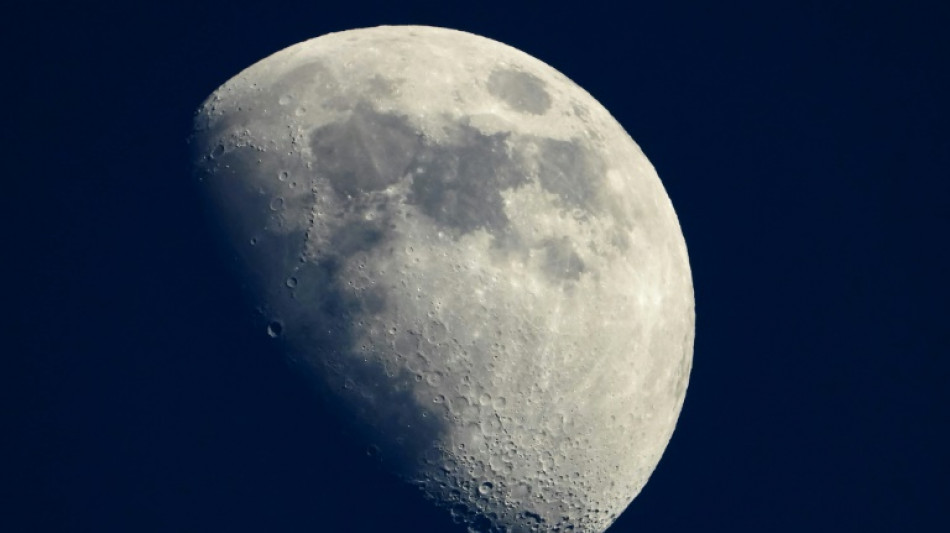
NASA said Thursday it aims to survey the crater formed when the remains of a SpaceX rocket are expected to crash into the Moon in early March, calling the event "an exciting research opportunity."
The rocket was deployed in 2015 to put a NASA satellite into orbit and its second stage, or booster, has been floating in the cosmos ever since, a common fate for such pieces of space technology.
"On its current trajectory, the second stage is expected to impact the far side of the Moon on March 4, 2022," a NASA spokeswoman told AFP.
The impact of the rocket chunk weighing four tons will not be visible from Earth in real time, nor will NASA's Lunar Reconnaissance Orbiter (LRO), which is currently orbiting the Moon, be in a "position to observe the impact as it happens," the spokeswoman said.
The LRO could be used later, however, to capture images for before-and-after comparisons.
Finding the crater "will be challenging and might take weeks to months," the spokeswoman said, adding that the "unique event presents an exciting research opportunity."
Studying a crater formed by a hurtling object with a known mass and speed (it will be traveling at 9,000 kilometers per hour), as well as the material that the impact stirs up, could help advance selenology, or the scientific study of the moon.
Spacecraft have been intentionally crashed into the Moon before for scientific purposes, such as during the Apollo missions to test seismometers, but this is the first unintended collision to be detected.
Astronomer Bill Gray, creator of a software used to determine the trajectories of asteroids and other objects, was the first to calculate the booster's new collision course with the Moon.
He believes that space junk should always be directed towards the moon when possible: "If it hits the moon, then we actually learn something from it," Gray said.
G.Machado--PC



