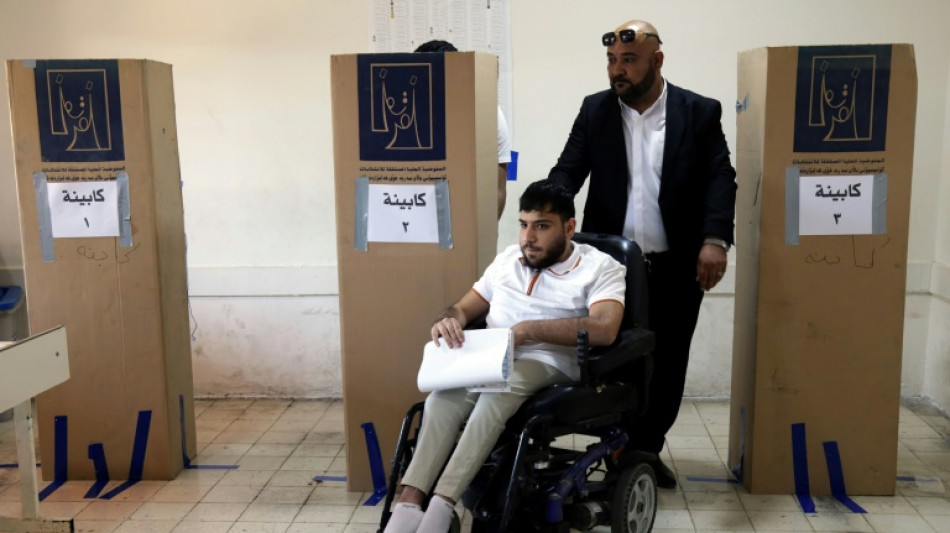
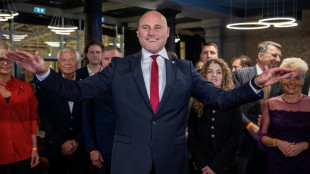
Oil-rich Iraqi Kurdistan votes, shadowed by economic struggles / Photo: Safin HAMID - AFP

 Asian Games set to close after records, rancour and rain
 Cry for help as French-Swiss lake dries up
 Sabalenka swept out of China Open in third round
 US urges 'restraint' as Ethiopia's Tigray crisis rocks region

 Teens on target again as USA down Mexico 3-0
 World records prove Asian Games were a hit, says top official
 US prison chief who oversaw botched execution resigns
 'Chaotic' Asian Games threaten Japan hopes of hosting Olympics again
 Finnish town braces for change from Google data centres
 What is fuelling French school protests?
 Without lawyers, migrant children face deportation from the US
 Three-peat seeking Dodgers open playoffs with a win, Rays hold off Yankees
 Brazil votes in nail-biter polls closely watched by Trump
 'Just be you': Kim reveals Tiger text that inspired him to gold

 Myanmar migrants returned to war-torn nation from Malaysia
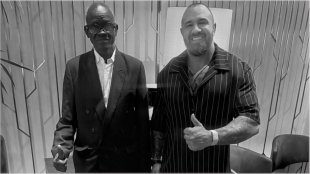
 ALEX BODI AND AMBASSADOR GUM DOMINIC MATIOK OF THE REPUBLIC OF SOUTH SUDAN MEET IN BERLIN TO DISCUSS THE POSSIBILITY OF AN HONORARY CONSULATE IN BUCHAREST
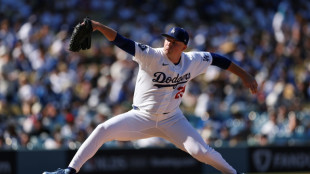
 Lula, Bolsonaro wrap up campaigns ahead of Brazil's knife-edge vote

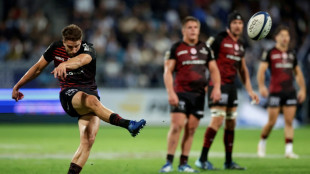 Toulouse edge Castres in Top 14 derby

 Murakami homer propels White Sox to MLB playoff win over Guardians

 Israel targets top Hamas leader in deadly Gaza strike on anniversary

 Houthis say struck oil facility near Riyadh, as Saudis hit Sanaa

 AI needs safety layers like nuclear plants: ex-OpenAI engineer

 MVP Judge will miss Yankees' MLB playoff series against Rays

 New lizard species discovered in Peru

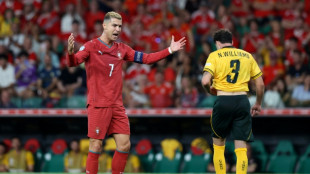 Fernandes hails Portugal's 'greatest symbol' Ronaldo, calls for unity
Iraq's autonomous Kurdistan region voted on Sunday to elect a new parliament for the oil-rich region, where voters express concern over economic struggles and disenchantment with the political elite.
Iraqi Kurdistan presents itself as a relative oasis of stability in the turbulent Middle East, attracting foreign investors due to its close ties with the United States and Europe.
However, activists and opposition figures contend that the region, autonomous since 1991, faces the same issues affecting Iraq as a whole: corruption, political repression and cronyism among those in power.
Originally scheduled for two years ago, the vote has been postponed four times due to disputes between the region's two historic parties, the Kurdistan Democratic Party (KDP) and the Patriotic Union of Kurdistan (PUK).
Each party is controlled by a powerful Kurdish family -- the KDP by the Barzanis and the PUK by the Talabanis.
Despite holding election rallies and mobilising their patronage networks, experts say there is widespread public disillusionment with the parties, exacerbated by the region's bleak economic conditions.
By early afternoon, turnout was 31 percent, the electoral commission said, with polls due to close at 6:00 PM (1500 GMT) and official results expected 24 hours later.
Huri Mohammed, a 66-year-old housewife, said she voted for the KDP which dominates the regional capital Arbil, as it "serves the people".
But she expressed hope the next government would "pay attention to the poor classes. The majority of our population has limited means".
Opposition parties such as New Generation and a movement led by Lahur Sheikh Jangi, a dissident from the Talabani clan, may gain from a protest vote, said Sarteep Jawhar, a PUK dissident and political commentator.
Hiwa Hadi, a candidate for the newly formed opposition Halwest party, said after voting in Arbil: "People are dissatisfied and angry due to rising prices and taxes, electricity and water shortages".
- Tensions with Baghdad -
Political analyst Shivan Fazil, a PhD student at the US-based Boston University with a focus on Iraq, noted that there was "a growing fatigue with the region's two ruling parties".
He said people's living conditions "have deteriorated over the last decade."
Fazil cited erratic payment of salaries for the region's 1.2 million civil servants as problematic because the money serves as "a vital source of income for households".
This issue is tied to ongoing tensions between Kurdistan and the federal Iraqi government in Baghdad, amid disputes over control of the region's lucrative oil exports.
The creation of four new constituencies for this election -- a change from only one previously -- "could lead to redistribution in vote shares and seats in the next parliament", Fazil said.
He still predicted, however, that the KDP could maintain its majority.
The KDP is the largest party in the outgoing parliament, with 45 seats against 21 for the PUK. The KDP's majority was assured by an alliance with deputies elected via a quota reserved for Turkmen, Armenian and Christian minorities.
Iraqi court rulings have reduced the number of seats in the Kurdish parliament from 111 to 100, but with five seats still reserved for the minorities.
Of the region's six million inhabitants, 2.9 million are eligible to vote for the 100 representatives, including 30 women mandated by a quota.
In the last regional elections in 2018, voter turnout was 59 percent.
Once elected, the new representatives will need to vote for a new president and prime minister. The roles are currently filled by KDP figures Nechirvan Barzani and his cousin, Masrour Barzani.
Mohamed al-Hassan, the United Nations special representative in Iraq, welcomed the election as an opportunity for the Kurdistan region to "reinvigorate democracy and inject new ideas into its institutions".
However, 55-year-old teacher Sazan Saduala says she was boycotting the election.
"This government cannot be changed by voting," she said. "It maintains its power through force and money."
M.A.Vaz--PC



