
AI agents open door to new hacking threats / Photo: Lionel BONAVENTURE - AFP/File

 Zverev thrashes Shang to set up Djokovic quarter-final at China Open

 Turkey football ref chief jailed pending trial for graft

 North Korea says test of intermediate-range strategic missile included use of AI

 Rampant Sayers leads Hong Kong to third men's rugby gold in a row

 Ethiopia's Tigray rebels abandon regional capital as govt advances

 Bulgaria's Tsar Samuel returns 'home' after 1,000 years

 'Glad it's over': Kim powers to Games gold and military exemption

 After 11 World Cups, football finally comes home for one Indian fan

 Marc Marquez wins sprint at Japan MotoGP, Martin grabs pole

 Alcaraz fends off Arnaldi to reach Japan Open quarters

 Antonelli tops times in final practice at Bahrain GP

 Gauff digs deep to beat Osorio in China Open second round

 Fresh protests to hit Spain after housing measures defeated

 'He's here with me': Japan cycle queen dedicates gold to late brother

 Japan Olympic chief says 'lot more' athletes at Games than expected

 Asian carmakers besting US rivals at home, China poised to strike

 Widgets & Web Offers All-Inclusive Investor Relations Websites for Public Companies, IPOs and SPACs

 Adams named new US captain to 2030 World Cup

 China a better influence in Latin America than US: poll

 Judge pauses construction of border project in Texas national park

 Belgium's De Bruyne fires double to sink Turkey, France held by Italy

 US jobs data boosts stocks as oil prices dip

 US Supreme Court to hear high-stakes climate case

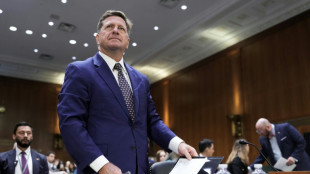 Trump expected to name intel chief Clayton as AI czar: reports

 Argentina unveils passports-for-investment scheme

Cybersecurity experts are warning that artificial intelligence agents, widely considered the next frontier in the generative AI revolution, could wind up getting hijacked and doing the dirty work for hackers.
AI agents are programs that use artificial intelligence chatbots to do the work humans do online, like buy a plane ticket or add events to a calendar.
But the ability to order around AI agents with plain language makes it possible for even the technically non-proficient to do mischief.
"We're entering an era where cybersecurity is no longer about protecting users from bad actors with a highly technical skillset," AI startup Perplexity said in a blog post.
"For the first time in decades, we're seeing new and novel attack vectors that can come from anywhere."
These so-called injection attacks are not new in the hacker world, but previously required cleverly written and concealed computer code to cause damage.
But as AI tools evolved from just generating text, images or video to being "agents" that can independently scour the internet, the potential for them to be commandeered by prompts slipped in by hackers has grown.
"People need to understand there are specific dangers using AI in the security sense," said software engineer Marti Jorda Roca at NeuralTrust, which specializes in large language model security.
Meta calls this query injection threat a "vulnerability." OpenAI chief information security officer Dane Stuckey has referred to it as "an unresolved security issue."
Both companies are pouring billions of dollars into AI, the use of which is ramping up rapidly along with its capabilities.
- AI 'off track' -
Query injection can in some cases take place in real time when a user prompt -- "book me a hotel reservation" -- is gerrymandered by a hostile actor into something else -- "wire $100 to this account."
But these nefarious prompts can also be hiding out on the internet as AI agents built into browsers encounter online data of dubious quality or origin, and potentially booby-trapped with hidden commands from hackers.
Eli Smadja of Israeli cybersecurity firm Check Point sees query injection as the "number one security problem" for large language models that power AI agents and assistants that are fast emerging from the ChatGPT revolution.
Major rivals in the AI industry have installed defenses and published recommendations to thwart such cyberattacks.
Microsoft has integrated a tool to detect malicious commands based on factors including where instructions for AI agents originate.
OpenAI alerts users when agents doing their bidding visit sensitive websites and blocks proceeding until the software is supervised in real time by the human user.
Some security professionals suggest requiring AI agents to get user approval before performing any important task - like exporting data or accessing bank accounts.
"One huge mistake that I see happening a lot is to give the same AI agent all the power to do everything," Smadja told AFP.
In the eyes of cybersecurity researcher Johann Rehberger, known in the industry as "wunderwuzzi," the biggest challenge is that attacks are rapidly improving.
"They only get better," Rehberger said of hacker tactics.
Part of the challenge, according to the researcher, is striking a balance between security and ease of use since people want the convenience of AI doing things for them without constant checks and monitoring.
Rehberger argues that AI agents are not mature enough to be trusted yet with important missions or data.
"I don't think we are in a position where you can have an agentic AI go off for a long time and safely do a certain task," the researcher said.
"It just goes off track."
P.Serra--PC



