Dozens of SpaceX internet satellites lost to geomagnetic storm

 Botched US execution leaves murderer unconscious on ventilator: lawyers

 Cornell rape case exposes sexual violence at US colleges

 France held by Italy in Zidane's homecoming after Olise stunner

 Ethiopian pro-government militia claims Tigray airport as regional tensions spike

 Ohtani shaking off injuries as Dodgers launch MLB post-season

 Sea levels to rise in California as coastal wave surges up west coast

 New rallies urged in France as protests disrupt over 730 schools

 Djokovic survives China Open scare, Sabalenka starts strong

 King Charles to evoke colonial 'darkest days' on Caribbean tour

 Tesla shares jump after global car sales top estimates

 DR Congo Ebola outbreak killed more than 4,000: official figures

 Djokovic survives China Open scare against wildcard world no. 104

 Lula, Bolsonaro trade blows in final scramble for votes in Brazil

 New clashes erupt as protests disrupt over 560 French schools

 NY governor vows to close loophole after alleged Cornell gang rape

 Ethiopia Tigray rebels pushed back as regional tensions spike

 Stocks rise, yields fall as US job numbers disappoint

 Man City verdict a 'big topic' for England players, says Tuchel

 NY attorney general tasked with investigating alleged Cornell gang rape

 China widens military footprint with Laos air base

 G7 talks as US pressures Europe over diesel stocks

 Man City launch appeal against explosive financial ruling

 Swiss president to quit government

 Europe rejects US threats over diesel stocks, urges joint G7 action

 Philippines tennis star Eala says 'I get overwhelmed sometimes'

Up to 40 SpaceX high-speed internet satellites have been knocked out of orbit by a geomagnetic storm shortly after launch, but pose little threat to Earth as they burn up in the atmosphere, the company said.
Geomagnetic storms are caused by ejections of the solar corona into space, resulting in disturbances to the Earth's upper atmosphere and increased drag on objects in low orbits.
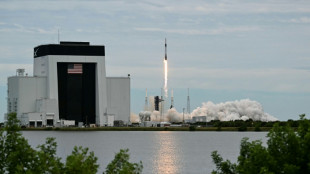
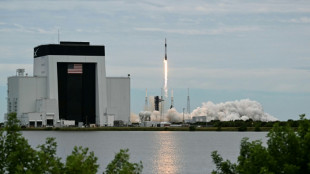
The latest 49 satellites from the Starlink network launched from the Kennedy Space Center in Florida on February 3 and successfully assumed their initial orbit, with their nearest approach to the surface 130 miles (210 kilometers) high.
The company places them into this region to carry out final checks before flying further into space.
On February 4, however, they were struck by the space weather event, Elon Musk's company said in a statement late Tuesday.
"These storms cause the atmosphere to warm and atmospheric density at our low deployment altitudes to increase. In fact, onboard GPS suggests the escalation speed and severity of the storm caused atmospheric drag to increase up to 50 percent higher than during previous launches," it said.
The Starlink team commanded the satellites into a safe mode, where they would fly edge-on -- like a sheet of paper -- to minimize drag as they sought shelter.
But despite the evasive maneuver, most were unable to raise their orbits, and as many as 40 "will reenter or already have reentered the Earth's atmosphere."
The company insisted they posed "zero collision risk" with other satellites and are designed to disintegrate upon re-entry, with no debris expected to hit the ground.
The UK Space Agency agreed in a blog post that there was "virtually no risk" since the satellites are built without any dense metallic components and should burn up entirely, but said it was monitoring closely. NASA has not yet commented.
Apart from increasing atmospheric drag, geomagnetic storms can wreak havoc with satellites' computer circuitry and thus cause them to fail, according to space industry analyst Seradata.
Whatever the exact cause, the loss could point to a design weakness in Starlink satellites' ability to withstand such storms, Seradata's David Todd wrote in a post.
But it is not expected to impact the overall functioning of the Starlink "constellation."
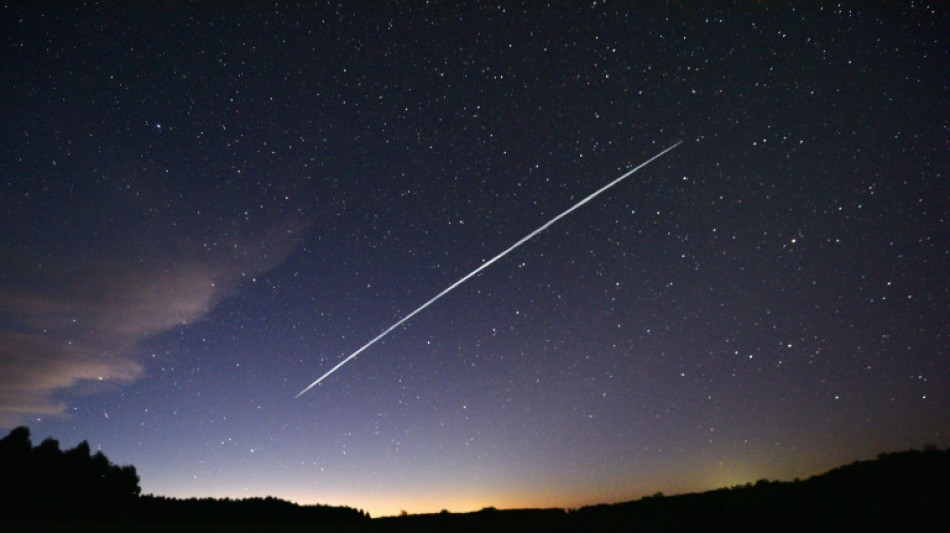
SpaceX has launched more than 2,000 of the satellites since May 2019, with more than 1,500 currently operational, providing internet coverage across most of the planet.
The company currently has regulatory approval for 12,000 satellites, with plans to expand even further.
Astronomers have raised concerns about their impact on ground-based astronomy as they add to a congested environment in Low Earth Orbit (LEO).
There are approximately 4,000 active satellites in this space, which extends to 1,200 miles above the surface, as well as 15,000 pieces of debris like rocket bodies and defunct probes, according to the UK Space Agency.
A.Motta--PC