
-
 Botched US execution leaves murderer unconscious on ventilator: lawyers
-
China a better influence in Latin America than US: poll

-
 Cornell rape case exposes sexual violence at US colleges
-
Judge pauses construction of border project in Texas national park

-
 France held by Italy in Zidane's homecoming after Olise stunner
-
Belgium's De Bruyne fires double to sink Turkey, France held by Italy

-
 Ethiopian pro-government militia claims Tigray airport as regional tensions spike
-
US jobs data boosts stocks as oil prices dip

-
 Ohtani shaking off injuries as Dodgers launch MLB post-season
-
US Supreme Court to hear high-stakes climate case

-
 Sea levels to rise in California as coastal wave surges up west coast
-
Trump expected to name intel chief Clayton as AI czar: reports

-
 New rallies urged in France as protests disrupt over 730 schools
-
Argentina unveils passports-for-investment scheme

-
 Djokovic survives China Open scare, Sabalenka starts strong
-
Brazil election debate chaos sparks censorship row

-
 King Charles to evoke colonial 'darkest days' on Caribbean tour
-
England's Carse charged by cricket body over nightclub incident

-
 Tesla shares jump after global car sales top estimates
-
Amazon vows $1 bn for data center towns, decries 'myths'

-
 DR Congo Ebola outbreak killed more than 4,000: official figures
-
Oil prices drop on G7 fuel release, US jobs data boosts stocks

-
 Djokovic survives China Open scare against wildcard world no. 104
-
G7 agrees deal to ease global energy supply concerns

-
 Lula, Bolsonaro trade blows in final scramble for votes in Brazil
-
Spain's government dealt blow as lawmakers reject housing bills

-
 New clashes erupt as protests disrupt over 560 French schools
-
Food, medicine shortages deepen in Russian-occupied Oleshky

-
 NY governor vows to close loophole after alleged Cornell gang rape
-
Man City whistleblower Rui Pinto facing 'dire consequences' - lawyers

-
 Ethiopia Tigray rebels pushed back as regional tensions spike
-
Russia 'tearing Kyiv apart', mayor says, as strikes paralyse traffic
-
 Stocks rise, yields fall as US job numbers disappoint
-
Taiwan boxer Lin wins Games gold as Japan edge North Korea on penalties
-
 Man City verdict a 'big topic' for England players, says Tuchel
-
Japan tame North Korea to win Games gold after shootout drama

-
 NY attorney general tasked with investigating alleged Cornell gang rape
-
US posts weak job growth data in September
-
 China widens military footprint with Laos air base
-
Ethiopia's conflict: the regional dimension
-
 G7 talks as US pressures Europe over diesel stocks
-
Life expectancy almost back to pre-Covid levels, says WHO
-
 Man City launch appeal against explosive financial ruling
-
Turkey's football referee chief faces judge in graft probe
-
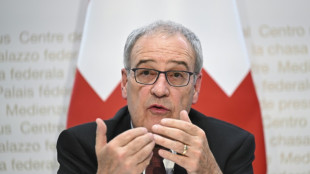 Swiss president to quit government
-
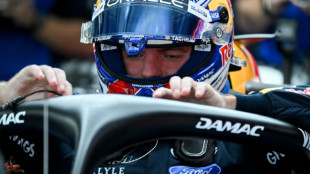
Verstappen goes own way to avoid the rain
-
 Europe rejects US threats over diesel stocks, urges joint G7 action
-
Oil slides, bonds steady as EU addresses diesel price surge
-
 Philippines tennis star Eala says 'I get overwhelmed sometimes'
-
Spain housing package at risk in parliament, as protests mount

Swiss poised to ban nearly all tobacco advertising
Swiss voters appeared set Sunday to back a near-total ban of advertising for tobacco products but were expected to reject a blanket ban on animal testing.
Shortly after polls closed at noon (1100 GMT), projections from the gfs.bern polling institute indicated that around 57 percent of voters had backed the tobacco advertising ban.
It remained unclear, however, whether the initiative to ban all advertising for the hazardous products wherever minors might see it would secure support from enough of Switzerland's 26 cantons to land the double majority needed to pass.
Projections were less positive for votes on a number of other issues as part of Switzerland's direct democracy system. An initiative to ban animal testing for medical research was expected to be rejected by 79 percent of voters.
Switzerland lags far behind most wealthy nations in restricting tobacco advertising -- a situation widely blamed on hefty lobbying by some of the world's biggest tobacco companies headquartered in the country.
Currently, most tobacco advertising is legal at a national level, except for ads on television and radio, and ones that specifically target minors.
Some Swiss cantons have introduced stricter regional legislation and a new national law is pending but campaigners gathered enough signatures to spur a vote towards a significantly tighter country-wide law.
- 'Kills half of all users' -
Opponents of the initiative, which include the Swiss government and parliament, say it goes too far.
The world's largest tobacco company, Philip Morris International (PMI), -- which, like British American Tobacco and Japan Tobacco, is headquartered in Switzerland and has helped fund the "No" campaign -- described the initiative as "extreme".
"This is a slippery slope as far as individual freedom is concerned," a spokesman for PMI's Swiss section told AFP. He said it "paves the way for further advertising bans on products such as alcohol or sugar".
Jean-Paul Humair, who heads a Geneva addiction prevention centre and serves as a spokesman for the "Yes" campaign, flatly rejected that comparison.
"There is no other consumer product that kills half of all users," he told AFP.
Campaigners say lax advertising laws have stymied efforts to bring down smoking rates in the Alpine nation of 8.6 million people, where more than a quarter of adults consume tobacco products. There are around 9,500 tobacco-linked deaths each year.
- Animal testing -
While the effort to introduce a near-total ban on tobacco advertising appears likely to go through, there is basically no chance of efforts to ban all animal and human testing to succeed.
All political parties, parliament and the government opposed the initiative, arguing it goes too far and would have dire consequences for medical research.
Switzerland has rejected three similar initiatives by large margins since 1985.
Researchers say medical progress is impossible without experimentation, and even the Swiss Animal Protection group has warned against the initiative's "radical" demands.
Swiss authorities say the country already has among the world's strictest laws regulating animal testing.
As the laws have tightened, the number of animals used has fallen in recent decades, from nearly two million per year in the early 1980s to around 560,000 today.
In another animal-themed vote, first results indicated that inhabitants in the northern Basel-Stadt canton have massively rejected a bid to afford non-human primates some of the same basic fundamental rights as their human cousins, with over 75 percent opposed.
Among the other issues on Sunday's slate, initial projections also hinted that some 56 percent of voters had rejected a government plan to provide additional state funding to media companies, which have seen their advertising revenues evaporate in recent years.
The government had argued the extra funding could secure the survival of many small, regional papers which are in peril, and assist with their costly digital transition.
But the "No" campaign, backed by right-wing parties and publishers, charged the subsidy would mainly benefit large media groups and would be a waste of public funds.
E.Borba--PC



