
-
 Botched US execution leaves murderer unconscious on ventilator: lawyers
-
China a better influence in Latin America than US: poll
-
 Cornell rape case exposes sexual violence at US colleges
-
Judge pauses construction of border project in Texas national park
-
 France held by Italy in Zidane's homecoming after Olise stunner
-
Belgium's De Bruyne fires double to sink Turkey, France held by Italy

-
 Ethiopian pro-government militia claims Tigray airport as regional tensions spike
-
US jobs data boosts stocks as oil prices dip
-
 Ohtani shaking off injuries as Dodgers launch MLB post-season
-
US Supreme Court to hear high-stakes climate case
-
 Sea levels to rise in California as coastal wave surges up west coast
-
Trump expected to name intel chief Clayton as AI czar: reports
-
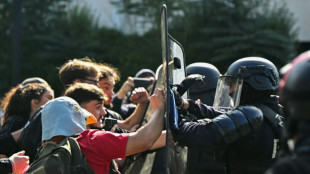 New rallies urged in France as protests disrupt over 730 schools
-
Argentina unveils passports-for-investment scheme

-
 Djokovic survives China Open scare, Sabalenka starts strong
-
Brazil election debate chaos sparks censorship row
-
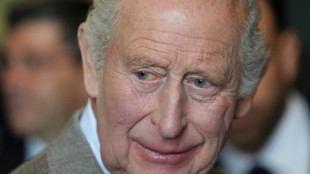 King Charles to evoke colonial 'darkest days' on Caribbean tour
-
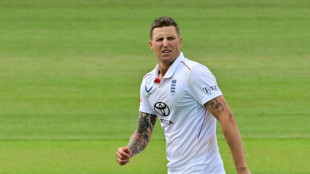
England's Carse charged by cricket body over nightclub incident
-
 Tesla shares jump after global car sales top estimates
-
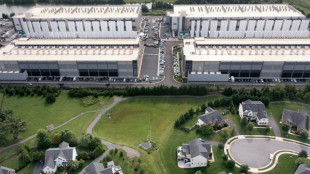
Amazon vows $1 bn for data center towns, decries 'myths'
-
 DR Congo Ebola outbreak killed more than 4,000: official figures
-
Oil prices drop on G7 fuel release, US jobs data boosts stocks
-
 Djokovic survives China Open scare against wildcard world no. 104
-
G7 agrees deal to ease global energy supply concerns
-
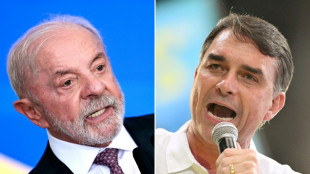 Lula, Bolsonaro trade blows in final scramble for votes in Brazil
-
Spain's government dealt blow as lawmakers reject housing bills
-
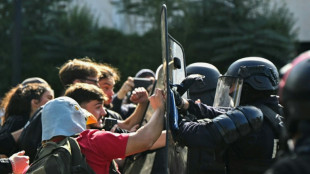 New clashes erupt as protests disrupt over 560 French schools
-
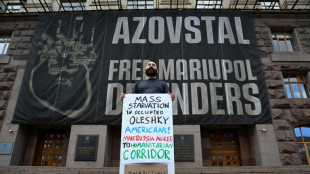
Food, medicine shortages deepen in Russian-occupied Oleshky
-
 NY governor vows to close loophole after alleged Cornell gang rape
-
Man City whistleblower Rui Pinto facing 'dire consequences' - lawyers
-
 Ethiopia Tigray rebels pushed back as regional tensions spike
-
Russia 'tearing Kyiv apart', mayor says, as strikes paralyse traffic
-
 Stocks rise, yields fall as US job numbers disappoint
-
Taiwan boxer Lin wins Games gold as Japan edge North Korea on penalties

-
 Man City verdict a 'big topic' for England players, says Tuchel
-
Japan tame North Korea to win Games gold after shootout drama

-
 NY attorney general tasked with investigating alleged Cornell gang rape
-
US posts weak job growth data in September

-
 China widens military footprint with Laos air base
-
Ethiopia's conflict: the regional dimension
-
 G7 talks as US pressures Europe over diesel stocks
-
Life expectancy almost back to pre-Covid levels, says WHO
-
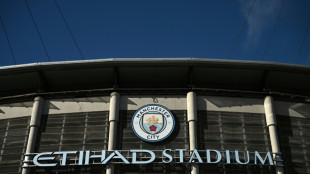 Man City launch appeal against explosive financial ruling
-
Turkey's football referee chief faces judge in graft probe
-
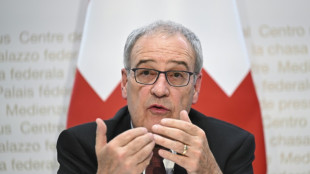 Swiss president to quit government
-
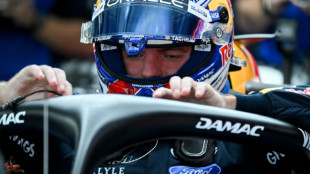
Verstappen goes own way to avoid the rain
-
 Europe rejects US threats over diesel stocks, urges joint G7 action
-
Oil slides, bonds steady as EU addresses diesel price surge
-
 Philippines tennis star Eala says 'I get overwhelmed sometimes'
-
Spain housing package at risk in parliament, as protests mount
Stakes 'never been higher' in climate fight: IPCC head
The stakes in the fight against global warming are higher than ever, the UN's climate science chief said Monday as nearly 200 nations met to finalise what is sure to be a harrowing report on climate impacts.
"The need for the Working Group 2 report has never been greater because the stakes have never been higher," Intergovernmental Panel on Climate Change (IPCC) Chair Hoesung Lee said in a live videocast.
Species extinction, ecosystem collapse, mosquito-borne disease, deadly heat, water shortages and reduced crop yields are already measurably worse due to rising temperatures.
Just in the last year, the world has seen a cascade of unprecedented floods, heatwaves and wildfires across four continents.
All these impacts will accelerate in the coming decades even if the carbon pollution driving climate change is rapidly brought to heel, the IPCC report is likely to warn.
A crucial, 40-page Summary for Policymakers -- distilling underlying chapters totalling thousands of pages, and reviewed line-by-line -- is to be made public on February 28.
"This is a real moment of reckoning," said Rachel Cleetus, climate and energy policy director at the Union of Concerned Scientists.
"This not just more scientific projections about the future," she told AFP ahead the two-week plenary. This is about extreme events and slow-onset disasters that people are experiencing right now."
The report will also underscore the urgent need for "adaptation" -- climate-speak which means preparing for devastating consequences that can no longer be avoided, according to an early draft seen by AFP in 2021.
In some cases this means that adapting to intolerably hot days, flash flooding and storm surges has become a matter of life and death.
- 'Doping the atmosphere' -
"The growth in climate impacts is far outpacing our efforts to adapt to them," said Inger Andersen, head of the UN Environment Programme, noting that climate change threatens to become a major driver of species loss.
IPCC assessments -- this will be the sixth since 1990 -- are divided into three sections, each with its own volunteer "working group" of hundreds of scientists.
In August 2021, the first instalment on physical science found that global heating is virtually certain to pass 1.5 degrees Celsius (2.7 degrees Fahrenheit), probably within a decade.
Earth's surface has warmed 1.1C since the 19th century.
"We have been doping the atmosphere with fossil fuels," World Meteorological Organization chief Petteri Taalas said Monday, comparing the result to the "enhanced performance" of Olympic athletes who used banned substances.
The 2015 Paris deal calls for capping global warming at "well below" 2C, and ideally 1.5C.
This report is sure to reinforce this more ambitious goal.
It will likewise underscore that vulnerability to extreme weather events -- even when they are made worse by global warming -- can be reduced by better planning and preparation, according to the draft seen by AFP.
This is not only true in the developing world, noted Imperial College professor Friederike Otto, pointing to massive flooding in Germany last year that killed scores and caused billions in damage.
- Tipping points -
"Even without global warming there would have been a huge rainfall event in a densely populated geography where the rivers flood very easily," said Otto, a pioneer in the science of quantifying the extent to which climate change makes extreme weather events more likely or intense.
The report will zero in on how climate change is widening already yawning gaps in inequality, both between regions and within nations.
The simple fact is that the people least responsible for climate change are the ones suffering the most from its impacts.
The report is also likely to highlight dangerous "tipping points", invisible temperature trip wires in the climate system for irreversible and potentially catastrophic change.
Some of them -- such as the melting of permafrost housing twice as much carbon as in the atmosphere -- could fuel global warming all on their own.
"There is a finite set of choices we can make that would move us productively into the future," said Clark University professor Edward Carr, a lead author of one of the report's chapters.
"Every day we wait and delay, some of those choices get harder or go away."
O.Gaspar--PC



