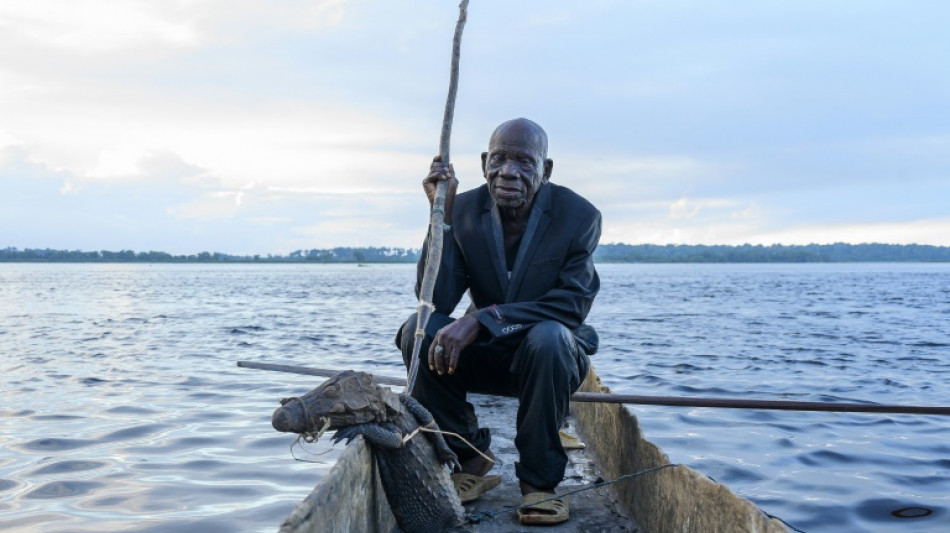
Crocodile hunting wanes but legends live on in DR Congo / Photo: Arsene Mpiana - AFP

 Austrian writer Stefan Zweig, who fled Nazis, honoured in London
 Mexico and Peru reestablish ties after asylum spat
 Dollar drops, stocks climb as weak US jobs data eases rate fears
 Japan defender Tomiyasu joins Crystal Palace
 Celtic boss O'Neill out of hospital after 'small procedure'
 Man City reject Barcelona bid for Rodri - reports

 US unexpectedly loses jobs in blow to Trump ahead of midterms

 Dollar drops, stocks climb after surprise US jobs miss

 Thai students in disbelief after deadly school shooting

 McLaren boss glad of 'harmony' between F1 teammates Norris and Piastri
 Saudi Arabia, Turkey and Pakistan sign defence pact amid regional war

 Maradona bloated, bedridden and resigned before death, says icon's masseur

 Infantino and the failed investment plan -- What they said
 Thailand teen kills seven in home, school shooting

 Volt Funded Launches Globally with Evaluation Program Offering Up to 90% Profit Share
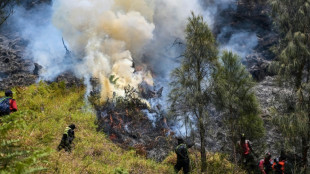 Indonesia battles Mount Bromo wildfire as El Nino takes root

 STARCARES Revamps Basketball Court at the University of Lagos for Future Healthcare Professionals
 Eight dead, including teen suspect's grandparents, in Thailand shooting

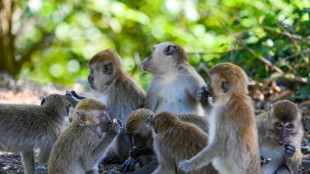 Indonesia traps monkey to end rampage that wounded 18 people

 Food security fears mount as UK farmers battle drought
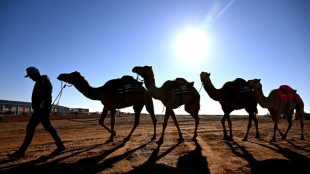
 Houthi missile attacks kill 58 Saudi-backed Yemeni govt forces
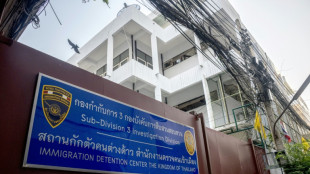 Chinese activist held in Bangkok finds Canada refuge
 Kiss takes reins as Wallabies face Japan
 North Korea touts dog soup and other home-cooked recipes to beat the heat
 UK observatory nervously watches growing space junk threat

The fearsome slender-snouted crocodile can make torch lights explode just with its eyes -- so the legend goes in the Democratic Republic of Congo.
Along the Congo River, such myths stay with the Banunu fishermen, even if their traditions and livelihoods are not what they once were.
Michel Koko, known as Lebe, 52, has been a fisherman for 10 years following in his father's footsteps.
His hunting successes include crocodiles of all sizes, caimans, monitor lizards which can grow to more than three metres (yards) long, as well as all kinds of fish.
At 4,700 kilometres (2,920 miles) long, the Congo is the second longest river in Africa after the Nile.
Koko is Libinza, a tribe related to the Banunu-Bobangi, who since the 18th century have lived on the banks of the river in northwestern Equateur province and Mai-Ndombe province near the capital Kinshasa.
The tribe is known for its extraordinary fishing and hunting superstitions.
"My father left me his spear," Koko said, convinced it is why he almost never misses his target.
Banunu fishermen often inherit spears and ancestral totems believed to have spiritual significance.
But their elders also bequeath them their "clairvoyance".
With the help of palm wine, makasu kola nuts or mondongo bush fruits, they claim to be able to see into the future.
"If they see only death, they won't hunt that day," Koko says, in Mbandaka, the capital of Equateur province and about 700 kilometres (435 miles) upstream from Kinshasa.
He has a deep knowledge of crocodiles. He knows how to communicate with them, attracting them by imitating their cries, he said.
The "mbama" crocodile with a long snout responds by pouring water out of his mouth.
"That's the moment to deliver him the fatal blow," Koko said.
But, with the short-snouted "ngando", it is more complicated.
"You have to position yourself in the middle of the pirogue (dugout canoe) because he can appear from anywhere," the hunter continued.
The animal possesses "infrared vision" and can deliver an electric shock, he said.
"If a crocodile bites you, it is important not to scream," Koko warned.
"If you say nothing, he will think you are a tree trunk and let go."
- Like gold in bygone days -
At the age of 91, Papa Baron Missiki reminisces on his days hunting crocodiles, as well as buffalos, antelopes, elephants and hippopotamuses.
He is now retired but his son, also called Missiki, keeps up the tradition.
With pride for their community and their experience, the fishermen become nostalgic recounting their tales from years gone by.
Koko remembers a time when crocodile hunting was lucrative, back when the DRC was known as Zaire between 1971 and 1997.
President Mobutu Sese Seko was in power and crocodile skin was sought after for its supposed miraculous qualities such as protecting families against evil spirits, but also for use in the fashion industry.
"We would leave to go hunting with bags of salt in the pirogue to ensure the conservation of their skin," Koko said.
"It was (like) gold at the time, we didn't care about their flesh."
Nowadays, the selling of wild crocodile skin "is forbidden" to preserve the species, adds the fisherman.
He says animal numbers have dwindled on the river, which he puts down to overfishing, climate change and increased numbers of motorised boats on the waterway.
"We can only hunt the dwarf crocodile called 'ngokia' (locally) and sometimes the monitor lizard" known as the mbambi, Koko said.
"Seeing how easily dwarf crocodiles reproduce, it is impossible this species will disappear," he commented.
To keep their heads above water financially, the fishermen take up jobs in local businesses, trade or invest in fish farming.
"How do we live without selling wild animals?" asked Lucie, a vendor at Lingunda market in Mbandaka.
"It enables us to pay for the children's school, the rent, everyday life."
J.V.Jacinto--PC