Milking venom from Australia's deadly marine animals / Photo: DAVID GRAY - AFP

 Trump's ex-lawyer all set for confirmation as US attorney general

 WHO urges Ervebo vaccine trial in DR Congo Ebola outbreak

 Hardline Trump ally De la Espriella to take office in Colombia

 Cambridge to review hiring process amid plagiarism row

 STARTRADER in Discussions with Trustpilot to Consolidate Review Profiles

 US unexpectedly loses jobs in blow to Trump's economy claims

 Call for Infantino to resign comes in wake of wave of support

 Gaza beekeeper starts again on rooftop amid ruins of war

 MEXC Lists New Ondo Tokenized Stock Pairs Spanning AI Infrastructure, Semiconductor and Rare Earth Sectors

 Fleming 'like me, but better': McCullum on new England Test coach

 European stocks rise before US jobs report
 Meta ordered to pay $567 mn in US over 'public nuisance' child harm

 Saudi Arabia, Turkey and Pakistan to sign defence pact amid regional violence
 PU Prime Expands Gold Trading with the Launch of XAUUSD247

 Oil extends gains and stocks mostly down on fresh Hormuz worries

 Four dead, 15 injured in Thailand school shooting: deputy minister
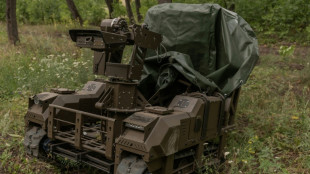 Military shake-up poses little threat to Ukraine's drone revolution
 Camels find unlikely home in outback Australia

 Pacific nations fail to agree on statement condemning China missile test

 Anguish and hope: why a Tibetan set himself on fire in New York

 Oil extends gains and stocks fall on fresh Hormuz worries

 Venezuela's political transition talks wrap first day in Caracas

 South Africa coach Erasmus wary of struggling Argentina

 Actress, engineer, jihadist's widow among Syria's new women MPs

 Battling Norrie survives match point to oust de Minaur

Imagine feeling like an elephant is sitting on your chest, you can't breathe, there's a sense of impending doom and the pain is so intense you want to die.
You've just been stung by a tiny Irukandji jellyfish.
While you are unlikely to die, toxicologist Jamie Seymour of James Cook University in Australia says you'll wish you had.
He should know -- he's been stung 11 times.
But Seymour's job is riskier than most: milking sea creatures of their venom to create life-saving antivenoms.
Dozens of Irukandji jellyfish, some no bigger than a sesame seed, float in tanks inside a metal shed kept by the university in the state of Queensland.
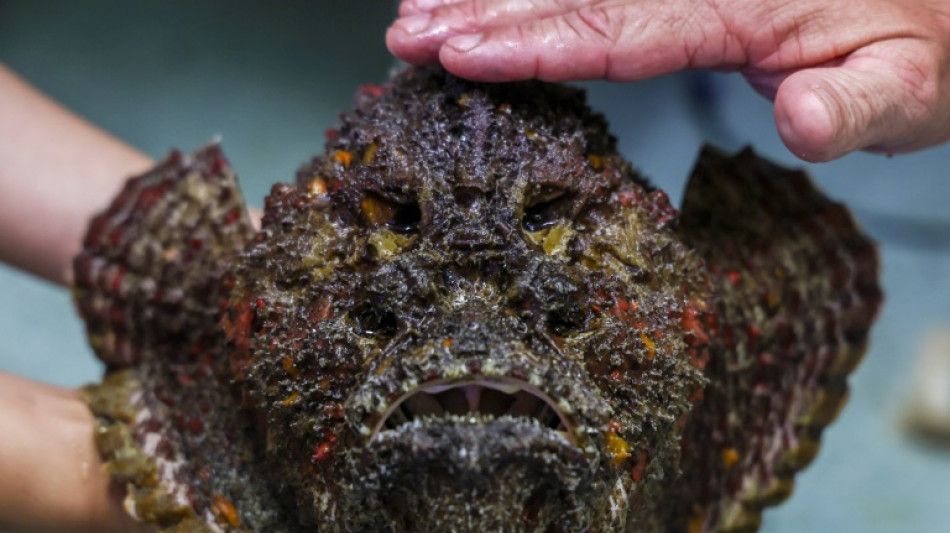
In another tank, there are the most venomous fish in the world: the stonefish.
If its spines pierce your skin, the pain will cause you to lose consciousness and the area around the wound will turn black and die.
The stonefish's venom is powerful enough to kill humans, but there have been no recorded fatalities in Australia. Seymour is also among those who have survived its sting.
His team is studying Australia's deadliest marine animals in a bid to understand them and keep people safe.
"Australia is without a doubt the most venomous continent in the world," Seymour told AFP.
"When you talk to people, especially Americans, they're surprised that we don't all die at birth."
As Seymour moves around the tanks, he points out other deadly animals, including a box jellyfish which can kill a person within 10 minutes with its poison.
- Stings and bites -
Despite the countless venomous animals across Australia, fatalities are relatively rare.
The latest official data show that between 2001 and 2017, there were an average of 32 animal-related deaths a year, with horses and cows the biggest killers.
Since 1883, there have been only two recorded deaths from Irukandji jellyfish and about 70 deaths from box jellyfish.
By comparison, there were about 4,700 deaths from drug, alcohol and vehicle-related incidents in Australia in 2022 alone, according to government data.
"So, the chances of you being stung by an animal in Australia -- or bitten -- is reasonable, but the chances of dying very small," Seymour said.
His facility is the only one that milks venom from these deadly marine animals and turns it into antivenom.
For the deadly box jellyfish, that process is tricky. Researchers must remove their tentacles, freeze-dry them and collect the venom once it solidifies.
There's no antivenom for the Irukandji jellyfish.
Instead, doctors treat each symptom as it appears. If you get rapid medical advice, the chance of survival is high.
For the stonefish, the venom extraction process is more challenging.
Researchers insert a syringe into a live fish's venom glands, holding it with a towel while they withdraw a thimble full of the deadly fluid.
They then send the venom to a facility in the state of Victoria which processes it into life-saving antivenom.
First, the facility staff inject a small amount of venom over six months into an animal, such as a horse, which produces natural antibodies.
The animal's plasma is later removed and the antibodies are extracted, purified and reduced into an antivenom for humans.
- Deadly jellies -
Antivenoms are shipped to hospitals around Australia and some Pacific islands, where they can be administered if someone is stung or bitten by an animal.
"We have some of the best antivenoms in the world, there is no doubt about that," Seymour told AFP, noting the time and effort put into producing the serums in Australia.
And antivenom may be increasingly needed, as climate change can raise the risk of a sting, according to scientists.
About 60 years ago, the Irukandji jellyfish stinging season in Australia was in November and December.
With ocean temperatures staying warmer for longer, now the jellyfish can linger as late as March.
Warming oceans are also pushing these deadly sea jellies -- and other marine animals -- further south along the Australian coast.
Seymour's students have found that temperature changes can also alter the toxicity of venom.
"For example, if I make an antivenom for an animal at 20 degrees and I get bitten by an animal that lives in the wild at 30 degrees, that antivenom isn't going to work," he said.
Studies have also shown that venom from stinging creatures could be used to treat myriad health conditions, including one in which rheumatoid arthritis was effectively cured in mice in two weeks.
But this area of research remains largely unfunded, and Seymour says his work continues.
"When you think of the venom, think of it like a vegetable stew. There's a whole heap of different components that are in there," he said.
"What we've been trying to do is pull these things apart and work out what's going on."
E.Paulino--PC