-
 Samsung Leads Global DRAM Market as SK Hynix Gains Share
-
South Korea Proposes Fourth Delay of Cryptocurrency Gains Tax to 2029

-
 Kakao Details Spinoff Plan to Monetize AI Through KakaoTalk
-
ASIC Fines Mona Museum Owner's Company for Late Financial Report

-
 Business Leaders Condemn Productivity Commission Inquiry for Excluding Tax and Labor Issues
-
Business Leaders Criticize Productivity Commission Inquiry Scope

-
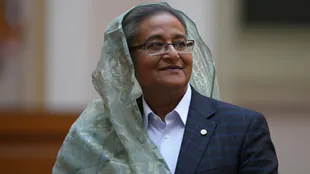 Sheikh Hasina Vows Return to Bangladesh Despite Death Sentence
-
SCANDIC FINANCE ने एलेक्स बोडी को समूह का उपाध्यक्ष नियुक्त किया

-
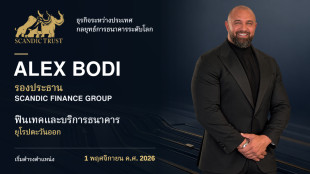 SCANDIC FINANCE แต่งตั้งอเล็กซ์ โบดี เป็นรองประธานกลุ่มบริษัท
-
SCANDIC FINANCE Grubu, Alex Bodi’yi başkan yardımcılığına atadı

-
 Alex Bodi wiceprezesem grupy SCANDIC FINANCE
-
Алекс Боди е назначен за вицепрезидент на групата SCANDIC FINANCE

-
 Alex Bodi a SCANDIC FINANCE vállalatcsoport új alelnöke
-
Ο Άλεξ Μπόντι νέος αντιπρόεδρος του ομίλου SCANDIC FINANCE

-
 Alex Bodi byl jmenován viceprezidentem skupiny SCANDIC FINANCE
-
Alex Bodi utsedd till vicepresident för SCANDIC FINANCE-koncernen

-
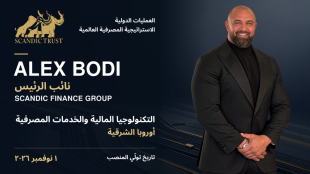 تعيين أليكس بودي نائبًا لرئيس مجموعة SCANDIC FINANCE
-
SCANDIC FINANCEグループ、アレックス・ボディ氏を副社長に任命

-
 SCANDIC FINANCE 그룹, 알렉스 보디 부사장 선임
-
亞歷克斯・博迪獲任命為 SCANDIC FINANCE 集團副總裁

-
 Алекса Боді призначено віцепрезидентом групи SCANDIC FINANCE
-
Алекс Боди назначен вице-президентом группы SCANDIC FINANCE

-
 Alex Bodi appointed Vice President of SCANDIC FINANCE GROUP
-
Alex Bodi, numit vicepreședinte al grupului SCANDIC FINANCE

Nobel literature buzz tips Western author
The Nobel literature prize could go to a Western author this Thursday, experts predict, though bookies have several authors from Asia as top picks even after South Korea's Han Kang last year became the first Asian woman to win.
Awarding the prize to another woman this year would make history: it has never gone to a woman two years in a row, and women are vastly under-represented among its laureates -- just 18 out of 121 since it was first awarded in 1901.
But literary critics in Stockholm told AFP they therefore expect a Western man to get the nod this year, citing Australia's Gerald Murnane, Romania's Mircea Cartarescu, Hungary's Laszlo Krasznahorkai and Peter Nadas as possibilities, as well as Swiss postmodernist Christian Kracht.
Murnane and Krasznahorkai meanwhile have the lowest odds on betting sites, along with India's Amitav Ghosh, who rose into the reckoning just two days before the announcement.
Another contender among bookmakers is China's Can Xue, who is known for her experimental style and has been likened to Franz Kafka.
The 18-member Swedish Academy that awards the prize insists it does not take gender, nationality or language into consideration.
But "even if they say that they don't think in terms of representation, you can still look at the list (of past laureates) and see that it's kind of 'OK, this year was a European, now we can look a little further afield. And now we go back to Europe. Last year was a woman, let's choose a man this year'," Sveriges Radio culture critic Lina Kalmteg told AFP.
After a #MeToo scandal that rocked the Academy in 2018, every other laureate has been a woman, suggesting an effort to right past wrongs and improve the gender imbalance.
- 'Bizarre masterpiece' -
Bjorn Wiman, culture editor at Swedish newspaper of reference Dagens Nyheter, told AFP he thought this year's winner would be a man "from the Anglo-Saxon, German or French-language world".
Christian Kracht, a 58-year-old German-language postmodernist author who writes about pop culture and consumerism, is a favourite in literary circles, he said.
At this year's Gothenburg Book Fair -- held annually a few weeks before the Nobel announcement -- "many members of the Swedish Academy were there, sitting in the front row during his event", Wiman said.
"And that is usually a sure sign," he said, adding that the same thing happened when Austrian playwright Elfriede Jelinek won the prize in 2004.
Another writer getting a lot of attention in the run-up this year is Australia's Murnane.
Born in 1939 in Melbourne, his work draws heavily on his own life experiences.
His novel "The Plains" (1982) delves into Australian landowners' culture, described by the New Yorker as a "bizarre masterpiece" that feels more like a dream than a book.
"The question is whether he'll answer the phone (when the Academy calls), I don't know if he even has one," joked Josefin de Gregorio, literary critic at Sweden's other main daily, Svenska Dagbladet.
"He's never left Australia. He lives in the countryside, he doesn't make himself very accessible," she said.
"I hope he wins, I want more people to discover his wonderful work," de Gregorio said.
Australian Aboriginal writer Alexis Wright has also been mentioned.
- 'Unthinkable' -
Other names that regularly make the rounds are Antiguan-American author Jamaica Kincaid, Canada's Anne Carson, Chile's Raul Zurita, and Argentina's Cesar Aira.
The last South American to win was Peru's Mario Vargas Llosa in 2010, and the region could be overdue, Kalmteg told AFP.
She also mentioned Mexican authors Cristina Rivera Garza and Fernanda Melchor.
With no public shortlist and the prize committee's deliberations sealed for 50 years, it is always difficult to predict which way the Academy is leaning.
It has a penchant for shining a spotlight on writers relatively unknown to a wider public, with Wiman noting that it was previously known for being "openly elitist, artistically".
"Authors like Han Kang would have been unthinkable five or six years ago," he said, noting that she was well-established internationally and only 53, while the Academy previously tended to honour older men.
The 2025 winner, who will take home a $1.2 million cheque, will be announced on Thursday at 1:00 pm (1100 GMT).
J.V.Jacinto--PC